R-dog Delivery Robot 'Poops' Packages, Raises Hygiene & Ad Concerns
A new quadrupedal delivery robot, designed to replace human gig-workers, unveils a controversial 'pooping' package delivery method and broadcasts ads, sparking immediate questions about user acceptance and urban commercialization.
✨ This content was summarized and interpreted by AI; it may contain errors — please verify accuracy with the original sources. Learn more
Listen to this story
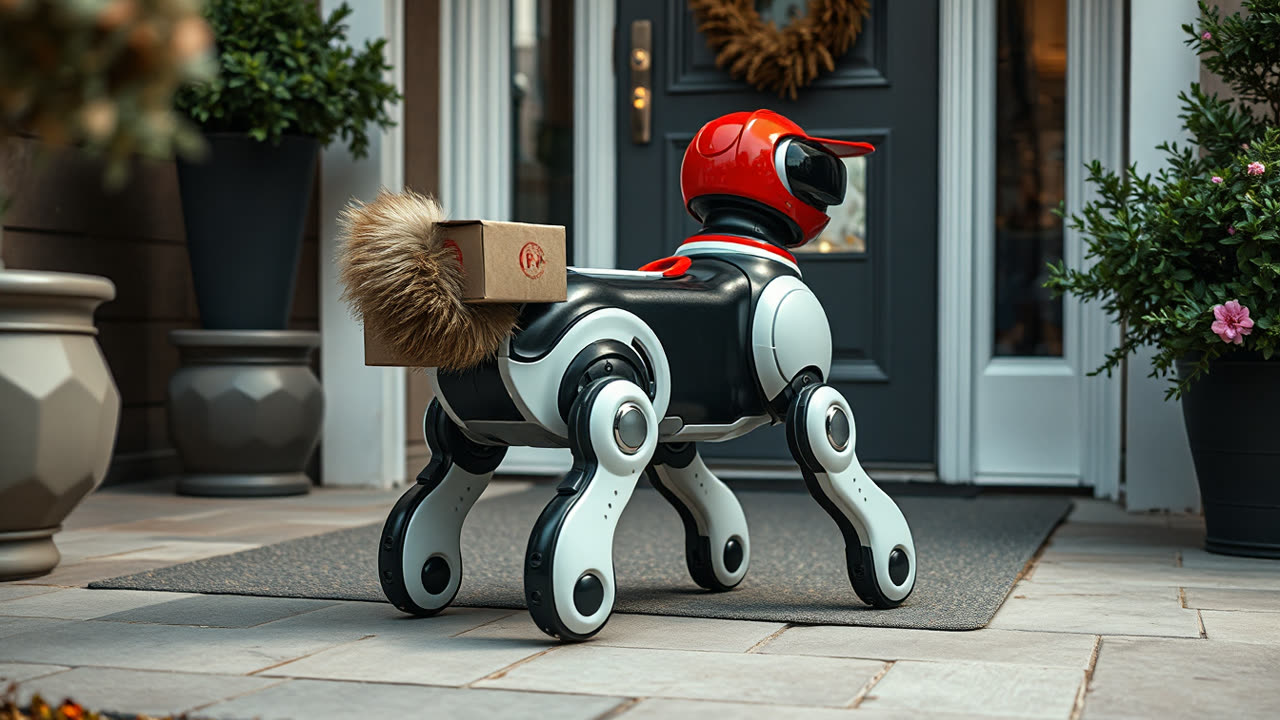
The R-dog delivery robot, recently unveiled with a purportedly friendly facade featuring a red cap and furry tail, aims to revolutionize last-mile logistics by replacing human gig-workers, yet its most striking feature—a package delivery mechanism described as "pooping" hot, steaming parcels onto doorsteps—presents a significant departure from conventional methods and raises immediate questions about user acceptance and practical hygiene. This quadrupedal automaton, designed for an approachable aesthetic, simultaneously broadcasts advertisements throughout its route, introducing a dual-purpose model that blends delivery service with mobile marketing. The core innovation here is not merely autonomous movement, which has been explored by numerous predecessors, but the adoption of a dog-like form factor and a highly unconventional deposit method that challenges established notions of convenience and package integrity.
This development matters profoundly for several reasons, impacting both the nascent robot delivery industry and the broader gig economy. For users, the "pooping" delivery method, while perhaps intended to be novel or even amusing, immediately raises concerns about package presentation, potential damage, and sanitary perceptions, especially for food or sensitive items. The notion of a "hot, steaming" package could imply thermal retention capabilities, but the visual and conceptual framing of the delivery mechanism is likely to be a significant hurdle for consumer adoption, potentially overshadowing any benefits of automation or speed. Furthermore, the integration of constant advertising throughout the robot's journey introduces a new dimension to urban streetscapes, turning delivery vehicles into moving billboards and potentially contributing to visual clutter and privacy debates as public spaces become increasingly commercialized. This persistent ad display could generate a secondary revenue stream for the R-dog's operators, potentially subsidizing delivery costs or increasing profit margins, but at the expense of an uninterrupted, discreet user experience.
In the competitive landscape of autonomous delivery, the R-dog stands apart from its more established rivals, which generally employ wheeled designs and more conventional delivery hatches. Companies like Starship Technologies and Kiwibot utilize compact, six-wheeled robots that navigate sidewalks, delivering packages from a secure, top-loading compartment that opens upon user authentication. Nuro, on the other hand, operates larger, driverless vehicles resembling small cars, designed to carry groceries and other goods with multiple compartments accessible via a digital interface. These systems prioritize secure, often climate-controlled delivery within a predictable, user-friendly interaction model. The R-dog's quadrupedal design, while potentially offering superior traversal capabilities over varied terrain compared to wheeled robots, introduces mechanical complexity and the unique ergonomic challenge of a low-to-the-ground package drop. Prior generations of delivery robots have focused on efficiency, safety, and integration into existing infrastructure; the R-dog, with its anthropomorphic dog-like form and peculiar delivery action, appears to be making a bold, perhaps risky, play for distinctiveness and emotional connection, even if that connection is tinged with novelty and potential aversion. Its explicit aim to replace gig-workers also intensifies the ongoing debate about automation's impact on employment, directly challenging the human element that many last-mile services still rely upon for flexibility and personalized service.
Looking ahead, the R-dog's success will hinge not just on its technological prowess—navigating complex urban environments, avoiding obstacles, and ensuring package security—but critically on public perception and regulatory acceptance. The "pooping" delivery mechanism, if adopted widely, could necessitate new standards for package handling and hygiene, particularly for food delivery. Regulators will also need to address the implications of autonomous advertising in public spaces, potentially setting guidelines on display size, content, and frequency. The move towards quadrupedal robots could open new avenues for navigating stairs or uneven paths, areas where wheeled robots struggle, but the overall cost of maintenance and operation for such complex robotic legs remains a significant factor. If the R-dog can overcome the initial "ick" factor and prove reliable, efficient, and cost-effective, its blend of delivery and advertising could represent a new business model for last-mile logistics. However, the immediate future likely involves extensive pilot programs and public education campaigns to normalize its unique approach, as consumer preference for discreet, clean, and secure delivery methods remains paramount. The true test will be whether the novelty of a "friendly" robot dog, even one that "poops" packages, can outweigh the established expectations for a seamless and dignified delivery experience.