Rabbit Pivots: R1's OS3 Now a Cloud AI Agent, Uncoupled from Hardware
Struggling with its R1 device, Rabbit is now offering its core 'agentic operating system,' OS3, as a standalone cloud-based AI agent, fundamentally altering its strategy from hardware to software.
✨ This content was summarized and interpreted by AI; it may contain errors — please verify accuracy with the original sources. Learn more
Listen to this story
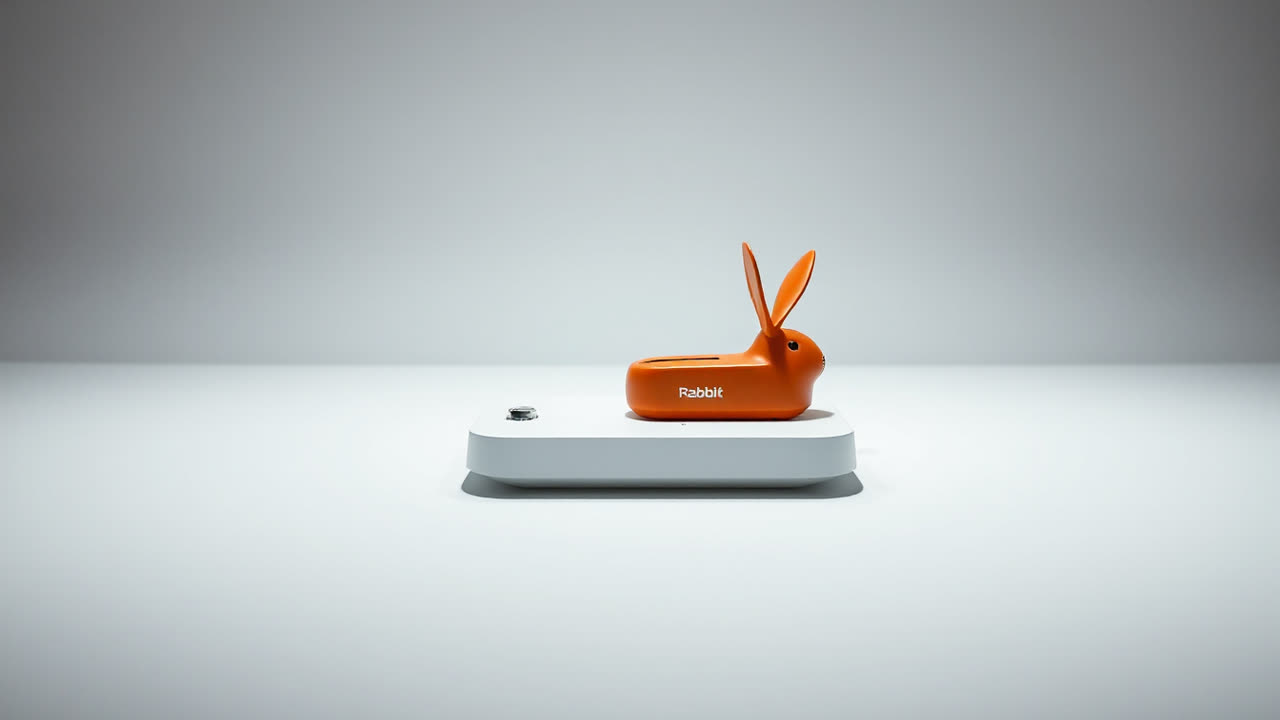
Rabbit, the company whose R1 device struggled to find its footing, is now making its core "agentic operating system," OS3, available as a standalone AI agent in the cloud, uncoupled from its physical hardware. This strategic pivot, initially reported by Wired and detailed by The Verge, fundamentally alters the startup's trajectory and raises significant questions about the future of dedicated AI hardware. The move effectively transforms Rabbit from a hardware-first company into a software and services provider, acknowledging the market's lukewarm reception to the R1 and aiming to broaden the reach of its underlying AI technology.
The initial rollout of the R1 was met with considerable skepticism and criticism. Reviewers frequently highlighted its limited functionality, inconsistent performance, and a user experience that often felt slower and less capable than simply using a smartphone with existing AI assistants. Many found its voice-first interface cumbersome and its "Large Action Model" (LAM) — designed to learn and mimic human interaction with applications — to be more aspirational than practical in its execution. The device, priced at $199, struggled to justify its existence as a "pocket companion" when a smartphone already offered superior processing power, a robust app ecosystem, and increasingly sophisticated AI capabilities. By decoupling OS3 from the R1, Rabbit implicitly concedes that the hardware itself was a significant barrier to adoption and that the true value, if any, lies in the agentic software.
This pivot carries profound implications for both users and the nascent AI hardware industry. For users, it means access to Rabbit's agent technology without the added cost or commitment of a dedicated device, potentially lowering the barrier to entry and allowing for broader experimentation with its "agentic" approach. If OS3 can truly automate complex, multi-step tasks across various applications, as Rabbit claims, it could offer a genuinely novel way to interact with digital services, moving beyond simple voice commands or single-app integrations. However, it also places OS3 in direct competition with established AI models and platforms like OpenAI's GPT-4o, Google's Gemini, and even Apple's upcoming "Apple Intelligence," all of which are rapidly integrating advanced agentic capabilities directly into existing devices and operating systems. The challenge for Rabbit will be to prove that its LAM and agent architecture offer a distinct advantage or efficiency that these incumbents cannot replicate or surpass.
For the industry, Rabbit's shift is a stark reminder of the immense difficulty in creating compelling, dedicated hardware for AI. The R1's struggles echo those of the Humane AI Pin, another ambitious attempt at a screenless, voice-first AI device that also faced significant critical backlash over its performance, battery life, and overall utility. Both cases suggest that the market is not yet ready, or perhaps will never be ready, for standalone AI hardware that attempts to replace or significantly augment the smartphone. Instead, the trend appears to be toward embedding advanced AI deeply within existing, ubiquitous platforms. This development reinforces the idea that the "next big thing" in AI might be less about a new gadget and more about a fundamental re-architecture of how we interact with software and services across the devices we already own.
Looking ahead, Rabbit's success hinges entirely on the performance and unique value proposition of its standalone OS3 agent. The company must demonstrate that its "Large Action Model" can indeed deliver on its promise of intuitive, cross-application automation in a way that rivals cannot. This means proving real-world utility for tasks beyond simple queries, such as booking travel, ordering food through multiple apps, or managing complex workflows across different platforms. If OS3 can achieve this, Rabbit could carve out a niche as a specialized AI agent provider, licensing its technology or offering it as a premium service. However, the competition is fierce, with tech giants pouring vast resources into developing their own sophisticated AI agents. The future of Rabbit, therefore, is no longer tied to the physical form factor of the R1, but rather to the raw efficacy and differentiating power of its cloud-based AI, a battle fought on the merits of software innovation rather than hardware novelty. The R1 will likely fade into an interesting, if cautionary, footnote in the history of AI hardware, while OS3 will now face the ultimate test of its true agentic capabilities in a crowded and rapidly evolving software landscape.