Rabbit Pivots to OS3: A Cross-Platform AI Agent for Your Existing Devices
After the R1 hardware's disappointing launch, Rabbit introduces OS3, a cross-platform AI agent designed to integrate into existing devices, signaling a crucial re-evaluation of AI's role in daily life.
✨ This content was summarized and interpreted by AI; it may contain errors — please verify accuracy with the original sources. Learn more
Listen to this story
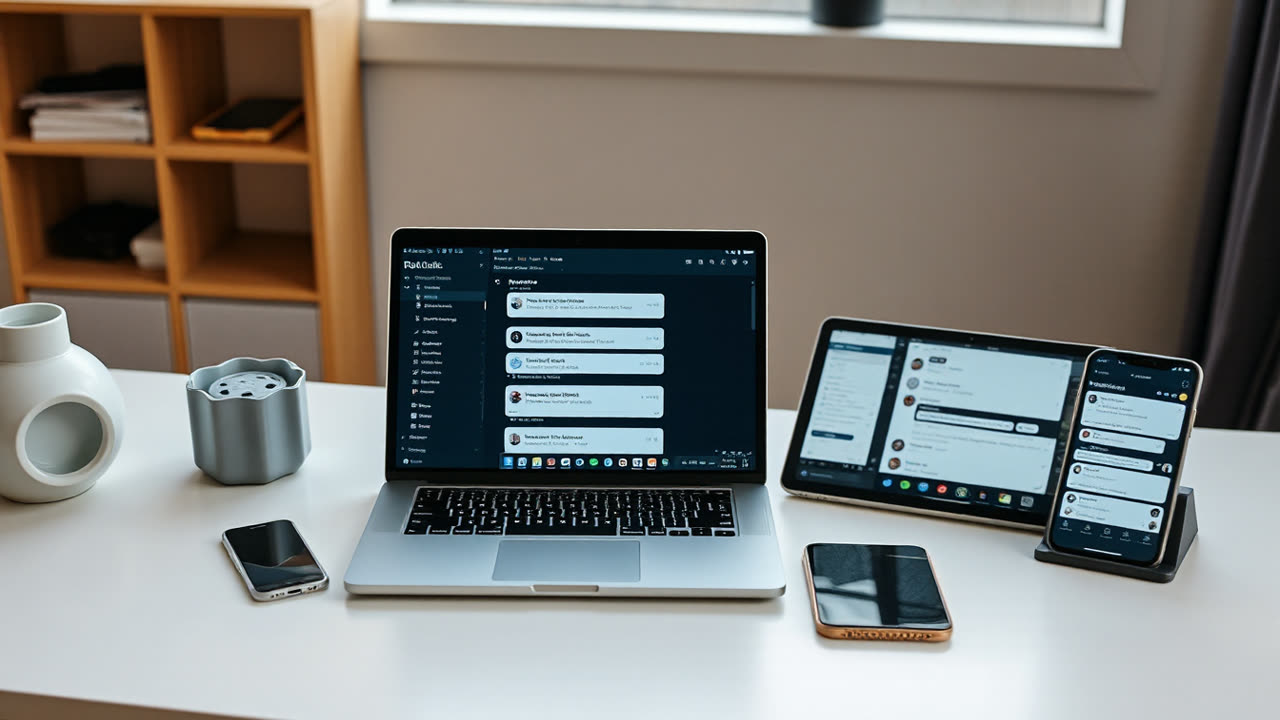
Rabbit's OS3 launch, an agentic operating system pivoting from its ill-fated R1 hardware, signals a crucial re-evaluation of how AI agents will integrate into daily life, embracing existing screens rather than attempting to replace them. This cross-platform AI agent, currently in an invite-only web beta, functions as a "master Agent" capable of orchestrating tasks across connected Windows, Mac, and Linux devices, with mobile support via Telegram in its testing phase. Unlike its predecessor, OS3 is designed to reside within the devices users already own, taking a single chat interface as its primary entry point where users state an outcome, and the system autonomously reasons with connected AI models, web services, or even other devices to execute the task. This strategic shift by CEO Jesse Lyu's company acknowledges the smartphone's entrenched position and the market's clear preference for software-first AI integration.
This pivot carries significant implications for both users and the broader tech industry. For users, OS3 promises to simplify the complex digital landscape, moving beyond the traditional app-centric paradigm to a unified, continuous conversational experience that spans multiple devices. This approach aims to reduce the cognitive load of managing numerous applications and fragmented chat threads, offering proactive and context-aware assistance. The ability for OS3 to determine the optimal device for a task and seamlessly move work and files between them could genuinely streamline workflows, a stark contrast to the R1's limited utility. Furthermore, OS3's "Bring Your Own Key" (BYOK) model, allowing users to connect their own AI provider API keys and allocate models by task tiers, introduces an unprecedented level of customization and control, potentially enabling users to leverage cheaper, faster models for simple queries and more powerful ones for complex work.
For the industry, Rabbit's redirection validates the growing consensus that dedicated, single-purpose AI hardware faces an uphill battle against the ubiquity and versatility of smartphones and general-purpose computing. The R1, priced at $199, initially garnered substantial hype, selling 10,000 units in 24 hours and 100,000 units overall, but quickly faced widespread criticism for being "half-baked." Reviewers lambasted its slow performance, inconsistent AI execution, limited app integrations (only Spotify, Midjourney, DoorDash, and Uber at launch), and a battery life as short as an hour, ultimately deeming it redundant given existing smartphone capabilities. The R1's failure to reliably perform promised tasks like booking taxis or ordering food, despite later software updates improving battery life and adding features like Magic Camera and Claude Code integration, underscored the challenge of delivering on ambitious AI promises in a standalone hardware form factor. The company reportedly struggled with payroll and faced mass returns, a clear indicator that technological novelty alone does not guarantee product-market fit.
The shift to OS3 positions Rabbit directly within the burgeoning "agentic AI" market, where AI systems are designed to autonomously plan, reason, and execute multi-step tasks with minimal human intervention. This market is projected to grow significantly, reaching an estimated $10.9 to $12.1 billion in 2026, with 80% of executives reportedly increasing investment in agentic AI. Industry analyst Gartner predicted in August 2025 that 40% of enterprise applications would integrate task-specific AI agents by the end of 2026, a substantial leap from under 5% in 2025. This trend highlights a broader industry movement towards AI agents that can operate across multiple applications and services, fundamentally changing how users interact with technology and potentially even eliminating the need for separate apps.
In this competitive landscape, Rabbit's OS3 will contend with established giants like Google Assistant, Apple's Siri, and Amazon's Alexa, all of whom are rapidly advancing their own agentic capabilities. OpenAI, for instance, is reportedly developing a smartphone centered around AI agents to replace traditional apps, while Google Cloud and Microsoft are investing heavily in enterprise-grade AI agent platforms. OS3's unique selling proposition lies in its "agent for all agents" architecture and its open model layer, which theoretically allows for greater flexibility and power than more closed ecosystems.
Looking ahead, OS3 faces the critical challenge of overcoming the reputational damage from the R1's disappointing launch. User adoption will hinge on its ability to consistently deliver on the promise of autonomous, reliable task completion across diverse services, a promise the R1 largely failed to fulfill. While the BYOK model might appeal to tech-savvy early adopters, mainstream success will require an intuitive, seamless experience that doesn't demand technical expertise. Should OS3 successfully demonstrate a truly unified and intelligent agent experience across platforms, it could carve out a significant niche, proving that the vision for a post-app world was not flawed, but merely needed a different delivery mechanism. The future of human-computer interaction is undoubtedly shifting towards more intelligent, proactive agents, and Rabbit's latest endeavor, if executed well, could finally position it as a meaningful player in that evolution.