Razer Unveils Prio: A Pocket-Friendly Mobile Gaming Controller
Razer's Prio mobile game controller marks a deliberate pivot towards ultra-compact, genuinely pocket-friendly design, challenging the bulkiness of existing mobile gaming accessories.
✨ This content was summarized and interpreted by AI; it may contain errors — please verify accuracy with the original sources. Learn more
Listen to this story
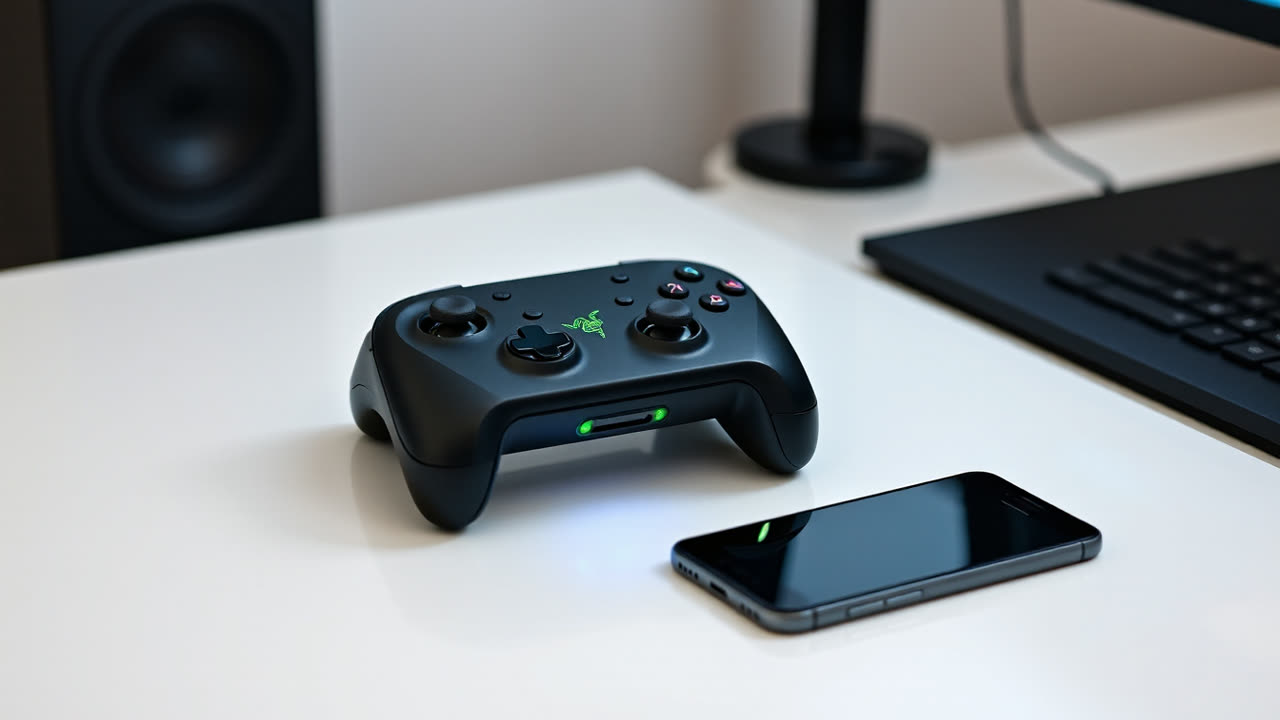
Razer's recent unveiling of the Prio mobile game controller, a device designed for unprecedented portability, marks a deliberate pivot in the increasingly competitive mobile gaming accessory market, emphasizing ultra-compact design over the more robust, console-like experiences offered by its predecessors and rivals. The Prio, characterized by its "cute and teensy" form factor and a unique folding mechanism, aims to be genuinely pocket-friendly, a distinction that could significantly broaden the appeal of dedicated mobile controllers beyond hardcore enthusiasts. This design choice directly addresses a critical pain point for many mobile gamers: the bulkiness and inconvenience of carrying existing controllers, even those designed for portability, alongside their smartphones.
The Prio's significance extends beyond its diminutive size; it represents Razer's strategic response to the evolving landscape of mobile gaming, where quick, on-the-go sessions are becoming as prevalent as extended play. While specific pricing and exact availability are still emerging, initial reports suggest a competitive entry point, likely positioning it against mid-range mobile controllers, potentially around the $60-$80 mark, a sweet spot for impulse purchases. Its folding design, allowing it to collapse into a truly compact form factor when not in use, sets it apart from popular clamshell-style controllers like the Backbone One or Razer's own Kishi V2, which, while portable, still retain a more rigid structure. The Prio likely connects via Bluetooth, offering broad compatibility across Android and iOS devices, a standard feature for modern mobile peripherals, though a direct USB-C connection for lower latency could also be an option for a premium version. This emphasis on seamless integration and minimal friction in setup and carry is crucial for capturing the casual gamer market.
This release is particularly interesting when viewed against the backdrop of Razer's existing mobile gaming portfolio. The Kishi V2, for instance, offers a more traditional, console-like experience, physically embracing the smartphone and providing a full array of buttons, triggers, and joysticks. While highly regarded for its ergonomic design and low-latency USB-C connection, its form factor, even when collapsed, remains substantial. The Prio, in contrast, appears to sacrifice some of that full-feature immersion for ultimate convenience. This differentiation suggests Razer is segmenting its mobile controller offerings, catering to distinct user preferences: the Kishi V2 for serious, extended gameplay, and the Prio for quick, accessible gaming anywhere. Compared to rivals like the Backbone One, which has largely dominated the premium segment with its intuitive app integration and console-like feel, the Prio attempts to carve out a niche focused purely on portability and instant gratification. Other competitors, such as various GameSir models, often compete on price and feature sets, but few have prioritized the "truly pocketable" aspect to the extent the Prio seems to.
The impact on users is clear: greater accessibility and spontaneity for gaming. Imagine a quick commute, a coffee break, or waiting in line – scenarios where pulling out a full-sized controller is impractical, but a tiny, easily deployable Prio makes a quick gaming session feasible. This could significantly boost engagement with mobile titles that benefit from physical controls, from competitive shooters and racing games to more intricate RPGs and platformers. For the industry, the Prio's success could validate a new design paradigm, encouraging other manufacturers to prioritize extreme portability and minimalist design. It might also accelerate the convergence of mobile gaming with cloud streaming services, where a highly portable controller makes services like Xbox Cloud Gaming or NVIDIA GeForce NOW even more compelling on a smartphone, untethered from a console or PC.
Looking ahead, the Prio's introduction signals a potential shift in Razer's overall accessory strategy, moving towards a more diversified approach that acknowledges the varied demands of the mobile gaming ecosystem. If the Prio gains traction, we could see an expansion of ultra-compact peripherals, perhaps even modular designs that allow users to customize their level of control based on the game or situation. Furthermore, its success might prompt deeper software integrations, offering quick-launch features or game-specific profiles tailored for its minimalist button layout. The long-term outlook for mobile game controllers, in general, appears robust, especially with the continued proliferation of graphically intensive mobile games and the growing popularity of cloud gaming. The Prio, with its singular focus on pocketability, is not just another controller; it's a statement about the future of mobile gaming – one where convenience and instant access are paramount, even if it means rethinking traditional controller ergonomics. Its success or failure will offer valuable insights into how deeply the mobile gaming community values ultimate portability over a full, console-like control scheme.