Retroid Pocket Unveils Duo Lite Plus with Unprecedented Free Exchange Program
Retroid Pocket unexpectedly unveils the Duo Lite Plus, a significantly upgraded dual-screen handheld, alongside an unprecedented free exchange program for existing Duo Lite owners, setting a new industry standard for customer loyalty and product upgrades.
✨ This content was summarized and interpreted by AI; it may contain errors — please verify accuracy with the original sources. Learn more
Listen to this story
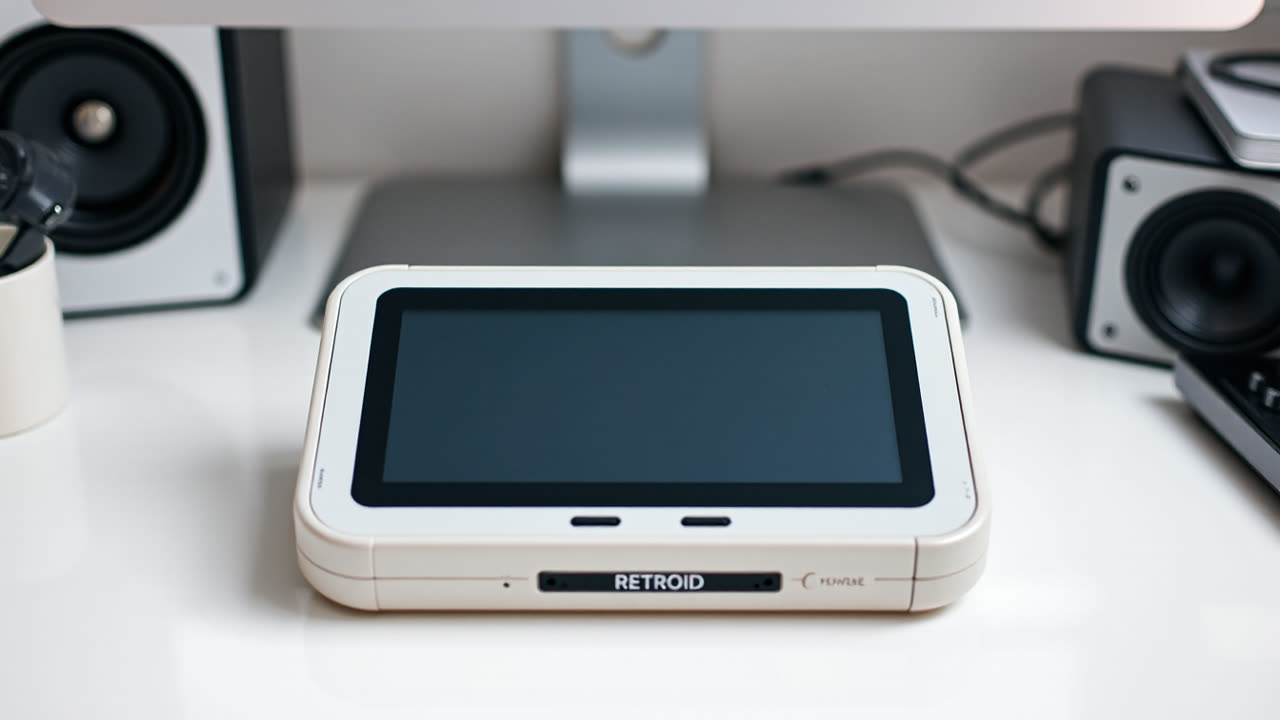
Retroid Pocket has unexpectedly unveiled the Duo Lite Plus, significantly expanding its dual-screen handheld lineup and offering an unprecedented free exchange program for existing Duo Lite customers. This move, announced in late August 2026, introduces a device that directly addresses core performance and display criticisms of its predecessor, while also setting a new precedent for customer loyalty and upgrade pathways in the highly competitive retro handheld market. The Duo Lite Plus retains the innovative dual-screen clamshell design, making it distinct from many single-screen rivals, but upgrades the internal chipset to an undisclosed but demonstrably more powerful processor, alongside a resolution bump for both 3.5-inch IPS displays to 720p, up from the Duo Lite's 480p panels. This substantial upgrade, combined with the free exchange offer, positions the Lite Plus not just as an iterative improvement, but as a strategic pivot to solidify Retroid Pocket's standing against both budget-friendly competitors and higher-end portable gaming devices.
This expansion matters profoundly for several reasons, starting with the immediate impact on Retroid Pocket's existing user base. The offer of a free exchange for Duo Lite owners, requiring only return shipping of their current device, is an aggressive and consumer-friendly strategy virtually unheard of in the electronics industry. This cultivates immense goodwill, transforming potentially dissatisfied early adopters into brand advocates and demonstrating a commitment to customer satisfaction that few rivals can match. For the industry, this sets a challenging benchmark. Competitors like Anbernic, Miyoo, and even larger players like Valve with its Steam Deck or Nintendo with its Switch, rarely offer such direct, cost-free upgrade paths. This could pressure other manufacturers to reconsider their post-purchase support models, potentially leading to enhanced customer loyalty programs across the sector. Moreover, the performance upgrade directly impacts the viability of more demanding emulation. The original Duo Lite, while capable for 8-bit and 16-bit classics, struggled noticeably with PlayStation Portable, Nintendo DS, and some PlayStation 1 titles, particularly those requiring higher resolution or more intensive graphics rendering. The Lite Plus's enhanced chipset and sharper displays promise a smoother, more visually appealing experience for a broader range of retro platforms, extending the device's utility and appeal to a wider audience of retro gaming enthusiasts.
The Retroid Pocket Duo series has always aimed to carve out a niche with its unique dual-screen form factor, reminiscent of Nintendo's DS and 3DS consoles. The original Duo Lite, launched in early 2026, was praised for its build quality and nostalgic appeal but criticized for its underpowered processor and low-resolution screens which limited its emulation capabilities and visual fidelity for anything beyond the most basic retro fare. The Lite Plus directly addresses these shortcomings. While specific benchmarks are still emerging, early reports suggest the new processor, likely an upgrade from the Lite's Unisoc T610 or similar, pushes performance closer to the company's own Retroid Pocket 4 Pro, enabling consistent 60fps emulation for many PSP and NDS titles, and even some lighter GameCube and PS2 games. This places it well above budget single-screen devices like the Anbernic RG35XX series or Miyoo Mini Plus, which typically cap out at PS1 or N64 emulation. Against its closest dual-screen rival, the Ayaneo Flip DS (which uses far more powerful, but also significantly more expensive, x86 architecture), the Duo Lite Plus remains firmly in the ARM-based retro emulation territory, offering a more affordable entry point into the dual-screen experience. Compared to Retroid's prior flagship, the Retroid Pocket 4 Pro, the Lite Plus trades raw power and a larger single screen for the distinctive dual-screen form factor and superior portability, appealing to a different segment of the market. The price point for new Lite Plus units, expected to be around $179, positions it as a premium option within the dedicated retro handheld space, yet still considerably more accessible than high-end x86 devices.
Looking ahead, Retroid Pocket's bold move with the Duo Lite Plus and its exchange program signals a maturing strategy focused on market differentiation and customer retention. This could herald a new era where manufacturers are more proactive in addressing product limitations post-launch, rather than simply moving on to the next generation. We may see Retroid Pocket leverage this goodwill to further expand its ecosystem, perhaps with proprietary software enhancements or deeper integration with its community. The success of the Lite Plus could also validate the dual-screen form factor as a persistent, albeit niche, segment of the handheld market, potentially encouraging other manufacturers to experiment with similar designs, especially if the Lite Plus proves capable of robust NDS and 3DS emulation via community efforts. However, the long-term challenge for Retroid will be to maintain this level of aggressive customer support without eroding profit margins. Future iterations of their devices will likely need to balance cutting-edge performance with competitive pricing, as the emulation scene continues to push for higher fidelity and broader platform support. This unexpected upgrade, therefore, is not merely a product launch; it's a strategic declaration of intent, reshaping expectations for what a dedicated retro handheld company can deliver.