Ring Launches "TAKE" Encryption Standard, Balancing AI Features and Privacy
Amazon-owned Ring has introduced a new default encryption standard, "TAKE," globally, aiming to provide robust privacy for smart home videos while retaining advanced AI-powered features.
✨ This content was summarized and interpreted by AI; it may contain errors — please verify accuracy with the original sources. Learn more
Listen to this story
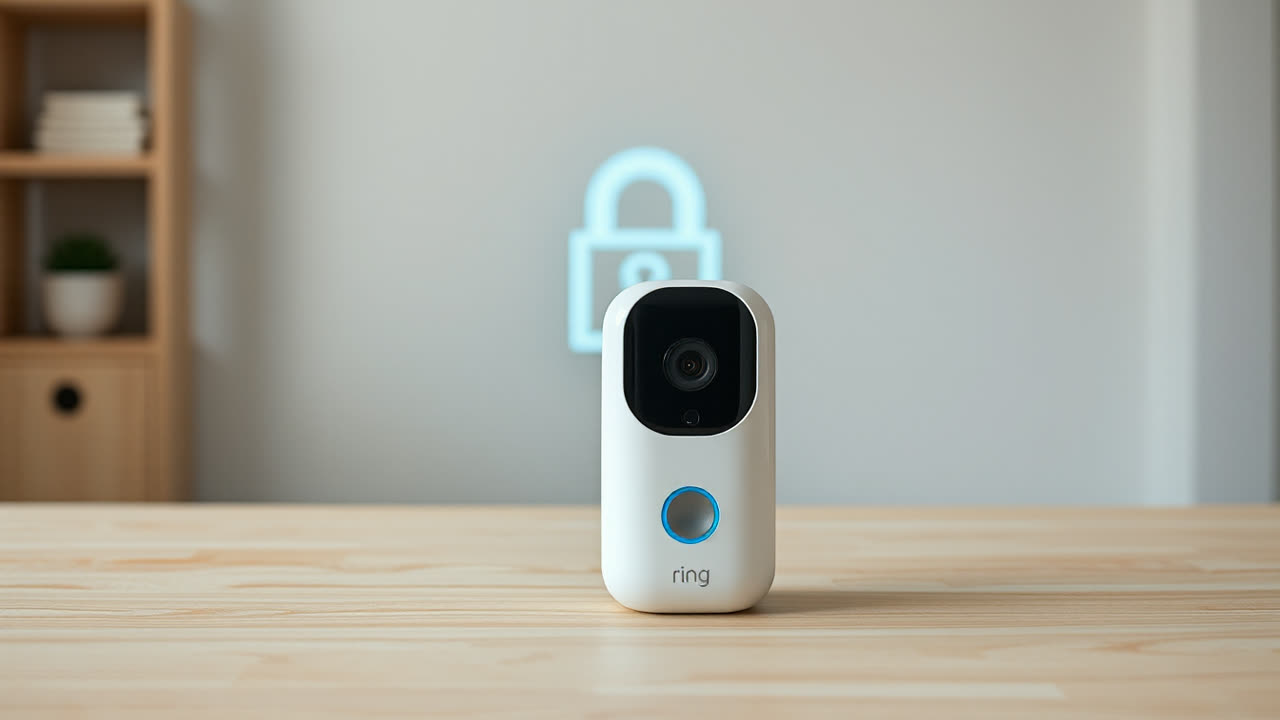
Ring, the Amazon-owned smart home security giant, has launched a new encryption standard called TAKE, or "Throw Away the Key Encryption," making it the default for all cloud features globally, a move rolling out in phases starting this September. This initiative represents a significant strategic pivot, aiming to reconcile the often-conflicting demands of advanced smart features and robust user privacy, a tension that has long plagued the smart home security industry. While Ring's videos are already encrypted in transit and at rest in the cloud, TAKE introduces a more nuanced approach to key management. With TAKE, videos are protected by unique, rotating encryption keys. A copy of these keys is temporarily held in a "secure enclave" within the cloud, a sealed vault that allows Ring access only under strict, limited conditions. This temporary access is specifically granted to power intelligent features like Smart Alerts, video descriptions, and familiar face detection. Crucially, after Ring utilizes the key for these purposes, it is immediately "thrown away and deleted," ensuring that only the user, and any designated Shared Users, retain the keys to their video on enrolled devices.
This development matters immensely for users, who have historically navigated a compromise between convenience and privacy in smart home security. Ring's existing end-to-end encryption (E2EE), introduced in 2021 following sustained calls from privacy advocates and a history of security concerns, offers the highest level of privacy by ensuring only enrolled user devices hold the decryption keys. However, E2EE comes at a significant cost: it disables many popular cloud-based features, including AI analysis, shared users, Bird's Eye View, and Alexa Greetings, fundamentally limiting the "smart" functionality of the devices. TAKE seeks to bridge this gap, offering a "similar level of protection as end-to-end encryption" while maintaining the full suite of intelligent features customers rely on. By making this hybrid model the *default*, Ring is effectively recalibrating the baseline for privacy, providing enhanced security without requiring users to actively sacrifice functionality. This could alleviate growing consumer unease about surveillance and data access by third parties, including law enforcement and Amazon itself, without explicit consent. Ring states it can now only provide basic subscriber details and encrypted video files in response to legal requests, not readable footage.
From an industry perspective, Ring's introduction of TAKE could set a new de facto standard for cloud-based video encryption in smart home security, particularly for providers heavily reliant on AI-driven features. Ring explicitly calls TAKE a "new standard for default video encryption and customer control in home security". The company has faced intense scrutiny over its privacy practices, including past security breaches in 2019 that allowed hackers to access user accounts and a controversial history of partnerships with law enforcement agencies, which saw the "Request for Assistance" feature in its Neighbors app shut down in 2024. Its initial E2EE rollout was a direct response to these pressures, yet its limitations highlighted a technological dilemma. Competitors like Google Nest offer advanced AI features such as facial recognition and person detection, while Arlo specializes in battery-powered cameras with varied resolutions up to 4K. Eufy, conversely, emphasizes local storage to avoid subscriptions and keep recordings on-hand. While these rivals boast their own security measures, including encrypting data in transit and at rest, Ring's explicit "throw away the key" mechanism for its *default* cloud encryption offers a distinct, transparent, and arguably more user-centric approach to balancing utility and data sovereignty. It signals a maturation of the smart home security market, where privacy is no longer a niche opt-in but an expected foundational element, even for feature-rich cloud services.
Looking ahead, this move by Ring is likely to intensify the race among smart home security providers to offer sophisticated, yet privacy-preserving, solutions. We can expect other companies to either adopt similar hybrid encryption models or more aggressively market their existing privacy features, potentially emphasizing purely local processing or more robust E2EE implementations that minimize feature trade-offs. The ongoing tension between powerful AI capabilities—which often require server-side processing of video data—and consumer demands for absolute privacy will continue to drive innovation in cryptographic techniques and secure hardware enclaves. Furthermore, as regulatory bodies worldwide continue to focus on data privacy, Ring's proactive step with TAKE might serve as a benchmark, influencing future data protection guidelines for connected devices. The long-term success of TAKE will hinge on its technical robustness, transparent implementation, and Ring's consistent adherence to its "throw away the key" promise, ultimately shaping consumer trust in a market where surveillance fears remain a primary concern.