Ring Makes End-to-End Encryption Default for Video Recordings, Setting New Privacy Standard
Amazon-owned Ring has fundamentally reshaped user data handling by making end-to-end encryption the default for its video recordings, a critical move that addresses years of privacy concerns and raises the bar for the entire smart home security industry.
✨ This content was summarized and interpreted by AI; it may contain errors — please verify accuracy with the original sources. Learn more
Listen to this story
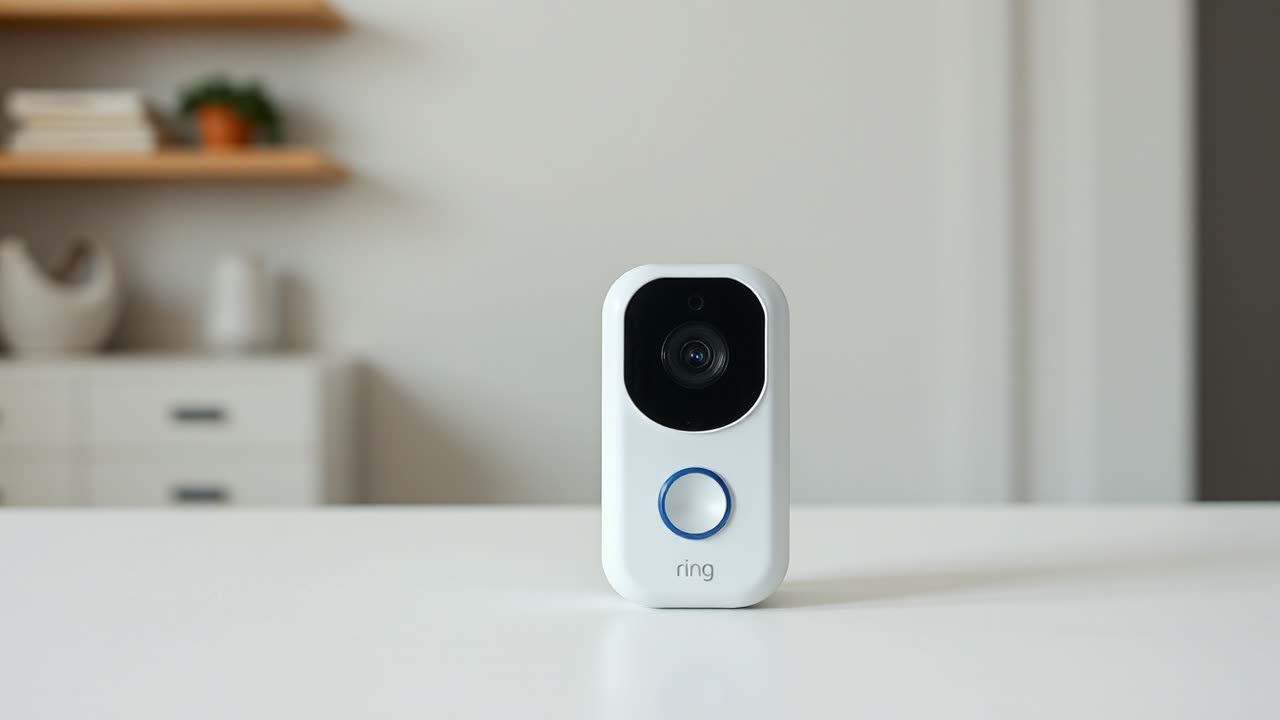
Ring, the Amazon-owned smart home security giant, has taken a significant step towards bolstering user privacy by implementing end-to-end encryption (E2EE) as the default standard for video recordings on its devices, a move that fundamentally reshapes how user data is handled and secured. This crucial update, initially rolled out as an opt-in feature in early 2022, now automatically encrypts video content from the moment it's captured until it reaches a user's device, making it inaccessible to Ring or any unauthorized third parties, even if intercepted. This shift comes in response to years of scrutiny over Ring's data practices, which previously saw video footage potentially viewable by Ring employees and accessible through unencrypted channels, raising significant alarm among privacy advocates and users alike.
The decision to make E2EE a default setting, rather than an optional toggle, is a critical inflection point for the smart home security industry. While Ring's data will still traverse its cloud infrastructure for processing, particularly for functionalities like smart home controls or motion detection, the content itself remains encrypted. Crucially, any data temporarily used for these purposes is now explicitly slated for deletion after its immediate utility, a policy aimed at minimizing persistent data footprints and mitigating the risk of data breaches or misuse. This addresses a core tension in smart home technology: the need for cloud processing to enable advanced features versus the imperative for user data privacy. By establishing E2EE as the baseline, Ring is effectively raising the bar for data protection, compelling rivals to re-evaluate their own default security postures.
The impact on users is profound. For years, the convenience of smart home security often came with implicit trade-offs in privacy, leaving many users uncertain about who could access their most sensitive recordings. With default E2EE, users gain an unprecedented level of assurance that their private moments, captured by their Ring cameras, remain truly private. This could significantly boost consumer confidence in Ring's ecosystem, potentially expanding its market reach to privacy-conscious demographics who previously shied away from connected cameras. Furthermore, it simplifies the user experience by removing the burden of actively enabling a critical security feature, ensuring that even less tech-savvy individuals benefit from the highest available protection. The deletion policy for operational data further reinforces this commitment, offering a clearer, more accountable framework for data lifecycle management.
Historically, Ring's privacy track record has been a point of contention. Prior to the introduction of E2EE, the company faced criticism for its collaboration with law enforcement, which allowed police to request user footage without a warrant, and for security vulnerabilities that exposed user data. The initial opt-in E2EE feature, while a step in the right direction, was criticized for its limited scope, only applying to select devices and requiring manual activation, leading to low adoption rates. This new default implementation represents a strategic pivot, moving from a reactive stance on privacy to a proactive, industry-leading position.
In comparison to rivals, Ring's move sets a new benchmark. While companies like Arlo and Google Nest have offered varying degrees of encryption, often with E2EE as an opt-in feature or limited to specific subscription tiers, Ring's *default* implementation across a broad range of its devices positions it at the forefront of consumer-grade smart home security. Arlo, for instance, offers optional E2EE for some cameras, but its general cloud storage relies on AES-256 bit encryption in transit and at rest, without the same end-to-end guarantee for all video streams. Google Nest cameras utilize secure boot, automatic security updates, and two-step verification, with video data encrypted during transmission to Google's cloud and while stored. However, the explicit default E2EE from device to user, coupled with the immediate deletion of processing data, distinguishes Ring's current offering. This move puts pressure on competitors to follow suit, potentially accelerating a broader industry shift towards more robust, default privacy protections.
Looking ahead, this development will likely catalyze further innovation in privacy-preserving smart home technologies. We can anticipate a renewed focus on on-device processing and edge computing to minimize reliance on cloud data transmission for sensitive tasks, further reducing privacy risks. The industry may also see increased demand for transparent data policies and independent audits to verify claims of E2EE and data deletion. For Ring, this strategic enhancement of its privacy framework could pave the way for deeper integration into other Amazon services, provided the privacy guarantees remain steadfast. However, the true test will lie in the consistent enforcement of these new policies and Ring's ability to maintain user trust in an ever-evolving threat landscape. The era of optional privacy in smart homes is drawing to a close, replaced by an expectation of robust, default protections that empower users and redefine the contours of digital security.