Rivian's R3 and R4 Crossovers Signal Aggressive Pivot to Mass Market Affordability
Rivian CEO RJ Scaringe confirms the upcoming R3 and R4 models will be 'materially lower' in price than the R2, marking a definitive strategic shift towards the mainstream electric vehicle market.
✨ This content was summarized and interpreted by AI; it may contain errors — please verify accuracy with the original sources. Learn more
Listen to this story
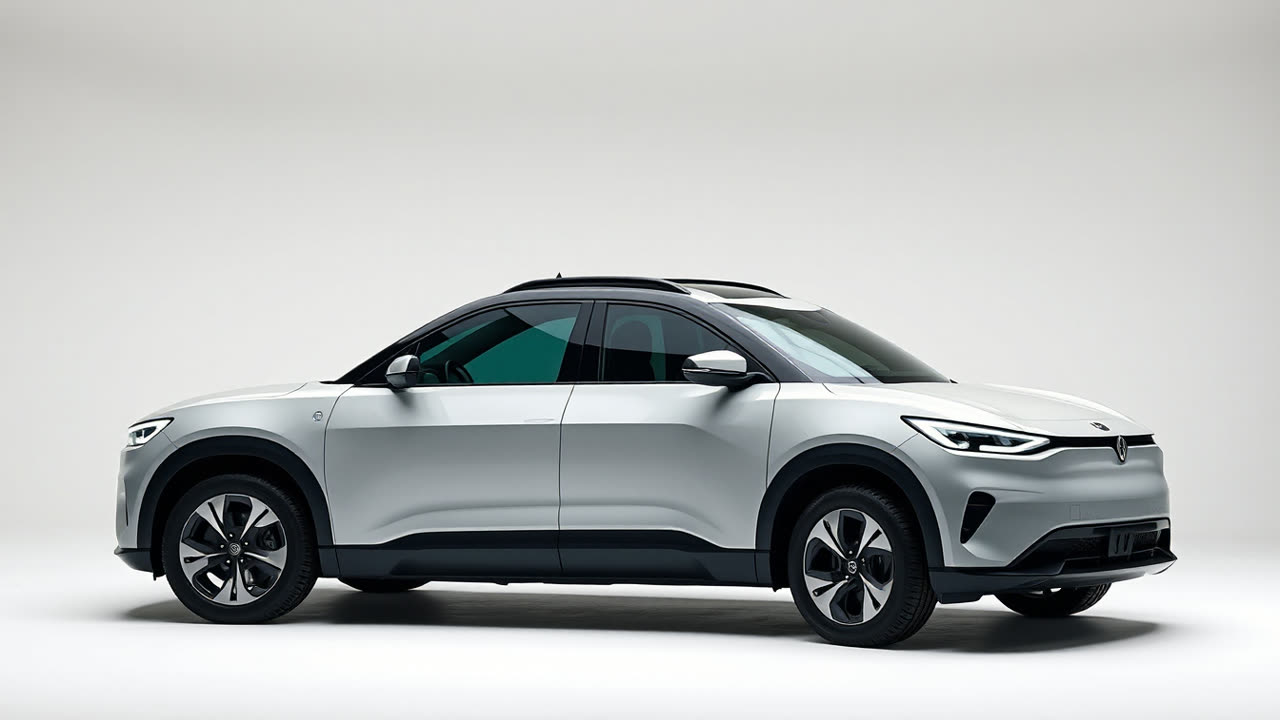
Rivian CEO RJ Scaringe's recent declaration that the upcoming R3 crossover will be "materially lower" in price than the R2, with a subsequent R4 model pushing affordability further, signals a profound strategic pivot for the electric vehicle manufacturer, moving aggressively into the mass-market segment. This shift is not merely about expanding product lines; it represents Rivian's definitive commitment to scaling production and capturing a broader consumer base beyond its initial luxury adventure niche, potentially reshaping the competitive landscape of mainstream EVs.
The R2, unveiled earlier this year, is already slated to start at approximately $45,000, a significant reduction from the R1S SUV's $75,000 base price. Scaringe's assertion implies the R3 could realistically target a starting price point closer to the low $40,000s or even upper $30,000s, with the R4 potentially dipping below the $35,000 mark. Such pricing would place the R3 and R4 in direct contention with established and anticipated volume sellers like the Tesla Model Y, which currently starts around $44,990, and upcoming models such as the Chevrolet Equinox EV (expected to start around $34,995) and potentially a rumored cheaper Tesla model. This aggressive pricing strategy is crucial for Rivian, which has faced significant financial pressures, including substantial quarterly losses and the need to achieve profitability through increased production volumes and economies of scale. The company reported a net loss of $1.45 billion in the first quarter of 2024, despite delivering 13,588 vehicles.
For consumers, this move promises greater accessibility to Rivian's distinctive design language and adventure-oriented ethos. The R3, described as a compact crossover, and the R3X, its more rugged variant, share the R2’s new mid-size platform, featuring a structural battery pack and a new drive unit. This commonality is key to cost reduction through manufacturing efficiencies. The R2 is designed for production at Rivian's existing Normal, Illinois plant, streamlining the path to market without requiring the immediate completion of its planned Georgia factory, which has seen its construction paused. This strategic decision further underscores Rivian's focus on operational efficiency and cost control.
The impact on the industry is multifaceted. Firstly, it intensifies price competition in the rapidly expanding compact and mid-size EV SUV segments. As legacy automakers and new entrants vie for market share, Rivian's entry with more affordable, yet characteristically premium, offerings could force rivals to re-evaluate their own pricing and feature sets. Rivian's brand, built on a reputation for quality, performance, and outdoor lifestyle appeal, could pose a formidable challenge even at lower price points. Secondly, by leveraging a common platform across the R2, R3, and R4, Rivian is demonstrating a mature approach to product development, moving away from bespoke platforms for each model to a more scalable, cost-effective architecture. This is a critical step for any automaker aiming for high-volume production. The R2, for instance, is projected to begin deliveries in the first half of 2026, setting a relatively swift timeline for the subsequent R3 and R4 to follow.
Compared to the prior generation of R1T and R1S, the R2, R3, and R4 represent a fundamental shift from niche luxury to broader appeal. The R1 models, while critically acclaimed, were positioned at the higher end of the market, limiting their sales potential. The new lineup aims to democratize the Rivian experience, offering similar design aesthetics and technological prowess in more compact and affordable packages. The R2, for example, will offer up to 300 miles of range and a 0-60 mph acceleration in under 3.0 seconds, features that compete directly with premium EV offerings but at a significantly lower entry price. The R3 is expected to offer similar performance metrics within its smaller footprint, catering to urban and suburban drivers seeking efficiency and versatility.
Looking ahead, Rivian’s success hinges on its ability to execute this ambitious strategy effectively. Scaling production of the R2 at the Normal plant, followed by the seamless integration of R3 and R4 manufacturing, will be paramount. The company's prior struggles with production ramp-up for the R1 models and the EDV vans highlight the complexities of this challenge. However, the decision to postpone the Georgia plant and consolidate production in Illinois suggests a more focused and pragmatic approach to achieving scale. If Rivian can deliver on its promise of "materially lower" prices without compromising its brand identity or quality, it stands to significantly expand its market footprint and solidify its position as a major player in the evolving EV landscape. This strategic pivot towards affordability is not just about survival for Rivian; it's about claiming a substantial piece of the mainstream EV market and driving the broader adoption of electric vehicles. The aggressive pricing of the R3 and R4 could well be the catalyst Rivian needs to transition from a promising startup to a profitable, high-volume automaker.