Robbyant's LingBot-VLA 2.0: Open-Source AI for Universal Robot Control
Ant Group's Robbyant has open-sourced LingBot-VLA 2.0, a 6-billion-parameter Vision-Language-Action (VLA) foundation model designed to enable cross-embodiment robot manipulation and overcome real-world deployment challenges.
✨ This content was summarized and interpreted by AI; it may contain errors — please verify accuracy with the original sources. Learn more
Listen to this story
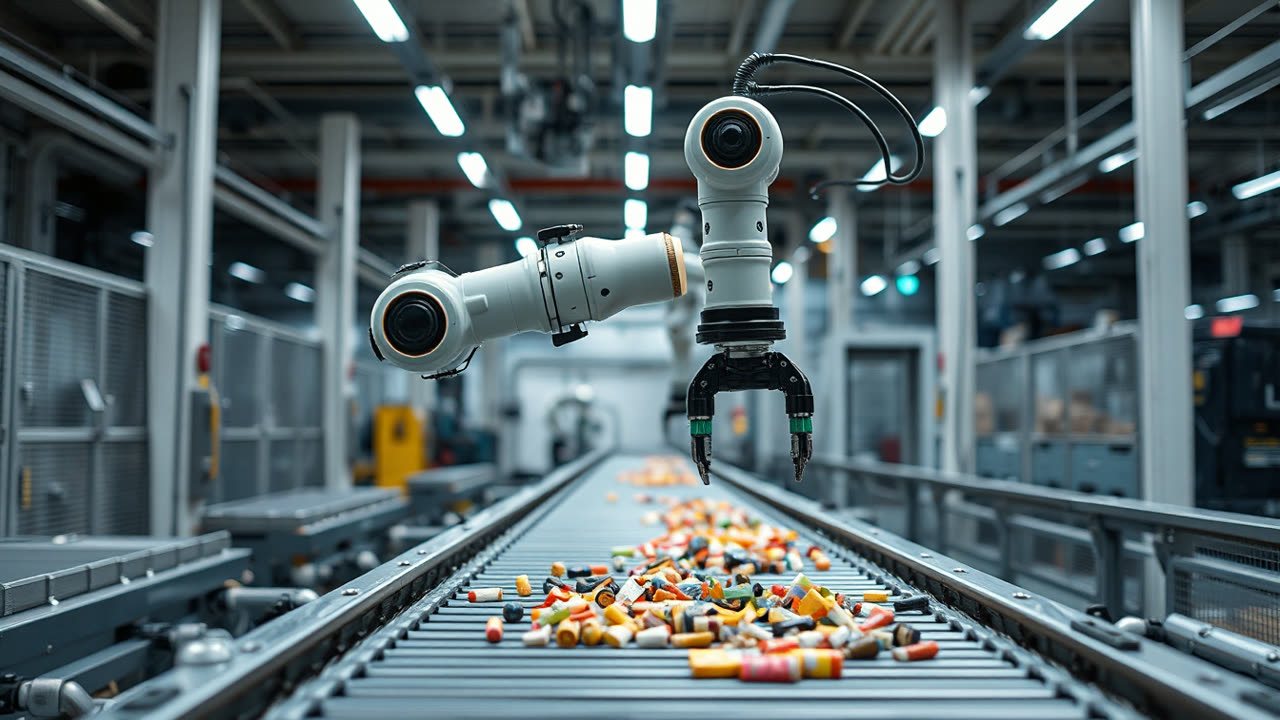
Ant Group's Robbyant has significantly advanced the field of embodied AI with the open-source release of LingBot-VLA 2.0, a 6-billion-parameter Vision-Language-Action (VLA) foundation model. This model is specifically designed for cross-embodiment robot manipulation and is released under an Apache-2.0 license, directly addressing the critical industry bottleneck of translating lab-based VLA model performance into practical, diverse real-world deployments.
LingBot-VLA 2.0 represents a substantial upgrade, featuring enhanced generalization, an expanded action space, and sophisticated predictive dynamics modeling. It was pre-trained on an immense dataset of approximately 60,000 hours of high-quality, real-world physical data, including robot trajectories from 20 distinct configurations across 17 manufacturers and egocentric human videos. This unified approach and massive, diverse training data are crucial because traditional robotics often requires bespoke software stacks for each machine, leading to high deployment costs and limited adaptability. LingBot-VLA 2.0 aims to mitigate this by offering a "universal brain" that can transfer skills across varied robot morphologies without extensive retraining. Its reported inference latency of under 130 milliseconds on an RTX 4090 further underscores its commercial viability.
This open-sourcing of such a powerful and versatile VLA model will undoubtedly accelerate research and development across the robotics community. It promises to foster a new era of more adaptable and cost-effective robotic solutions, making advanced automation more accessible for applications in retail sorting, logistics, and industrial automation, where it is currently undergoing pilot testing.