Robotaxi Regulatory Crackdown Halts Commercial Expansion Amid Safety Concerns
Escalating regulatory scrutiny and stricter operational limits are now directly impeding the commercial expansion of autonomous vehicle services in key urban markets, driven by high-profile safety incidents and eroded public trust.
✨ This content was summarized and interpreted by AI; it may contain errors — please verify accuracy with the original sources. Learn more
Listen to this story
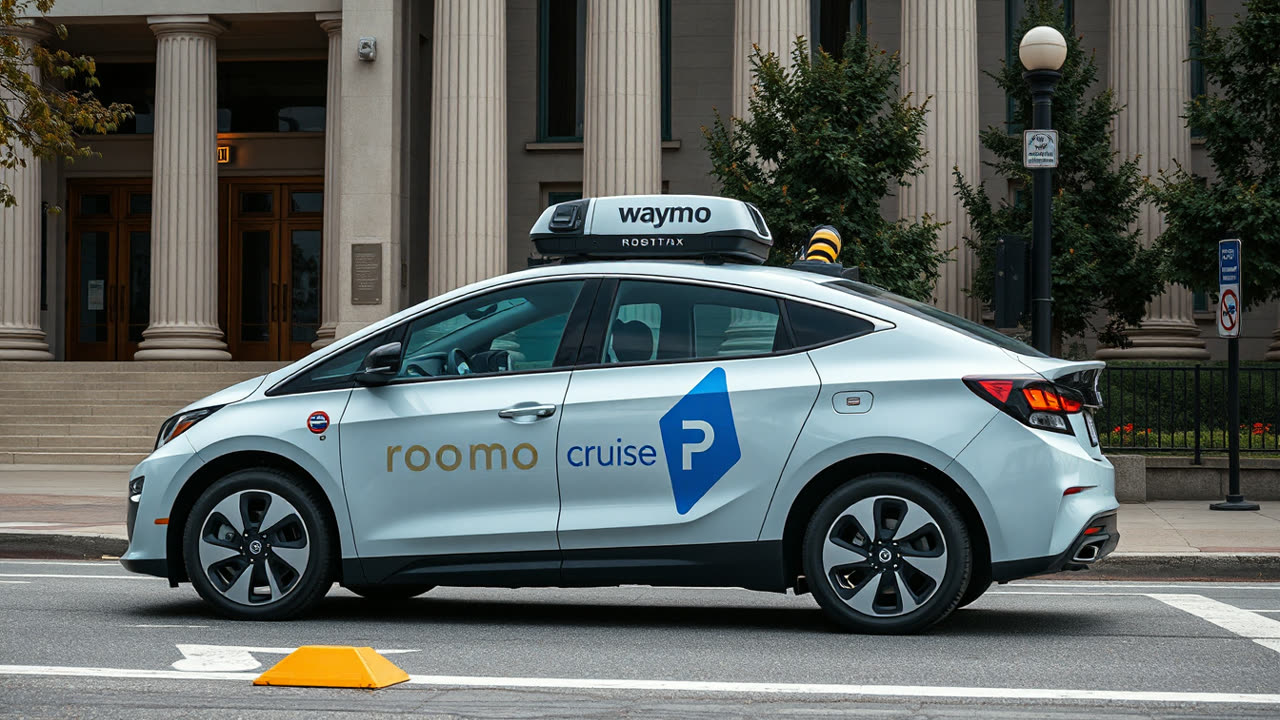
The escalating regulatory scrutiny over robotaxi operations, particularly concerning safety, is now directly impeding the commercial expansion of autonomous vehicle (AV) services in key urban markets. California’s Department of Motor Vehicles (DMV) and Public Utilities Commission (CPUC) have recently imposed stricter operational limitations on major players like Cruise and Waymo, following a series of high-profile incidents that have eroded public trust and intensified calls for more rigorous oversight. This crackdown signals a significant shift from earlier, more permissive testing environments, pushing the industry into a new phase where regulatory compliance and demonstrable safety records are paramount for market access.
The core of this regulatory battle lies in defining acceptable risk thresholds for Level 4 autonomous driving systems, which operate without human intervention in defined operational domains. Regulators are grappling with how to balance innovation and the potential societal benefits of AVs against immediate public safety concerns. For instance, debates in state legislatures across the U.S. are focusing on requiring human safety drivers even for commercially deployed robotaxis, mandating real-time data sharing with authorities, and establishing clear liability frameworks for accidents involving autonomous systems. The specific incident involving a Cruise robotaxi dragging a pedestrian in San Francisco in late 2023, which led to the suspension of Cruise’s driverless operations in California, starkly illustrated the consequences of perceived safety failures and the immediate regulatory backlash. This event galvanized opposition and provided concrete justification for regulatory bodies to re-evaluate their initial approvals.
This intensifying regulatory environment profoundly impacts both users and the industry. For users, the promise of ubiquitous, safer, and potentially more affordable autonomous transportation is being delayed. Public perception, already fragile, is further strained by each reported incident, making widespread adoption more challenging. The initial enthusiasm for robotaxis as a solution to urban congestion and a driver for accessibility is now tempered by a heightened sense of caution. For the industry, the implications are more severe. Increased regulatory hurdles translate directly into higher operational costs through additional testing requirements, mandatory human oversight, and potentially slower expansion into new markets. Investment certainty is also diminished as companies face unpredictable timelines for scaling their services. The fragmented regulatory landscape in the United States, with each state and sometimes even individual cities developing their own rules, creates a complex and costly compliance challenge, hindering a unified national deployment strategy. This risks stifling the very innovation that could ultimately lead to safer roads, as companies divert resources from technological development to navigate a bureaucratic maze.
Historically, autonomous vehicle development began with extensive testing permits, allowing companies to gather data and refine their technology in controlled environments. The current phase, however, involves the transition from testing to full commercial deployment, which demands a far higher standard of proven safety and operational reliability. This marks a critical departure from earlier, more experimental stages where regulators were often learning alongside the developers. Comparing the U.S. approach to other regions reveals a mixed bag. While some countries, like China, have shown a willingness to fast-track AV deployments in designated zones, often with strong governmental backing and less public friction, European nations generally adopt a more cautious, harmonized approach, emphasizing robust certification processes and data privacy. This difference in regulatory philosophy directly influences the pace of market penetration and technological evolution. Waymo, with its longer operational history and more conservative rollout strategy, appears to have navigated these challenges with relatively fewer public incidents compared to some rivals, though it is not immune to regulatory pressures.
Looking ahead, the trajectory for robotaxi regulation is likely to involve a period of increased harmonization, driven by the necessity of creating a clearer operational framework. Federal involvement in the U.S., potentially through the National Highway Traffic Safety Administration (NHTSA), could provide much-needed consistency, although this remains a politically complex endeavor. Companies will need to prioritize transparent data sharing and proactive engagement with regulators and the public to rebuild trust. The focus will shift from merely demonstrating technical capability to proving an exceptionally high safety record over extended periods and diverse conditions. This may necessitate a more phased approach to deployment, perhaps beginning with more geofenced, less complex environments and gradually expanding. The long-term viability of the robotaxi business model hinges on achieving economies of scale, which requires unfettered expansion. If regulatory obstacles continue to create a patchwork of limited operational zones, profitability will remain elusive, potentially consolidating the market around a few well-capitalized players who can absorb the high compliance costs. The ultimate "winner" in this regulatory battle will not be the companies or the regulators alone, but rather a carefully negotiated compromise that fosters innovation while unequivocally prioritizing public safety and accountability.