Roku's Deep Dive into Your Viewing Habits: The Pervasive Reach of ACR
Roku's Automatic Content Recognition (ACR) technology systematically collects vast user viewing data, including content from connected devices, transforming passive viewing into active data generation to fuel its lucrative advertising business and raising significant privacy concerns.
✨ This content was summarized and interpreted by AI; it may contain errors — please verify accuracy with the original sources. Learn more
Listen to this story
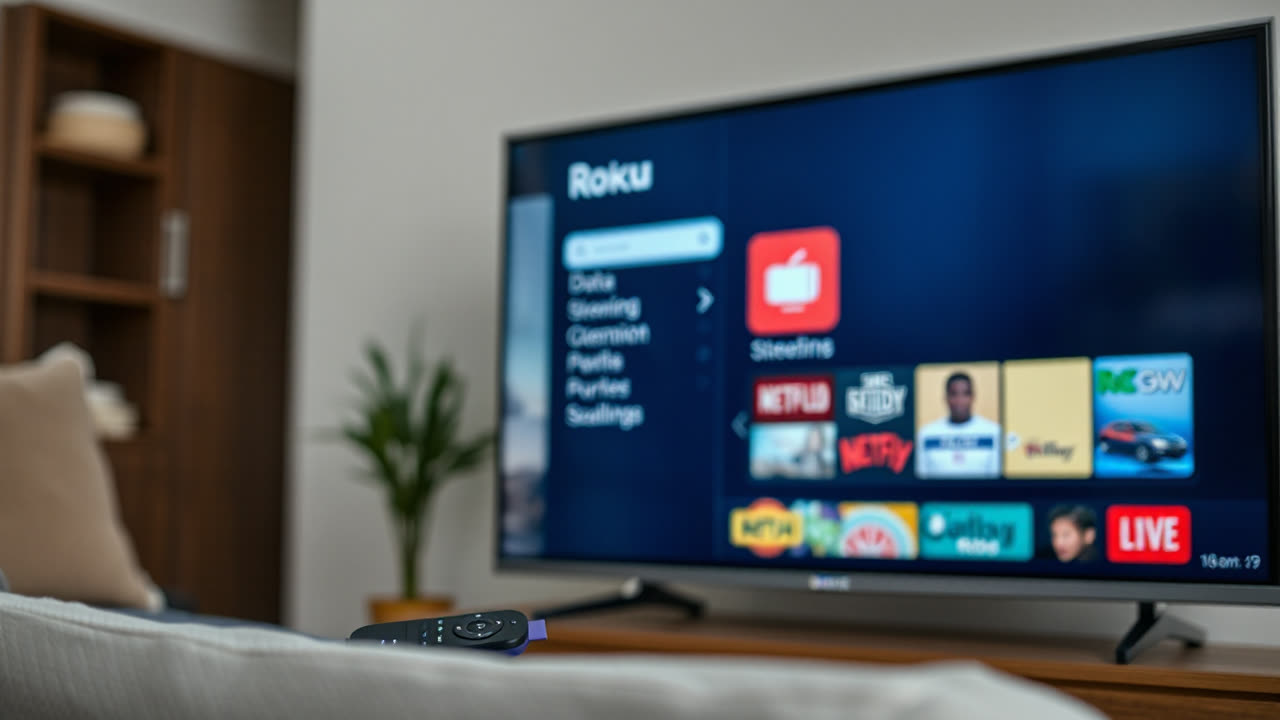
Roku, a dominant force in the streaming device market, systematically collects vast quantities of user viewing data, including every program watched, the duration, and even commercials viewed, through its Automatic Content Recognition (ACR) technology, a practice central to its advertising-driven business model. This granular data collection extends beyond the Roku interface itself, often encompassing content consumed via connected devices like gaming consoles and Blu-ray players, effectively turning the TV into a pervasive surveillance tool for marketing purposes. While Roku’s privacy policy outlines these practices, the depth and breadth of the data harvested—and the often-obscure methods to limit it—represent a significant and often unacknowledged compromise of user privacy, fundamentally reshaping the viewer experience from passive consumption to active data generation.
This extensive data harvesting matters because it underpins Roku’s strategic pivot from hardware sales to a highly lucrative advertising and content platform business, with its "Platform" segment generating the majority of the company's revenue—over $900 million in Q1 2024 alone, largely from advertising. For users, this translates into an increasingly personalized, yet potentially invasive, advertising experience. Every pause, rewind, and channel change feeds an algorithm designed to construct detailed user profiles, which are then monetized by serving highly targeted advertisements across the Roku ecosystem and beyond, often shared with a network of third-party advertisers and data brokers. The impact on the industry is profound: Roku's success in leveraging user data for advertising revenue pressures competitors like Amazon's Fire TV and Google TV to intensify their own data collection efforts, creating a "race to the bottom" in terms of user privacy as companies vie for ad dollars. This model also incentivizes content providers to partner with Roku, accepting data-sharing agreements in exchange for broader reach and sophisticated targeting capabilities, further entrenching the data-for-access paradigm.
Users do have options to mitigate some of this pervasive tracking, though they are often buried deep within settings menus and do not offer a complete opt-out. The primary method involves navigating to the "Privacy" settings on the Roku device, then to "Advertising," where users can enable "Limit Ad Tracking" (LAT) or "Reset Advertising Identifier." Activating LAT signals to advertisers that the user prefers not to receive targeted ads, although it does not stop data collection entirely; Roku explicitly states it will still collect data to "improve your experience and provide you with relevant content and services." Furthermore, users can disable the "Smart TV experience" under "Privacy > Smart TV experience," which is the core setting for ACR, preventing Roku from identifying content played from external inputs. However, disabling this feature may impact the functionality of universal search and content recommendations. Crucially, these settings apply only to the specific Roku device and account, meaning users with multiple devices or different streaming platforms must repeat the process. Compared to rivals, Roku's approach is often seen as more aggressive in its default data collection. While Amazon Fire TV and Google TV also rely heavily on advertising and collect user data, they tend to offer more prominent or, at least, similarly complex, privacy controls. Apple TV, conversely, is generally perceived as having a more privacy-centric model, with less reliance on ad-based monetization and more stringent data collection policies, though its market share is considerably smaller. The prior generation of streaming devices had a less sophisticated data infrastructure, with less emphasis on granular user profiling, but as the streaming wars intensified, the value of user data for targeted advertising became undeniable.
Looking ahead, the landscape of streaming privacy is poised for significant shifts driven by both consumer demand and escalating regulatory scrutiny. The increasing awareness among consumers regarding data privacy, fueled by high-profile data breaches and privacy-focused advocacy, will likely pressure Roku and its competitors to offer more transparent and easily accessible privacy controls. Legislations like the European Union's GDPR and the California Consumer Privacy Act (CCPA) have already set precedents for data protection, and it is highly probable that similar, even stricter, regulations will emerge globally, potentially mandating clearer opt-out mechanisms and greater control over data sharing. Roku might be compelled to evolve its business model, perhaps by introducing premium, ad-free tiers that genuinely respect user privacy, or by investing more heavily in contextual advertising that relies less on individual user profiles. The company could also face increasing pressure to provide clearer, more explicit consent mechanisms for ACR data collection, moving away from its current implicit consent through device usage. Ultimately, the future will likely see a delicate balance between the lucrative potential of personalized advertising and the growing imperative for user privacy, with regulatory bodies and informed consumers playing a critical role in shaping how streaming platforms collect, use, and protect our viewing habits.
FACTS: How to stop Roku from tracking everything you watch — Let's dive in to Roku's privacy policy to see what data is being collected from you -- and how to stop it. (kaynak: Engadget, https://www.engadget.com/2227777/roku-how-to-stop-tracking-everything-you-watch/)