RPCS3 Emulator Unlocks Direct PS3 Disc Play on PC, Revolutionizing Game Preservation
This landmark development allows PC users on Windows, Linux, and macOS to play PlayStation 3 games directly from physical discs, bypassing the need for cumbersome ISO ripping and fundamentally altering the landscape for game preservation and accessibility.
✨ This content was summarized and interpreted by AI; it may contain errors — please verify accuracy with the original sources. Learn more
Listen to this story
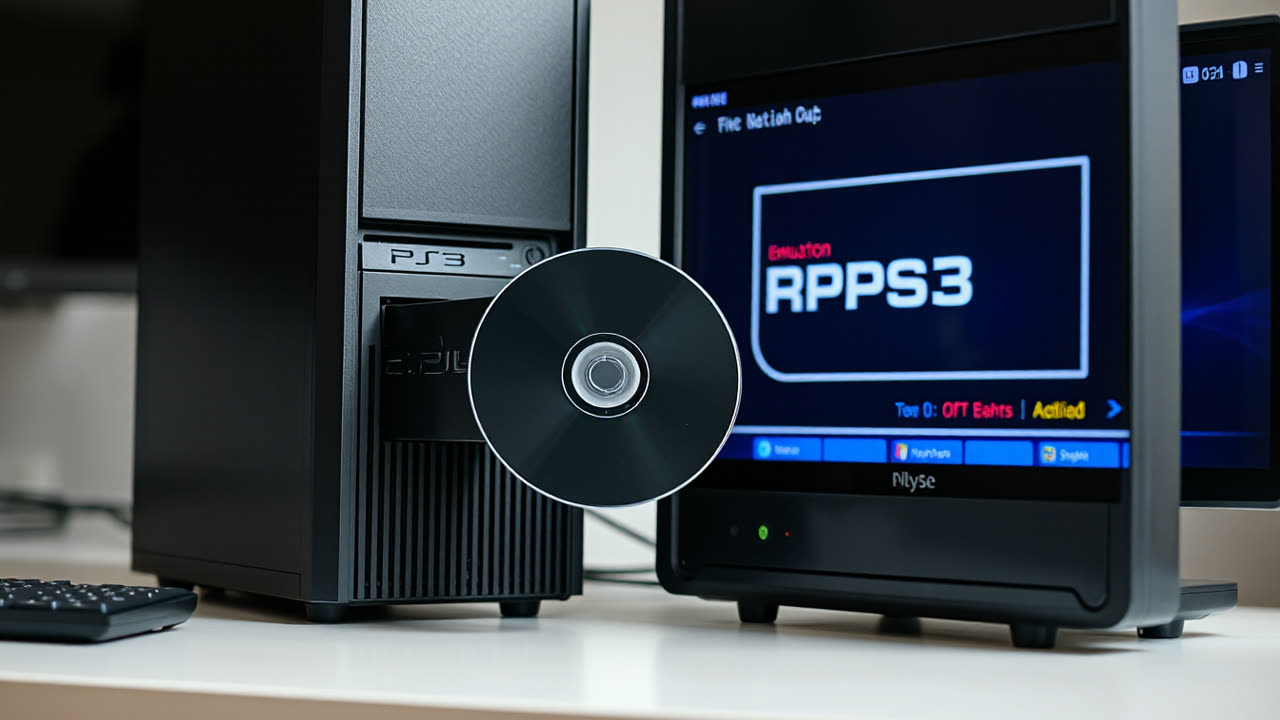
The RPCS3 emulator has achieved a landmark development, allowing PC users on Windows, Linux, and macOS to play PlayStation 3 games directly from physical discs, fundamentally altering the landscape for game preservation and accessibility for a console generation spanning nearly two decades. This capability, announced by the RPCS3 developers to their social media followers, streamlines the process of experiencing a vast library of titles, bypassing the previously required and often cumbersome step of ripping game data to an ISO file before emulation. The direct disc loading feature eliminates a significant barrier to entry, making the process as straightforward as inserting a disc into a compatible drive, mirroring the user experience of a native console.
This advancement holds profound implications for both users and the broader gaming industry. For players, it provides unprecedented access to a console generation renowned for its unique hardware architecture and exclusive titles, many of which are no longer available digitally or are difficult to run on aging hardware. It offers a crucial avenue for game preservation, ensuring that physical media, which might otherwise become obsolete as consoles fail, retains its utility. The ability to play directly from disc mitigates concerns about digital storefront closures, game delistings, and the inherent fragility of purely digital ownership. Furthermore, it empowers enthusiasts to build comprehensive digital libraries on their PCs without reliance on proprietary console ecosystems or the often-complex process of legally acquiring digital copies of older titles. The convenience factor alone is immense, eliminating the need for large storage allocations for ripped ISOs and simplifying the setup for casual users.
Historically, emulators like RPCS3 have required users to "dump" their physical game discs into digital ISO or folder formats on their hard drives before playback, a process that can be time-consuming and technically challenging for some. While other prominent emulators, such as PCSX2 for PlayStation 2 and Dolphin for GameCube/Wii, have offered direct disc loading for years, RPCS3's implementation is particularly significant due to the PS3's notoriously complex Cell Broadband Engine architecture. This architecture presented immense challenges for emulation, making every step of its development, including native disc support, a testament to the developers' perseverance and ingenuity. RPCS3 has steadily improved its compatibility and performance since its inception, moving from struggling with basic titles to now boasting over 60% of the PS3's vast library as "playable" or "perfectly playable," with more than 2,000 games achieving this status. This progress, coupled with hardware advancements in CPUs and GPUs, allows many PS3 classics to run at higher resolutions and frame rates than their original console counterparts, often surpassing 4K resolution and 60 frames per second on modern PCs.
Looking ahead, this development solidifies RPCS3's position as a leading force in console emulation and game preservation. Future updates will likely focus on further optimizing performance, expanding compatibility to the remaining challenging titles, and refining the user experience. The immediate impact will be a surge in interest from both long-time PS3 fans and new players discovering its library for the first time, potentially driving demand for physical PS3 games in the secondary market. This also highlights a critical ongoing debate within the industry regarding game preservation and the role of emulation. While console manufacturers have historically viewed emulation with skepticism due to copyright concerns, the increasing acknowledgment of its role in preserving gaming history is shifting perspectives. As digital storefronts continue to evolve and older hardware becomes more difficult to maintain, emulators like RPCS3 offer a vital, community-driven solution to ensure that gaming's rich past remains accessible. This landmark achievement for RPCS3 not only unlocks a treasure trove of games but also underscores the enduring power of physical media and the critical importance of open-source development in safeguarding digital heritage for future generations.