Samsung Launches Galaxy Buds On, Its First Clip-On Earbuds, Entering Open-Ear Market
Samsung has officially launched its first clip-on earbuds, the Galaxy Buds On, in South Korea, marking a significant strategic entry into the rapidly expanding open-ear audio market.
✨ This content was summarized and interpreted by AI; it may contain errors — please verify accuracy with the original sources. Learn more
Listen to this story
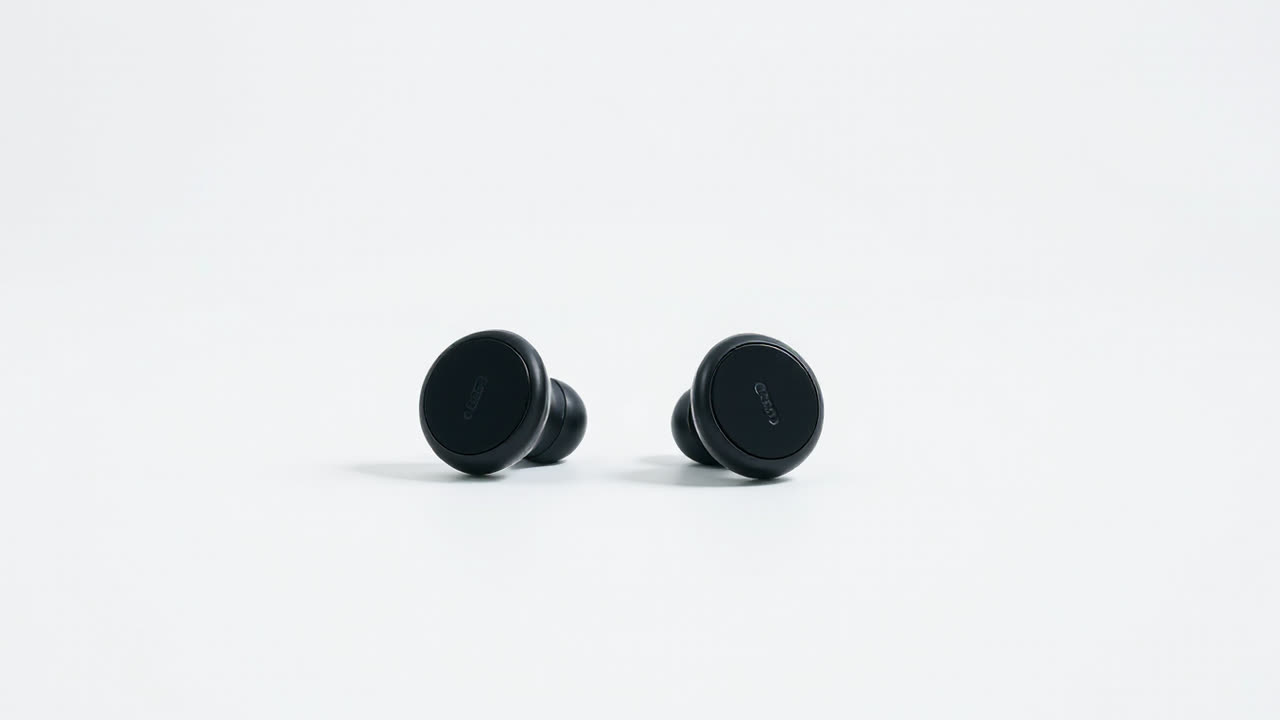
Samsung has officially launched its first clip-on earbuds, the Galaxy Buds On, in South Korea, marking a significant strategic entry into the rapidly expanding open-ear audio market. Available from October 27 at a price of KRW 299,000 (approximately $220), this debut signals Samsung's commitment to diversifying its wearable audio portfolio beyond traditional in-ear designs, with a global rollout anticipated to follow.
This move by Samsung is far more than just another product launch; it represents a calculated response to evolving consumer preferences and a validation of the open-ear form factor. Traditional in-ear earbuds, while offering superior sound isolation and often active noise cancellation, frequently lead to discomfort during extended wear, ear fatigue, and a critical lack of situational awareness, posing safety concerns for users in active or urban environments. The Galaxy Buds On directly addresses these pain points by employing an ergonomic clip-on design that leaves the ear canal unobstructed, allowing users to simultaneously enjoy audio and remain fully aware of their surroundings, whether during a morning run or while multitasking at home. This open design also offers hygiene benefits by reducing the trapped moisture and bacteria associated with in-ear models.
At its core, the Galaxy Buds On is powered by Qualcomm's Snapdragon S7 Gen 1 Sound Platform, complemented by a Class-D amplifier, promising up to 9.5 hours of continuous music playback on a single charge. A key technical challenge for open-ear designs is often a compromised bass response due to the lack of a sealed ear canal. Samsung aims to mitigate this with its proprietary TwinBoost speakers, engineered to improve low-frequency output. Furthermore, the earbuds integrate an automatic volume adjustment feature that dynamically recalibrates audio levels based on ambient environmental noise, ensuring a consistent listening experience. Privacy, another common concern with open-ear devices, is tackled through Audio Leakage Reduction technology, designed to minimize sound dispersion and prevent others from overhearing content in quiet settings like offices or libraries.
For communication, the Galaxy Buds On features a sophisticated triple-microphone array, a bone-conduction Voice Pickup Sensor, and machine learning algorithms that work in concert to isolate the user's voice from background noise, promising clearer calls even in challenging environments. Beyond audio, the earbuds are deeply integrated into Samsung's broader ecosystem, offering Galaxy AI features such as hands-free access to Gemini Live for real-time conversational assistance. Users can also record quick voice memos with a long-press gesture, which Bixby can later index for search retrieval. Intuitive head gestures allow for hands-free control, enabling users to accept or decline calls, dismiss alarms, and review notifications with simple head movements.
Samsung's foray into this segment highlights the burgeoning potential of open-ear audio. The global open-ear headphones market, valued at an estimated $2.38 billion in 2024, is projected to reach $7.65 billion by 2033, growing at a robust CAGR of 14.7%. Another analysis indicates a market size of $3.8 billion in 2025, expected to hit $9.6 billion by 2034 with a CAGR of 10.8%. This growth is particularly striking given that the overall wireless earbuds market experienced a 2% decline in the year leading up to Q2 2026, while open-ear earbud sales increased by 12% in the same period, now accounting for 13.5% of all true wireless stereo (TWS) product sales. Clip-on models, like the Galaxy Buds On, are leading this charge, making up 61% of open-ear sales.
The competitive landscape for open-ear earbuds is already populated by innovative players. Sony's LinkBuds, for instance, offer an open-ring design with IPX4 water resistance and up to 5.5 hours of earbud battery life, priced around $180-$230. Huawei's FreeClip, another clip-on option, boasts IP54 water resistance and up to 8 hours of playback, typically ranging from $146-$214. Shokz, a pioneer in open-ear technology, offers models like the OpenFit, which utilize air conduction, are ultra-lightweight, comfortable, and water-resistant, with prices generally between $199-$250. Bose also has a strong contender with its Ultra Open Earbuds. Samsung's entry, therefore, is into a segment with established, albeit fewer, competitors compared to the saturated in-ear market.
Looking ahead, Samsung's entry with the Galaxy Buds On is poised to intensify competition and accelerate innovation within the open-ear category. The integration of Galaxy AI capabilities, particularly Gemini Live, positions these earbuds not just as audio devices but as intelligent companions, aligning with the broader trend of AI-powered wearables. While the initial launch is limited to South Korea, the eventual global rollout will undoubtedly challenge existing players and could prompt more mainstream brands to explore similar designs. The success of the Galaxy Buds On will hinge on its ability to deliver on its promises of comfort, situational awareness, and audio quality, especially the effectiveness of its bass enhancement and leakage reduction technologies in real-world scenarios. The lack of specific global release dates and pricing details remains a crucial unknown, but Samsung's considerable market influence and distribution network suggest a strong potential to capture a significant share of this burgeoning market, further solidifying open-ear earbuds as a mainstream alternative in personal audio.