Samsung Re-Enters PC Market with Gaia AI Accelerator
Samsung's System LSI division is making a significant re-entry into the PC market with its Gaia AI accelerator, currently undergoing validation by HP and Lenovo.
✨ This content was summarized and interpreted by AI; it may contain errors — please verify accuracy with the original sources. Learn more
Listen to this story
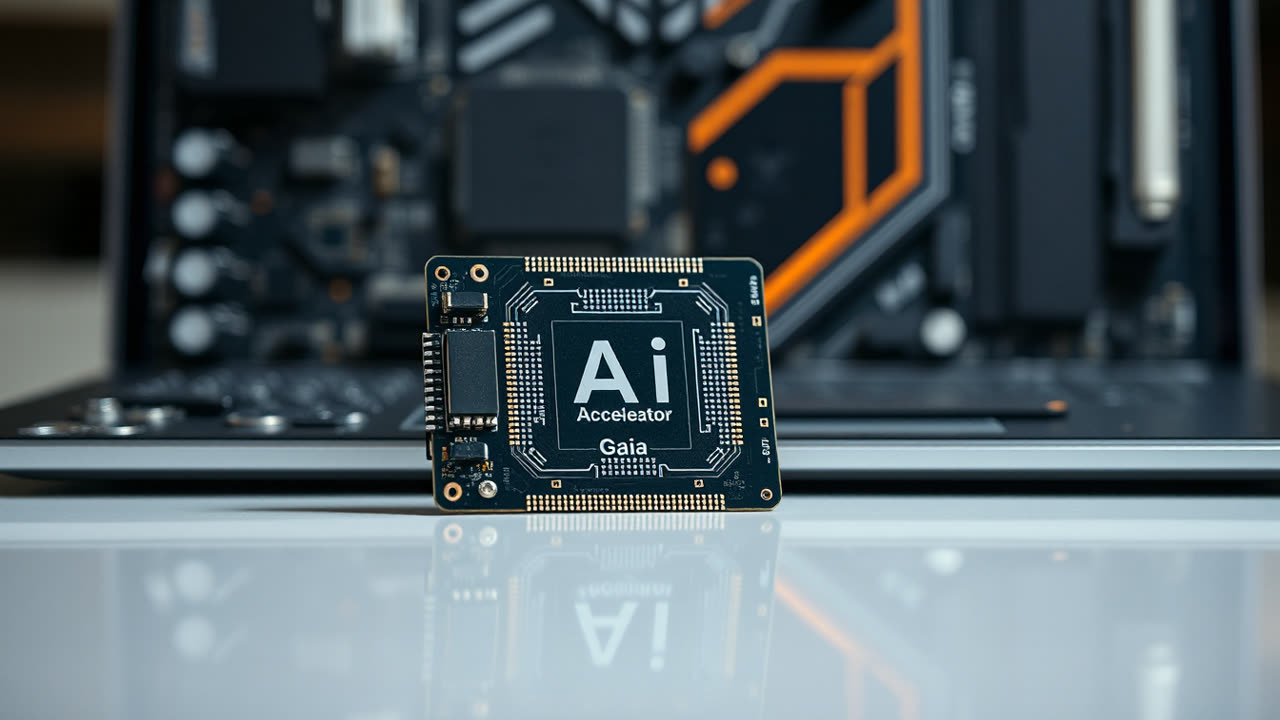
Samsung's System LSI division is making a significant re-entry into the PC market with its Gaia AI accelerator, a dedicated Neural Processing Unit (NPU) currently undergoing validation by industry giants HP and Lenovo. Developed on a 4nm fabrication process, Gaia is engineered to offload generative AI workloads from traditional CPUs and GPUs, positioning Samsung as a formidable new player in the rapidly expanding AI PC ecosystem. This move marks Samsung's return to the PC chip arena after more than a decade, with mass production anticipated as early as 2027.
The strategic importance of Gaia lies in its potential to enhance on-device AI capabilities, offering substantial benefits such as reduced latency, improved privacy by keeping data local, and offline functionality for critical AI tasks. By integrating an optimized NPU architecture, and potentially its next-generation Processing-in-Memory (PIM) technology, Gaia aims to deliver superior performance per watt for AI computations, distinguishing itself in a crowded market. This dedicated approach, rather than replacing the main processor, allows Gaia to function as a specialized companion chip, working in tandem with existing PC platforms to accelerate AI functions.
However, Samsung faces intense competition from established players like Intel, AMD, Qualcomm, and Nvidia, all vying for dominance in the AI PC segment. While the reported validation by HP and Lenovo is a strong indicator of market acceptance, Samsung's success will hinge on Gaia's ability to offer compelling performance advantages and seamless integration within diverse PC architectures. This aggressive push underscores the industry's belief that AI PCs represent the next major battleground for semiconductors, where the ability to deliver robust, efficient on-device AI will define the next generation of computing experiences.