Samsung's Galaxy H1 Over-Ear Headphones Poised to Challenge Apple and Sony in Premium Market
Samsung is set to disrupt the premium over-ear headphone market by early 2027 with its internally codenamed 'Galaxy H1,' a flagship wireless offering confirmed by leaked code strings, signaling an aggressive challenge to Apple and Sony that promises to complete its audio ecosystem and intensify innovation with deep Galaxy AI integration and high-resolution audio capabilities.
✨ This content was summarized and interpreted by AI; it may contain errors — please verify accuracy with the original sources. Learn more
Listen to this story
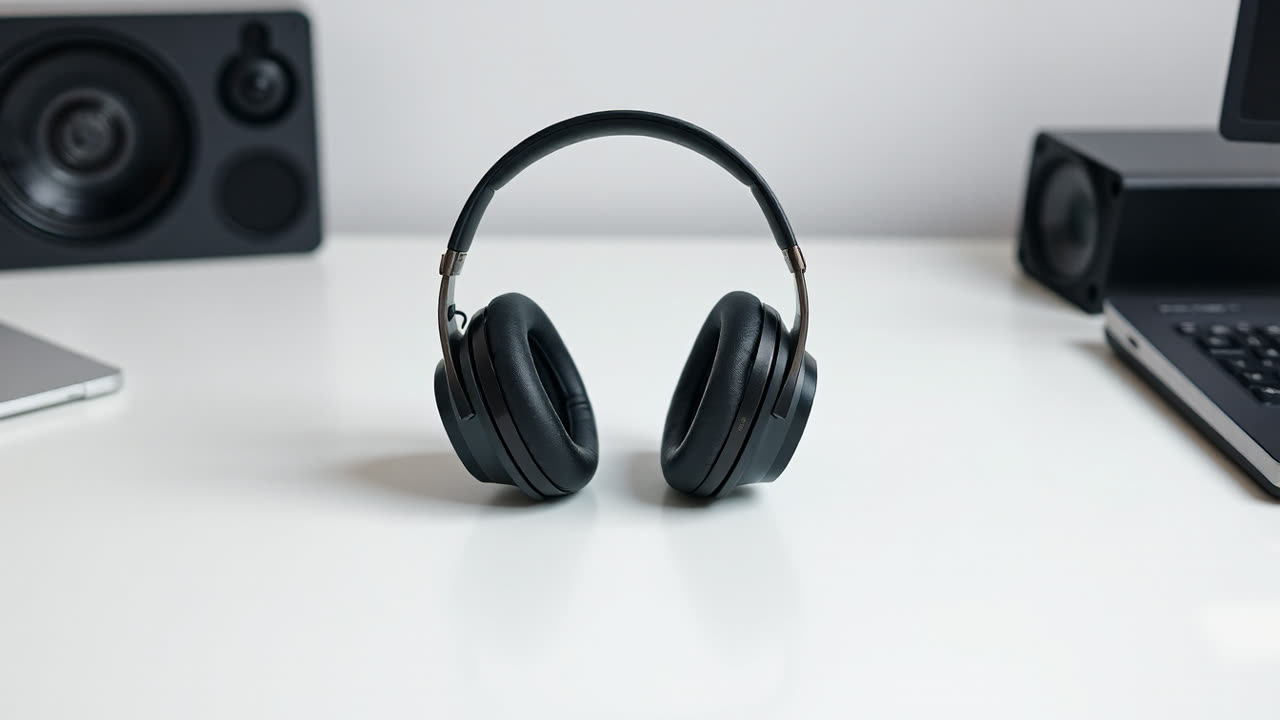
Samsung is poised to disrupt the premium over-ear headphone market with its internally codenamed "Galaxy H1," a flagship wireless offering expected to launch in early 2027. Leaked code strings and accompanying graphics within the Galaxy Wearable app confirm the South Korean giant's ambitious re-entry into a segment long dominated by Apple and Sony, signaling a strategic shift beyond its successful true wireless Galaxy Buds ecosystem. This move represents Samsung's first direct challenge under its primary mobile brand to established players, introducing a product that promises advanced features like Adaptive Noise Cancellation (ANC), Bluetooth 6.0 connectivity, Samsung Seamless Ultra-High Quality (SSC UHQ) audio, and deep Galaxy AI integration.
The significance of the Galaxy H1 extends far beyond merely offering another set of high-end headphones; it represents Samsung's concerted effort to complete its premium audio ecosystem and solidify its position against rivals. For users, particularly those deeply embedded in the Samsung Galaxy device universe, the H1 could deliver an unparalleled level of seamless integration and intelligent functionality. The rumored deep Galaxy AI integration suggests features that could dynamically adapt audio based on user context, environment, or even personal preferences, moving beyond the static ANC and ambient modes offered by current leaders. Furthermore, the inclusion of the SSC UHQ codec, theoretically capable of transmitting 24-bit/96 kHz audio at bitrates up to 2.3 Mbit/s, positions the H1 as a serious contender for audiophiles seeking high-resolution wireless playback, provided it can maintain stable connections and deliver on its lossless potential in real-world scenarios. This could elevate the listening experience for Galaxy smartphone and tablet owners, creating a compelling reason to stay within the Samsung hardware family.
From an industry perspective, Samsung's entry is a powerful validation of the premium over-ear segment and is set to intensify competition. While Sony has consistently innovated with its WH-1000XM series, including the recent WH-1000XM6 and rumored return of the WH-1000XM4, and Apple's AirPods Max continues to command a significant premium, the market has seen relatively conservative updates lately. Google, for instance, opted for fresh coats on existing earbuds at its latest Pixel 11 hardware showcase rather than ambitious new form factors. Samsung, however, appears ready to make a "bold, unexpected play," forcing competitors to accelerate their own innovation cycles, particularly in areas like AI-driven audio and deeper cross-device integration. The design cues, with a wide headband akin to the AirPods Max and thicker earcups reminiscent of the Sony WH-1000XM6, suggest Samsung is aiming directly for the aesthetic and comfort standards set by the current giants. By leveraging the acoustic pedigree of its subsidiary JBL, which already produces formidable over-ear options, Samsung possesses the internal expertise to craft a truly competitive audio product.
Samsung's previous audio strategy has primarily focused on its true wireless Galaxy Buds, which have seen several generations of refinement, including recent FDA clearance for hearing aid features on select models. The absence of a flagship over-ear product under the Galaxy brand has left a noticeable gap, allowing Apple and Sony to capture the high-end market. The Galaxy H1 fills this void, creating a comprehensive audio portfolio that can cater to a wider range of user preferences and use cases, from portable true wireless convenience to immersive, high-fidelity over-ear listening. The expected seamless multi-device Auto Switch support and extended battery performance are crucial table stakes in this segment, ensuring a fluid user experience across Samsung devices.
Looking ahead, the success of the Galaxy H1 will hinge on several critical factors beyond its rumored specifications. Pricing will be key; to truly compete with the AirPods Max, which sits at a premium tier, Samsung must strike a balance between perceived value and accessibility. Moreover, the efficacy of its ANC, the comfort of its design for prolonged wear, and the actual performance of the SSC UHQ codec will determine its appeal to discerning listeners. The true differentiator, however, may lie in the practical applications of its Galaxy AI integration. If Samsung can deliver genuinely useful, intuitive AI features that enhance the listening experience or productivity in ways rivals cannot, the Galaxy H1 could carve out a significant niche. This launch also sets the stage for a future where personal audio devices are not just about sound reproduction, but intelligent companions deeply integrated into our digital lives, constantly adapting and augmenting our auditory world. The early 2027 launch window suggests a carefully planned entry, giving Samsung ample time to refine the product and integrate it seamlessly into its broader Galaxy ecosystem, potentially alongside new smartphone and wearable releases.