SanDisk Optimus GX Pro 850P 2TB SSD: A Familiar PS5 SSD with a Stiff Premium Price
The SanDisk Optimus GX Pro 850P 2TB SSD, a rebadged version of the Western Digital Black SN850P, enters a mature market with high performance but a notably stiff premium, challenging consumers to justify its cost against increasingly competitive alternatives.
✨ This content was summarized and interpreted by AI; it may contain errors — please verify accuracy with the original sources. Learn more
Listen to this story
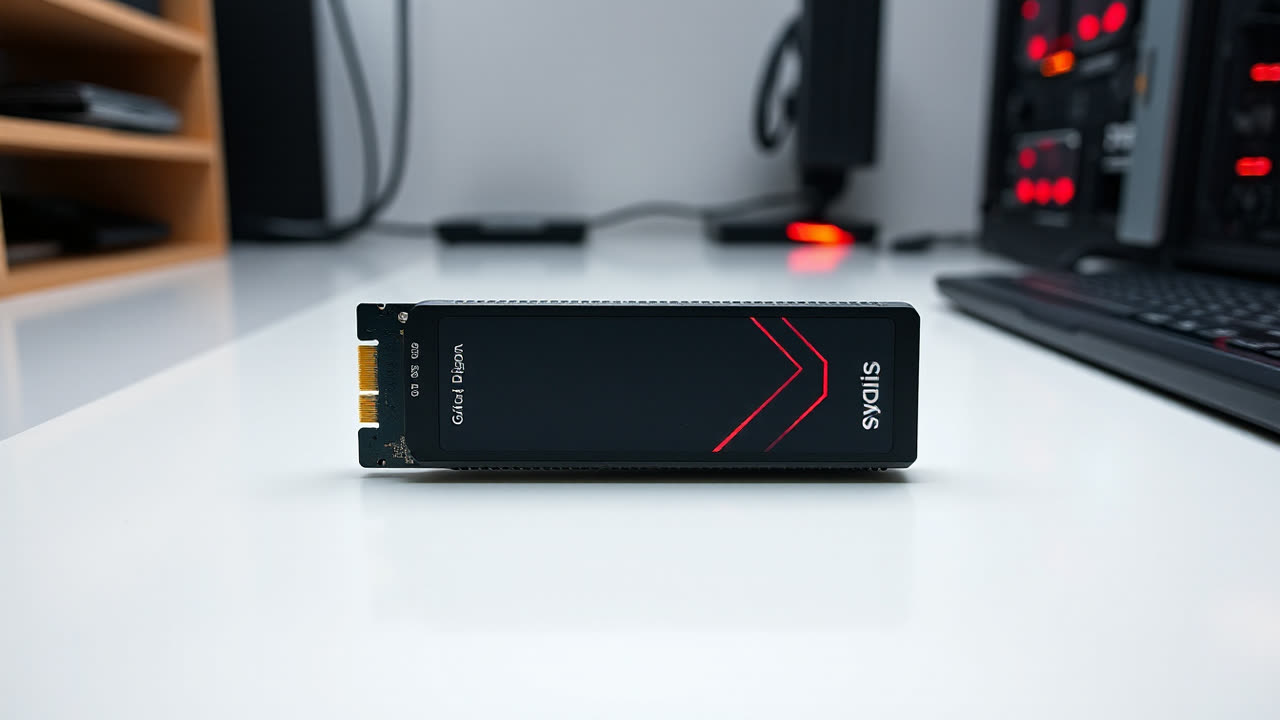
The SanDisk Optimus GX Pro 850P 2TB SSD, a rebadged version of the Western Digital Black SN850P, enters a mature market with high performance but a notably stiff premium, challenging consumers to justify its cost against increasingly competitive alternatives. This 2TB NVMe SSD, designed specifically with PlayStation 5 compatibility in mind, boasts sequential read speeds up to 7,300 MB/s and write speeds up to 6,600 MB/s, mirroring the established capabilities of its WD counterpart. Its random performance is equally robust, with up to 1,200K IOPS read and 1,100K IOPS write, ensuring rapid game loading and smooth system responsiveness. While these specifications easily surpass Sony's recommended 5,500 MB/s minimum for PS5 expansion, the core news is less about raw speed and more about strategic branding and pricing within the fiercely contested high-performance SSD segment.
The existence of the Optimus GX Pro 850P primarily highlights Western Digital's dual-brand strategy, leveraging the SanDisk name for retail presence while offering essentially identical hardware to its WD Black line. This approach, while not uncommon in the tech industry, raises questions about genuine differentiation and consumer value. For users, particularly PS5 owners, the "Optimus GX Pro 850P" offers the same reliable, high-speed expansion as the SN850P, including an integrated heatsink crucial for sustained performance in the console's thermal environment. However, the reported "stiff premium" means consumers are paying extra for a familiar brand name without necessarily gaining a performance edge or unique features over other top-tier drives. For instance, the 2TB model was noted to be priced higher than some of its direct rivals, which can make it a tougher sell in a market segment where price-per-gigabyte is a critical consideration for many.
This pricing strategy significantly impacts users, especially those looking to expand their PS5 storage. With the base PS5 offering a usable 667GB of internal storage, a 2TB expansion is highly desirable for modern game libraries. However, if the Optimus GX Pro 850P commands a premium over equally capable drives like the Samsung 990 Pro, Crucial T500, or even the original WD Black SN850, it forces consumers to either pay more for brand recognition or opt for more cost-effective alternatives. The industry consequence is a continued segmentation where brand loyalty might be tested against tangible value. While Western Digital benefits from broader market reach across its brands, the perceived lack of unique selling points for the SanDisk rebrand at a higher price point could dilute its competitive edge against other manufacturers who offer compelling performance at more aggressive price points.
Comparing the SanDisk Optimus GX Pro 850P to its rivals and predecessors underscores its position. The WD Black SN850P, its direct twin, itself improved upon the original SN850 by optimizing for PS5 compatibility, often including a pre-installed heatsink and slightly tweaked firmware for console use. This generation of PCIe Gen 4 SSDs, including contenders like the Samsung 990 Pro (up to 7,450 MB/s sequential read) and the Crucial T500 (up to 7,400 MB/s sequential read), represents the pinnacle of Gen 4 performance, consistently pushing near the interface's theoretical limits. The Optimus GX Pro 850P stands shoulder-to-shoulder with these top performers in terms of speed, proving its mettle for demanding applications beyond console gaming, such as high-end PC gaming, content creation, and professional workstations. However, the market has seen aggressive pricing from newer entrants and established brands alike, with some 2TB PCIe Gen 4 drives now available at significantly lower price points, albeit sometimes with slightly reduced endurance or different controller/NAND configurations. This intense competition means that merely matching performance is no longer enough; price and value proposition are paramount.
Looking ahead, the landscape for high-performance SSDs is poised for further evolution. While PCIe Gen 5 SSDs are already on the market, offering theoretical speeds up to double that of Gen 4 drives, their practical impact on current-generation consoles like the PS5 is nil, as the console only supports Gen 4. For PC users, Gen 5 remains a premium niche, limited by motherboard compatibility and the relatively few applications that can fully leverage such extreme bandwidth. Therefore, PCIe Gen 4 SSDs, like the Optimus GX Pro 850P, will remain the sweet spot for performance and value for the foreseeable future, especially for console expansion and mainstream PC builds. Price trends for NAND flash memory, which have seen fluctuations due to supply and demand, suggest a potential for continued price stability or even slight declines in the medium term, barring unforeseen global events. This could put further pressure on manufacturers to lower prices for existing Gen 4 drives, making the current premium of the Optimus GX Pro 850P even more difficult to sustain. Ultimately, while the SanDisk Optimus GX Pro 850P delivers unimpeachable performance in a mature, reliable package, its future success will hinge not just on its technical prowess, but on its ability to offer compelling value in an increasingly crowded and price-sensitive market.