SanDisk Xbox Series X|S Expansion Cards Launch, Challenging Seagate and WD
Five years after the Xbox Series X|S launch, SanDisk introduces its Optimus GX C50 expansion cards, finally bringing a direct competitor to Seagate and Western Digital in the proprietary storage market.
✨ This content was summarized and interpreted by AI; it may contain errors — please verify accuracy with the original sources. Learn more
Listen to this story
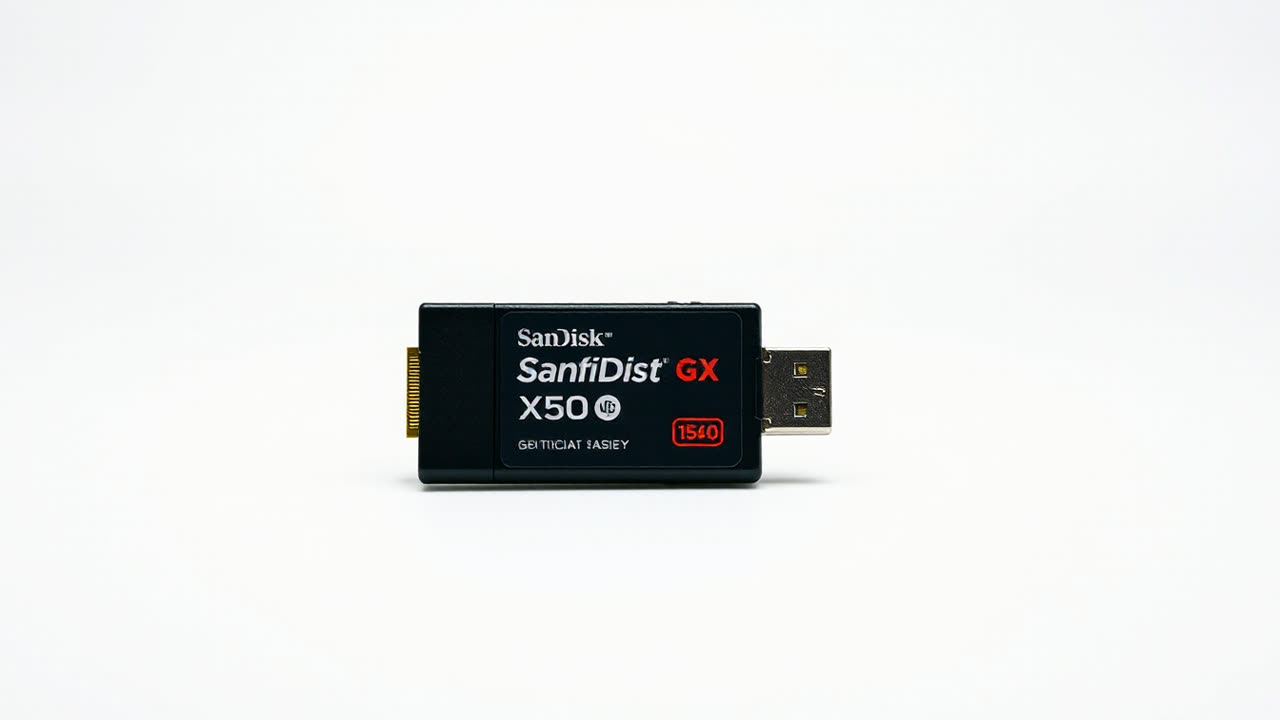
SanDisk's Optimus GX C50 expansion cards for the Xbox Series X|S are now available on Amazon, starting at $249.99 for the 1TB variant, finally introducing a direct competitor to Seagate and Western Digital in the proprietary storage expansion market five years after the consoles' launch. This long-awaited alternative marks a significant shift in the console accessory landscape, potentially disrupting a segment previously dominated by a single primary vendor and offering Xbox gamers more choice and, ultimately, better value.
The core issue driving the need for these specialized expansion cards lies in the Xbox Series X|S's architecture. Unlike previous console generations where external USB hard drives could directly play games, the current Xbox consoles require games optimized for the Velocity Architecture to be stored on an NVMe SSD that matches or exceeds the internal drive's performance. Generic external USB drives can only store and transfer these optimized titles, not play them directly, necessitating proprietary expansion cards for true plug-and-play functionality. Prior to SanDisk's entry, Seagate's Storage Expansion Card was the de facto, and often sole, solution, with Western Digital later offering its own licensed alternatives. For instance, the Seagate Storage Expansion Card for Xbox Series X|S, 1TB, currently retails for around $149.99 on Amazon, while a 2TB version can be found for approximately $279.99. Western Digital's Black C50 1TB expansion card, which launched in June 2023 at an MSRP of $179.99, is now often available for around $149.99. SanDisk’s initial pricing of $249.99 for 1TB, while higher than current Seagate and WD offerings, could indicate a premium positioning or an early adopter price point that is expected to adjust as competition intensifies.
The arrival of SanDisk, a well-established name in flash storage, injects crucial competition into a market segment that has historically been criticized for its high prices and limited vendor options. For users, this means a potential downward pressure on prices across all brands, making essential storage upgrades more accessible. Prior to this, the pricing of proprietary Xbox expansion cards was often seen as a barrier, forcing many gamers to meticulously manage their limited internal storage or resort to the slower process of transferring games to external USB drives for archival purposes. The increased competition also incentivizes innovation, potentially leading to future cards with improved thermal management, slightly better performance, or additional features, though the core specifications are largely dictated by Microsoft's Velocity Architecture requirements.
Comparing the SanDisk Optimus GX C50 to its rivals, the key differentiator will likely be subtle performance nuances, specific bundled software, or warranty terms, given that all licensed expansion cards must meet Microsoft's strict performance criteria to ensure seamless gameplay. The Xbox Series X|S launched in November 2020, and for nearly three years, Seagate held a near-monopoly on officially licensed expansion cards. Western Digital's entry in mid-2023 provided the first real alternative, and SanDisk's arrival now solidifies a competitive landscape. This gradual introduction of competitors highlights the complexity and licensing requirements involved in creating these proprietary solutions, which are essentially custom NVMe SSDs in a specific form factor, designed to match the internal SSD's 2.4 GB/s raw throughput for uncompressed assets.
Looking ahead, the expansion of vendor choice for Xbox Series X|S storage is a net positive for consumers. It is plausible that SanDisk will introduce 512GB and 2TB variants of the Optimus GX C50 to match the existing capacities offered by Seagate and WD, further diversifying the market. The long-term implications could extend beyond just pricing; a more vibrant competitive environment might encourage Microsoft to be more flexible with future storage solutions, perhaps exploring broader compatibility with standard M.2 NVMe SSDs for future console iterations, similar to the PlayStation 5's approach. However, given the deep integration of the Velocity Architecture with the current proprietary card design, a radical shift for the current generation is unlikely. Instead, expect a continued refinement of the existing model, with brands like SanDisk vying for market share through competitive pricing, promotional bundles, and strong brand recognition. The initial higher price point of the SanDisk 1TB card suggests a strategy to establish a premium presence, but sustained market pressure from Seagate and WD will likely force price adjustments, ultimately benefiting the Xbox gaming community with more affordable and diverse storage options.