SANY's Massive Electric Heavy Equipment Delivery Signals Global Shift, Outpacing North America
Chinese manufacturing giant SANY delivered 200 heavy-duty electric haul trucks and over 600 electric wheel loaders in a single month, marking a critical acceleration in industrial decarbonization that sharply contrasts with slower adoption rates in North America.
✨ This content was summarized and interpreted by AI; it may contain errors — please verify accuracy with the original sources. Learn more
Listen to this story
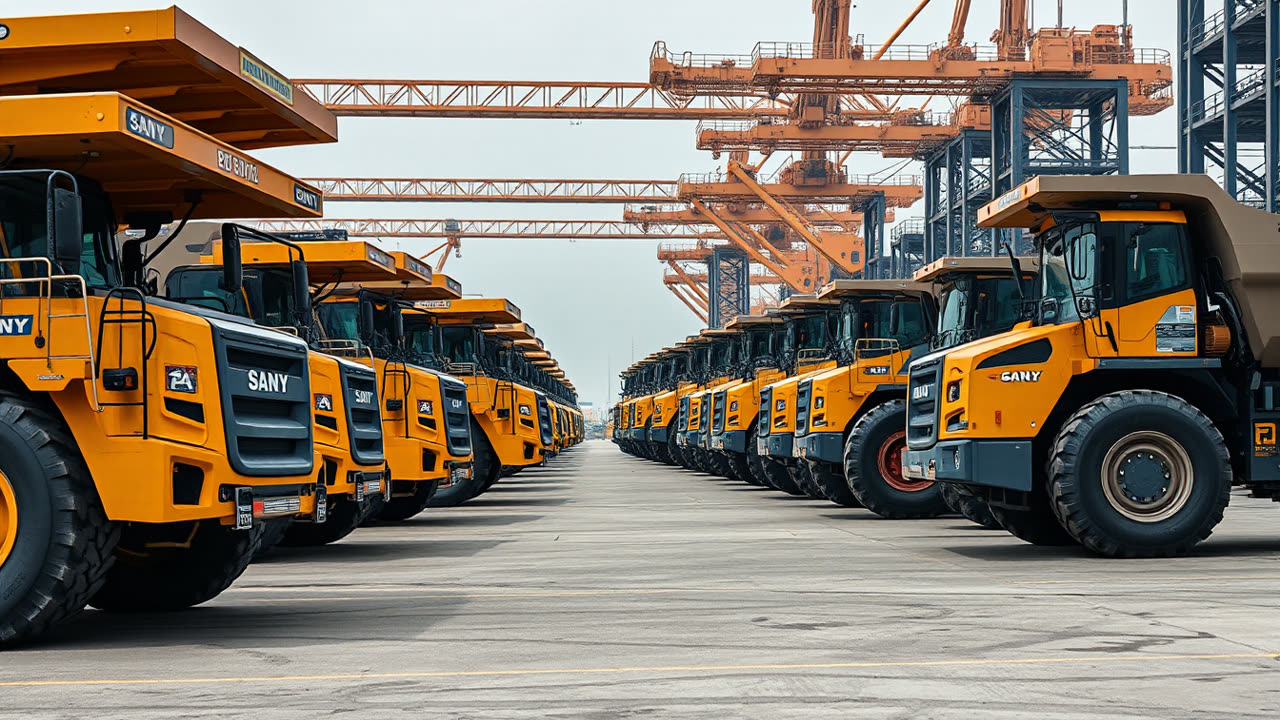
SANY's recent delivery of 200 heavy-duty electric haul trucks and over 600 electric wheel loaders in August 2026 underscores a rapidly accelerating global shift towards electrified heavy machinery, starkly contrasting with the slower adoption rates observed in North American fleets. This significant deployment by the Chinese manufacturing giant, detailed by Electrek, represents one of the largest single-month electric heavy equipment deliveries to date and signals a critical inflection point for industrial decarbonization.
The sheer scale of SANY's latest rollout is a powerful indicator of maturity in both electric vehicle technology for demanding industrial applications and the robust supply chains supporting it. For end-users in mining, construction, and logistics, the transition to electric heavy equipment promises substantial operational cost reductions. Electric powertrains typically boast fewer moving parts than their diesel counterparts, translating to significantly lower maintenance expenses and extended service intervals. Fuel costs, a perennial concern for heavy industry, are dramatically cut, with electricity often being cheaper and more stable in price than diesel. Beyond cost savings, these electric machines offer a quieter, zero-emission work environment, enhancing worker safety and comfort, particularly in enclosed spaces or noise-sensitive areas. The immediate torque delivery of electric motors also provides superior responsiveness and control, potentially improving productivity and reducing cycle times in demanding tasks like material handling and excavation.
This move by SANY, a global top-three construction machinery manufacturer by sales revenue, solidifies its aggressive strategy in the electric heavy equipment sector. While established Western players like Caterpillar, Komatsu, and Volvo Construction Equipment have also invested heavily in electrification, SANY, alongside other Chinese manufacturers such as XCMG and Zoomlion, appears to be leading in terms of production volume and market penetration, especially in the domestic Chinese market and emerging economies. Caterpillar, for instance, has introduced electric prototypes like the 793 electric mining truck and several battery-electric mini excavators and wheel loaders, with commercial availability expanding incrementally. Similarly, Komatsu has showcased electric excavators and autonomous haulage systems, emphasizing partnerships for battery technology and charging infrastructure. Volvo CE has been particularly active in smaller electric construction equipment, aiming for a significant portion of its sales to be electric by the end of the decade. However, SANY's latest figures suggest a more immediate and large-scale market deployment, leveraging China's advanced battery manufacturing capabilities and supportive industrial policies.
The disparity in adoption between regions like China and North America can be attributed to several factors. China's robust industrial policy, significant investments in charging infrastructure, and a concentrated domestic supply chain for batteries and electric components have fostered a fertile ground for rapid EV deployment across all sectors. Furthermore, stringent environmental regulations in Chinese urban and industrial zones often incentivize the adoption of zero-emission machinery. In contrast, North America faces challenges including a more fragmented regulatory landscape, slower development of heavy-duty charging infrastructure, higher initial capital expenditure concerns for fleets, and a less integrated supply chain for large-scale industrial EV components. The sheer scale and existing investment in diesel infrastructure also present a significant hurdle for rapid conversion.
Looking ahead, the trajectory is clear: electrification of heavy equipment will continue its rapid expansion globally. SANY's aggressive deliveries set a precedent that will likely pressure competitors to accelerate their own production and market strategies. We can anticipate further innovation in battery technology, focusing on higher energy density, faster charging capabilities, and improved thermal management for extreme operating conditions. The integration of advanced telematics, artificial intelligence, and autonomous operation will become standard, with electric powertrains simplifying the control systems required for automation. Hydrogen fuel cell technology will also emerge as a viable alternative for ultra-heavy-duty, long-range applications where battery weight and charging times remain prohibitive, with companies like Komatsu already exploring hydrogen solutions for mining trucks. However, challenges persist, including the development of robust, high-power charging infrastructure capable of supporting large fleets, the grid capacity to handle increased electricity demand, and the need for skilled technicians trained in electric vehicle maintenance and repair. SANY’s market moves demonstrate that the future of heavy industry is unequivocally electric, and the global race for dominance in this transformative sector is intensifying rapidly.