Saudi Arabia Unveils Ceer EXOBOT EVs, Accelerating Vision 2030 Automotive Ambitions
Saudi Arabia's new automotive brand Ceer has officially launched its flagship EXOBOT electric SUV and sedan, marking a significant stride in the Kingdom's Vision 2030 economic diversification strategy and establishing a domestic EV manufacturing industry.
✨ This content was summarized and interpreted by AI; it may contain errors — please verify accuracy with the original sources. Learn more
Listen to this story
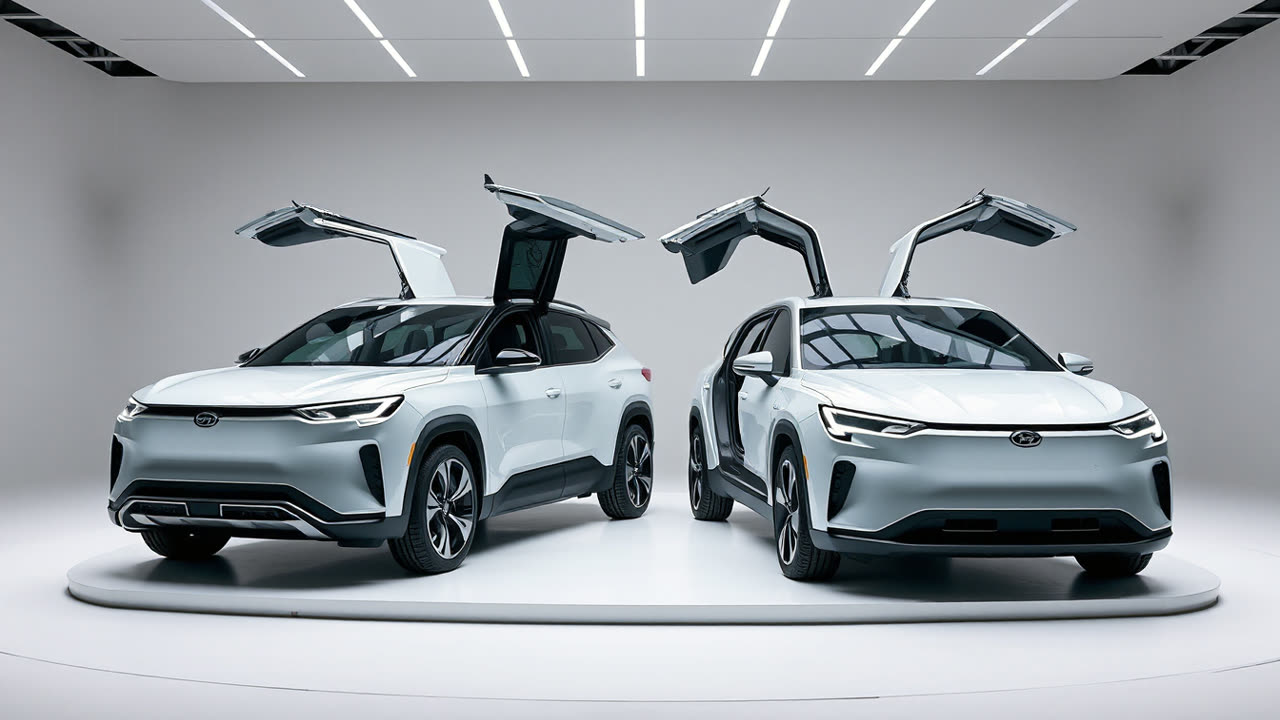
The unveiling of Ceer's EXOBOT electric SUV and sedan on Monday marks a pivotal moment for Saudi Arabia, signaling a determined acceleration in its ambitious Vision 2030 strategy to diversify the economy beyond oil and establish a formidable domestic automotive manufacturing industry. Crown Prince Mohammed bin Salman revealed the flagship EVs, positioning them as a testament to the Kingdom's burgeoning industrial capabilities and a significant step toward becoming a regional and global hub for advanced manufacturing.
The EXOBOT models, comprising a sleek sedan and a robust SUV, are the vanguard of a planned portfolio of seven vehicles Ceer intends to launch over the next five years, ranging from compact to midsize with diverse propulsion options. Both initial models boast impressive specifications: the EXOBOT sedan offers an estimated NEDC range of up to 670 km, while the SUV achieves up to 560 km, both capable of recharging from 10% to 80% in under 30 minutes thanks to their 800-volt electrical architecture. Power output for both models stands at 850 horsepower (625 kW), enabling the sedan to accelerate from 0 to 100 km/h in a swift 2.6 seconds, with the SUV following closely at 2.9 seconds. Top-spec EXOBOT models are projected to offer over 1100 bhp, achieve 0-62 mph in 2.1 seconds, and include features like steer-by-wire technology, rear-wheel steering, adaptive dual-chamber air suspension, and a striking 48-inch curved "Digital Horizon" display spanning the dashboard. The vehicles also feature distinctive "gullwing" doors and a pillar-less design, reminiscent of futuristic concepts.
This launch is not merely about new vehicles; it represents Saudi Arabia's strategic pivot towards an integrated, sustainable industrial ecosystem. Established in November 2022 as a joint venture between the Public Investment Fund (PIF) and Taiwanese electronics giant Foxconn, Ceer is more than just an automotive brand; it is a cornerstone of the Kingdom's economic transformation. The company leverages BMW Group's electric vehicle platform technology and powertrain components through a licensing agreement, while Foxconn provides the electrical architecture and manufacturing expertise. Further bolstering its supply chain, Ceer signed a $2.2 billion contract with Hyundai Transys in June 2024 for integrated electric vehicle drive systems and partnered with Croatian EV firm Rimac for rear motors. The vehicles are designed, engineered, and will be manufactured at the Ceer Manufacturing Complex (CMC) in King Abdullah Economic City (KAEC), a facility touted as the largest and one of the most technologically advanced automotive production sites in the Middle East. Commercial production is slated to begin in the fourth quarter of 2026, with initial deliveries expected before year-end 2026 for the First Edition sedan, followed by the Plus model in late 2027.
The impact on users and the industry is profound. For Saudi consumers, Ceer offers a homegrown luxury EV option, designed with local climate considerations and cultural aesthetics in mind. The focus on high performance and advanced technology positions EXOBOT to compete with established luxury EV brands, catering to a discerning market segment. From an industrial perspective, Ceer is projected to contribute over $8 billion (SAR 30 billion) to Saudi Arabia's GDP by 2034 and improve the trade balance by approximately $21 billion (SAR 80 billion), creating up to 30,000 direct and indirect job opportunities. This directly aligns with Vision 2030's goals of increasing non-oil exports and localizing industries, targeting 45% local content in its cars by 2034. The establishment of Ceer's manufacturing complex, alongside other investments like Lucid Motors' facility in KAEC, is transforming Saudi Arabia from a predominantly import-led automotive market into a burgeoning manufacturing ecosystem.
Compared to rivals, Ceer enters a fiercely competitive luxury EV market, projected to reach $221.51 billion in 2026, with SUVs and crossovers holding a significant 47.2% market share. While its 800-volt architecture and rapid charging times are competitive with premium offerings like the Porsche Taycan and Audi RS e-tron GT, which charge 10-80% in 18 minutes, Ceer still needs to prove its real-world range and build brand trust. The initial 850 hp output is impressive, though some luxury performance EVs like the Tesla Model X Plaid exceed 1,000 hp. Ceer differentiates itself by emphasizing a unique Saudi-inspired design and a strong commitment to local manufacturing, a narrative that resonates with national pride and economic diversification goals. Unlike the PIF's investment in Lucid Motors, where the fund holds a majority stake in an American company that has faced significant accumulated losses (over $15 billion by end of 2025 on a $9 billion investment), Ceer is a Saudi-owned brand built from the ground up, representing sovereign automotive capability.
Looking ahead, Ceer's trajectory will be closely watched. The company's plans to launch seven models over the next five years, including potential plug-in hybrids and combustion-engine models to adapt to market demand, indicate a flexible strategy beyond pure EVs. This broader approach could mitigate risks in a rapidly evolving market, especially as Chinese EV manufacturers intensify competition in the luxury segment. Success hinges not just on production targets, which have already seen a slight slip from an initial 2025 availability to Q4 2026, but on establishing reliable production, competitive pricing, extensive service coverage, and genuine consumer demand beyond initial domestic enthusiasm. The long-term vision includes expanding into surrounding Middle East and North Africa markets by 2028, with potential global sales by 2030. If Ceer can navigate these challenges, it will not only solidify Saudi Arabia's position as an automotive manufacturing powerhouse but also demonstrate a successful blueprint for industrial diversification in a post-oil economy.