ScrollEd Aims to Turn Textbooks into TikTok-like Feeds with AI at TechCrunch Disrupt
Palo Alto startup ScrollEd, founded by student spouses Utsav Gupta and Rebecca Neff, is pitching an AI-powered platform at TechCrunch Disrupt that converts static textbooks into dynamic, scrollable, social media-like learning feeds, integrating video, audio, and quizzes to engage Gen Z students.
✨ This content was summarized and interpreted by AI; it may contain errors — please verify accuracy with the original sources. Learn more
Listen to this story
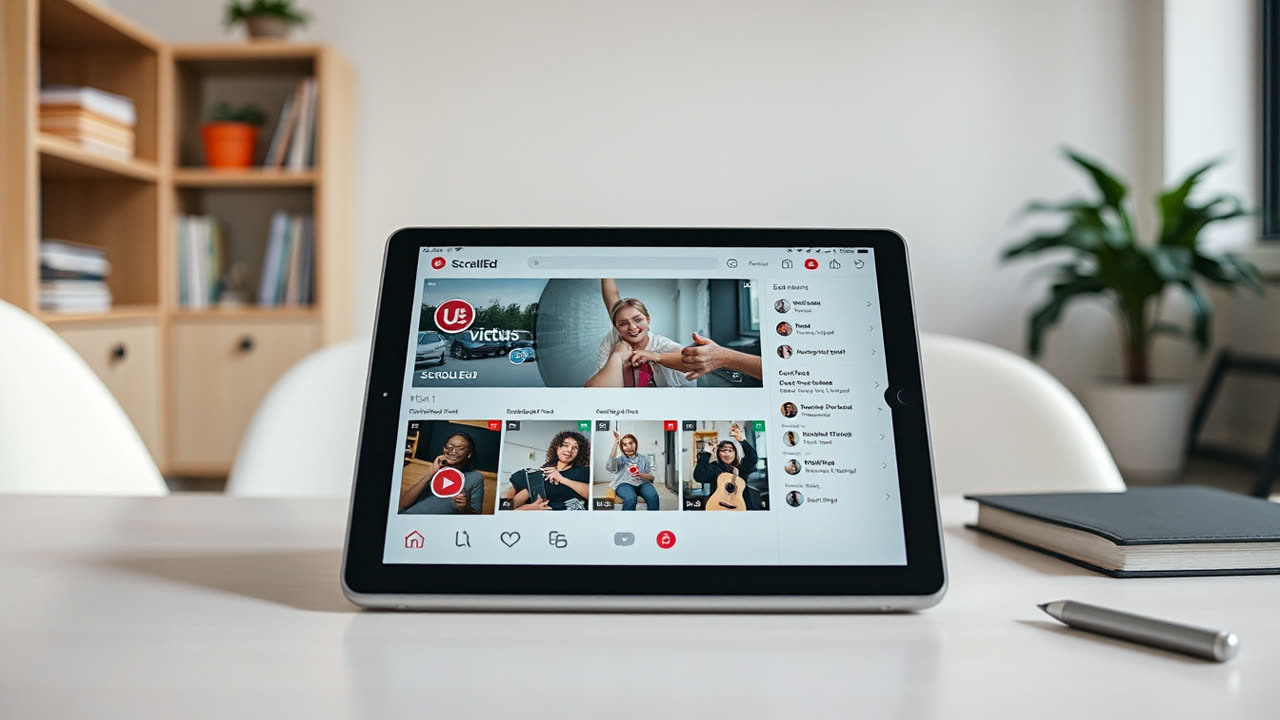
The Palo Alto startup ScrollEd, founded by student co-founders and spouses Utsav Gupta and Rebecca Neff, is pitching at TechCrunch Disrupt, aiming to revolutionize textbook learning by transforming static content into a dynamic, scrollable, Instagram-like feed. This innovative platform integrates video, audio, and quizzes directly into the learning experience, addressing the evolving study habits of Generation Z. ScrollEd's core offering is an AI-powered smart-scrolling technology that converts any text file, including PDFs and notes, into bite-sized learning cards, complete with AI summaries and auto-crafted checks for understanding for every section. The system also connects ideas into a guided path, ensuring students always know what to learn next, and supports learning in short, five-minute sessions.
This approach directly tackles the declining attention spans prevalent among Gen Z students, who have grown up with constant digital stimulation and short-form content. Research indicates that the average attention span of Gen Z is approximately eight seconds, four seconds shorter than millennials, largely due to their exposure to multiple screens and digital content. Furthermore, this generation, as the first true digital natives, prefers visual content, with 65% being visual learners, and expects instant feedback. Traditional textbooks often fail to meet these preferences, being perceived as monotonous and less engaging. ScrollEd's model, by mirroring the intuitive, rapid-fire consumption patterns of social media platforms like TikTok, could significantly boost engagement and motivation in academic settings, particularly for subjects involving practical skills, movement, or language learning.
The ed-tech market, projected to reach $236.25 billion in 2026 with an 18.3% CAGR, is ripe for such innovation, with AI-driven personalized learning systems and gamification being key trends. While digital textbooks have gained traction for their convenience and lower cost compared to traditional print books, they often introduce new distractions through notifications and can be challenging to navigate on small screens. ScrollEd attempts to mitigate these downsides by integrating multimedia directly into the content flow, making distractions part of the learning experience rather than external interruptions. The platform's ability to break down complex topics into digestible, interactive segments aligns with the growing emphasis on microlearning, where small, focused bursts of information enhance retention.
Compared to existing solutions, ScrollEd differentiates itself from basic e-textbooks that merely digitize content, often lacking interactive elements. While some e-textbooks include multimedia or quizzes, ScrollEd's unique "smart-scrolling" and AI-feed generation aims for a more seamless, social media-native experience. Adaptive learning platforms, a segment expected to exceed $5.2 billion in 2026, already tailor content to individual student needs and pace, often using AI. ScrollEd could be seen as an evolution within this adaptive learning space, specifically optimized for the consumption habits of younger learners. Other AI study companions, such as Scroll AI (not to be confused with ScrollEd), offer summarization and chatbot functions for uploaded materials, but ScrollEd's focus on a dynamic, scrollable, social media-like feed with embedded multimedia and quizzes seems to be a more comprehensive reimagining of the textbook format.
However, the efficacy of short-form video for deep learning remains a subject of ongoing debate. While studies suggest short-form videos can improve understanding and engagement, especially when teacher-made and integrated into structured learning environments, neuroscientists raise concerns about the "illusion of learning" from such formats. The brain's processing of information for academic retention typically requires sustained focus, which can conflict with habits formed by fast-paced, reward-driven social media platforms. Students themselves exhibit mixed perceptions, acknowledging creative possibilities but also expressing hesitation about TikTok's credibility as a platform for digital learning. This suggests that while ScrollEd's format may capture initial attention, its long-term impact on deep comprehension and critical thinking will be crucial for its sustained success and acceptance by educators.
Looking ahead, ScrollEd's success will hinge on its ability to balance engaging presentation with robust pedagogical effectiveness. As AI becomes mainstream in education and personalization becomes the norm, platforms that can measurably improve student outcomes will be prioritized. The global ed-tech market is shifting from rapid expansion to strategic consolidation, with a sharper focus on tools that reduce workload, tighten governance, and prove value. ScrollEd will need to demonstrate not just novelty but quantifiable improvements in learning retention and academic performance. This will likely involve integrating more sophisticated AI for truly adaptive content delivery, beyond just summaries and quizzes, perhaps even incorporating features that encourage deeper engagement and critical analysis, counteracting the superficial consumption often associated with social media. The startup's pitch at TechCrunch Disrupt, a major AI and technology conference running from October 13-15, 2026, in San Francisco, offers a significant platform to attract investment and partnerships, crucial for scaling and refining its technology. Furthermore, addressing concerns around data privacy and ensuring equitable access, especially given the "AI access gap" that could emerge, will be paramount for widespread adoption. If ScrollEd can prove its pedagogical value while maintaining its engaging format, it could indeed carve out a significant niche in the future of digital education, transforming how a generation learns from textbooks.