Seven-Year-Old Nvidia Shield TV Pro Sees $100 Price Hike, Signaling AI's Impact on Consumer Electronics
The unexpected $100 price increase for the long-standing Nvidia Shield TV Pro, pushing it to $299.99, highlights how the surging demand for memory components by the AI industry is driving up costs across the broader consumer electronics market.
✨ This content was summarized and interpreted by AI; it may contain errors — please verify accuracy with the original sources. Learn more
Listen to this story
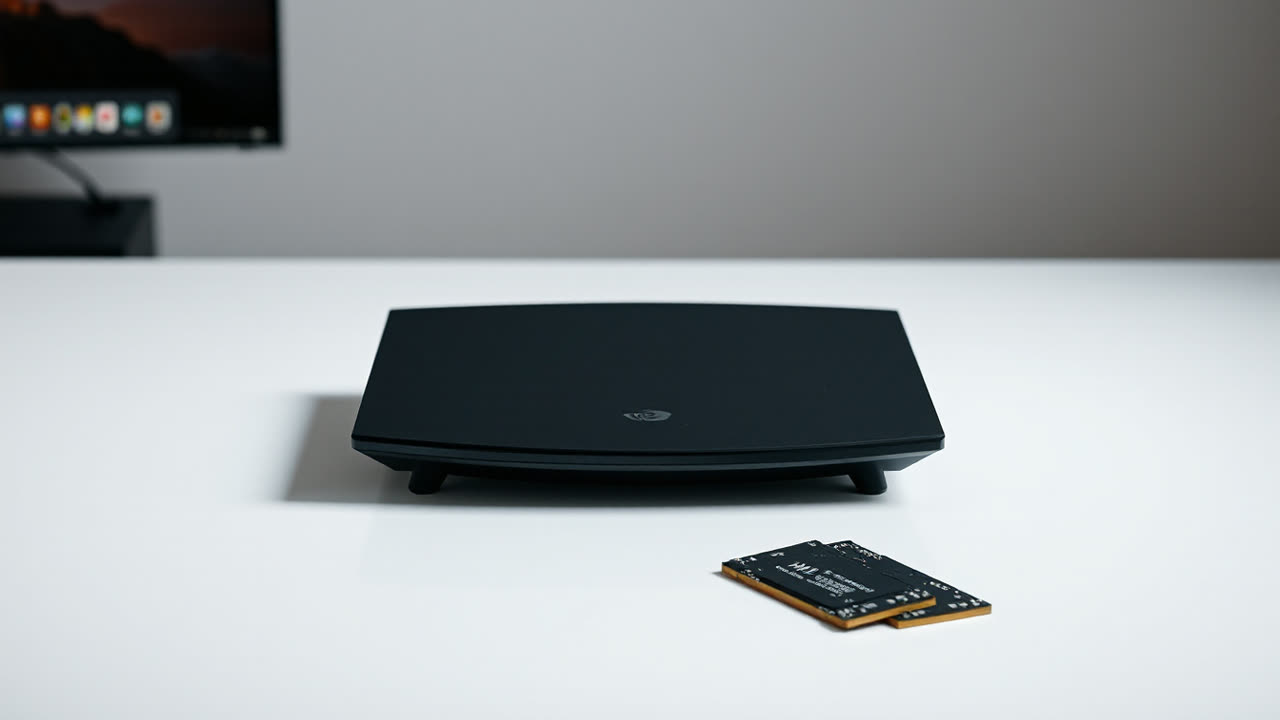
The seven-year-old Nvidia Shield TV Pro, a stalwart in the premium streaming device market, has seen its price surge by $100, reaching an unexpected $299.99. This significant increase for a device originally launched in 2015, and last refreshed in 2019, underscores a broader, unsettling trend in the consumer electronics industry: the escalating cost of memory components, directly fueled by the insatiable demands of artificial intelligence development. While the Shield TV Pro's longevity and robust feature set have historically justified its premium price, this latest adjustment fundamentally alters its value proposition and signals a challenging future for hardware manufacturers and consumers alike.
The core news is not merely a price adjustment but a stark reflection of economic forces reshaping tech manufacturing. The Nvidia Shield TV Pro, known for its powerful Tegra X1+ processor, 3GB of RAM, and 16GB of internal storage, has long been a favorite for power users, offering advanced features like 4K HDR streaming, AI-enhanced upscaling, and robust Plex server capabilities. Its enduring appeal has been its performance ceiling, often exceeding that of newer, cheaper rivals. However, the $100 increase, pushing it to nearly $300, positions it in a new, less competitive bracket, making it considerably more expensive than top-tier alternatives like the Apple TV 4K (starting around $129) or the Amazon Fire TV Cube (around $139.99), which offer comparable or superior streaming and smart home integration without the same price premium. This shift demands a re-evaluation of whether its niche features, such as local media server hosting and advanced gaming via GeForce Now, still warrant such a substantial investment from the average consumer.
This price hike matters immensely because it illustrates the profound, often invisible, impact of the AI boom on the broader tech supply chain. The burgeoning demand for high-bandwidth memory (HBM) and other advanced DRAM modules for AI accelerators and data centers has created a ripple effect, driving up prices for standard DRAM and NAND flash memory components used in everyday consumer devices. Industry analysts project significant increases in DRAM prices, with some forecasts suggesting a 15-20% rise in Q4 2024 alone, following earlier increases throughout the year. This isn't just about Nvidia; it's a systemic issue. Manufacturers of everything from smartphones and laptops to smart home devices and, indeed, streaming boxes, are facing higher bills for their essential components. For a company like Nvidia, which is simultaneously a major player in AI hardware and consumer devices, the decision to raise the Shield TV's price likely stems from a necessity to offset these rising material costs, rather than a strategy to extract more profit from an aging product. It suggests that the cost savings typically associated with mature product lines are being eroded by external market pressures.
The Nvidia Shield TV's remarkable seven-year run is a testament to its forward-thinking design and Nvidia's commitment to software updates, a rarity in the Android TV space. Its Tegra X1+ chip, while not cutting-edge by today's standards, still provides ample power for demanding applications and its AI upscaling engine remains a standout feature, enhancing lower-resolution content to near-4K quality. This longevity contrasts sharply with the typical two-to-three-year refresh cycles of most consumer electronics. However, the current price now puts it well above its most direct competitors. The latest Apple TV 4K, for instance, boasts the A15 Bionic chip, offering superior raw processing power and a more integrated ecosystem for Apple users, at a significantly lower entry price. Similarly, the Fire TV Cube combines streaming with an Echo speaker, adding voice assistant functionality and a robust app ecosystem. The Shield TV's unique selling points, such as game streaming through GeForce NOW and its versatility as a media server, now face a higher financial barrier for entry.
Looking ahead, this trend points to a future where affordable, feature-rich consumer electronics may become increasingly challenging to produce. If memory prices continue their upward trajectory due to AI demand, manufacturers will face difficult choices: absorb the costs, pass them onto consumers, or innovate with less memory-intensive designs. For Nvidia, the increased price of the Shield TV Pro might also signal a strategic shift, potentially clearing inventory or maintaining a "premium" perception without immediate plans for a successor in the same vein. Developing a new Shield TV that can compete on price while incorporating newer, more expensive components would be a significant engineering and financial challenge. Consumers, in turn, will need to weigh performance against cost more carefully, potentially settling for devices with fewer high-end features or accepting higher prices for the capabilities they desire. The era of consistently declining prices for advanced tech may be drawing to a close, at least for devices heavily reliant on the memory components now coveted by the AI industry.