SimpliSafe Launches Video Doorbell Series 2 with Human-Verified Proactive Monitoring
SimpliSafe's new Video Doorbell Series 2 integrates with Active Guard, enabling human security agents to proactively intervene at users' front doors, marking a significant leap in DIY home security.
✨ This content was summarized and interpreted by AI; it may contain errors — please verify accuracy with the original sources. Learn more
Listen to this story
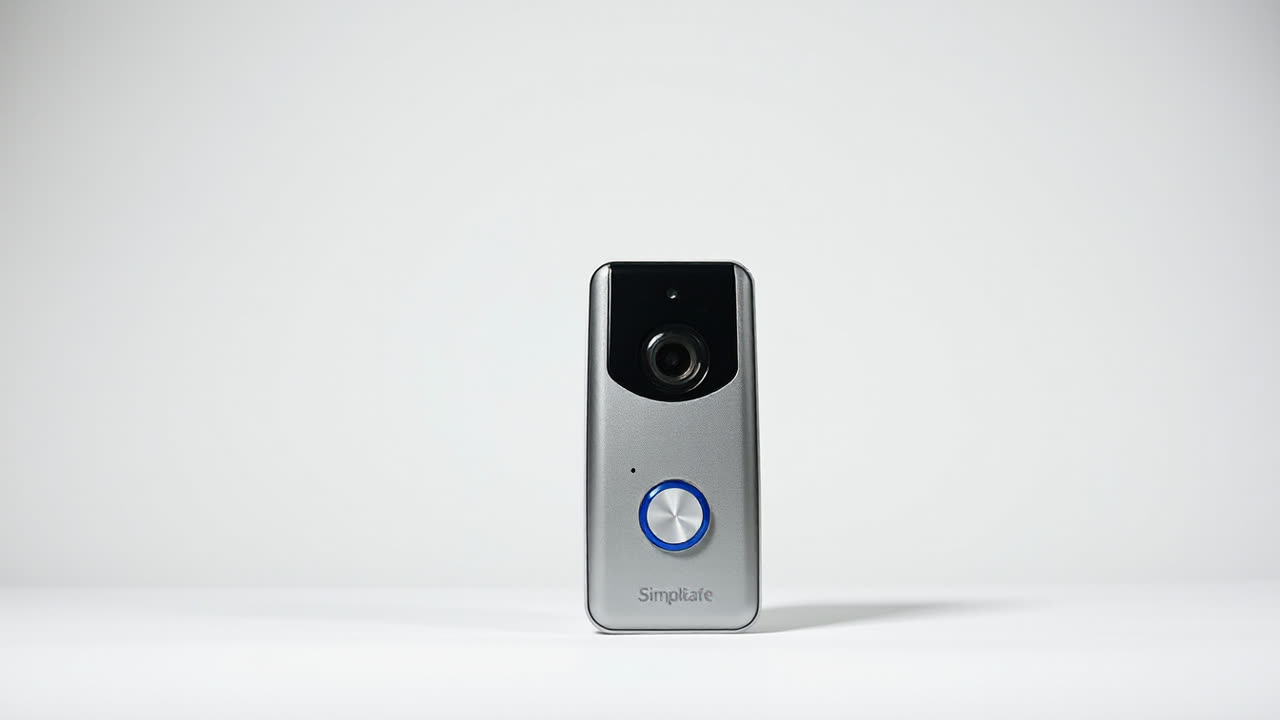
SimpliSafe has launched its Video Doorbell Series 2 for $199.99, integrating it with the company's Active Guard Outdoor Protection to enable human security guards to proactively monitor a user's front door. This new offering represents a significant evolution in the DIY home security landscape, moving beyond mere recording to active, human-verified intervention. The doorbell itself records in 2K resolution, providing an expanded head-to-toe view designed to capture both visitors and packages, a notable upgrade from the original Video Doorbell Pro's 1080p HD. It also features enhanced two-way audio and AI capabilities for detecting people and packages, with future updates planned for vehicle detection. Motion detection relies on both video analytics and passive infrared (PIR) technology, allowing for custom activity zones and sensitivity settings to minimize unwanted alerts.
This integration of AI-powered detection with live human monitoring fundamentally changes the promise of DIY security. Unlike systems that simply alert homeowners to an event or record footage after a crime has occurred, SimpliSafe's Active Guard allows US-based monitoring agents to intervene in real-time. If the doorbell's AI identifies a potential threat, and it doesn't match a pre-saved "Familiar Face," an agent can access the live feed, speak directly to the individual through the camera's enhanced speaker, activate a loud 90dB siren, and trigger a spotlight. This proactive deterrence aims to stop crime before it escalates, a capability SimpliSafe claims can see agents respond in under 30 seconds. While the Video Doorbell Series 2 can be enabled for Active Guard, it requires at least one Outdoor Security Camera Series 2 to be the primary camera for the service, connected to a continuous power source for optimal performance.
The impact on users is substantial, offering a higher tier of security that blends the affordability and ease of DIY installation with the responsiveness typically associated with traditional, professionally installed systems. For homeowners, this translates to enhanced peace of mind, knowing that a human is actively watching and ready to intervene, rather than just sending a notification to a smartphone. However, this advanced protection comes with a recurring cost: Active Guard Outdoor Protection is available through SimpliSafe's Pro ($49.99/month for overnight 8 p.m. to 6 a.m. local time coverage) or Pro Plus ($79.99/month for 24/7 coverage) monitoring plans. These costs are significantly higher than basic self-monitoring plans or even some professional monitoring services that lack direct human intervention through cameras. Users must also weigh potential privacy concerns associated with human monitoring of live video feeds, although SimpliSafe's AI-driven filtering and "Familiar Faces" feature aim to reduce unnecessary agent access.
Within the broader home security industry, SimpliSafe's move intensifies the competition in the rapidly expanding DIY market, which reached $5.9 billion in 2025 and is projected to hit $23.8 billion by 2034. Security cameras are the largest segment within this market, underscoring the importance of innovations in this area. SimpliSafe is directly challenging rivals like Deep Sentinel, which charges $100/month for outdoor camera monitoring, and Ring's Virtual Security Guard plan, which starts at $99/month for indoor and outdoor camera monitoring. SimpliSafe positions its Pro Plus plan at $79.99/month as a more cost-effective alternative for 24/7 human-verified outdoor protection. Other DIY giants like Ring and Arlo offer professional monitoring (e.g., Ring at $20/month, Arlo at $24.99/month), but these typically focus on alarm dispatch rather than direct human intervention via camera to deter intruders. Nest (Google) doorbells offer 2K resolution and AI features like "Familiar Faces" with a Nest Aware subscription, but do not currently emphasize active human intervention in the same way.
Looking ahead, the trajectory of home security is clearly shifting towards more proactive, AI-driven solutions with human verification. The limitations of human attention spans in monitoring multiple camera feeds make AI crucial for identifying anomalies and prioritizing alerts for human review. This "human-in-the-loop" approach, exemplified by SimpliSafe's Active Guard, aims to reduce false alarms while ensuring a rapid, intelligent response to genuine threats. The DIY security market will likely see further advancements in AI capabilities, including more sophisticated object recognition (like the upcoming vehicle detection for SimpliSafe) and predictive surveillance that anticipates risks. As edge computing and 5G integration become more prevalent, camera systems will process data locally for faster response times and improved privacy. SimpliSafe's latest doorbell, therefore, isn't just a product launch; it's a strategic move that signals a future where DIY home security systems are not only accessible and affordable but also capable of delivering a level of proactive, intelligent protection once reserved for high-end, traditional security services. The ongoing challenge will be to balance advanced features and human oversight with user privacy expectations and competitive pricing models, as the market continues its robust growth.