Siri AI in iOS 27: The Era of Waitlists for Advanced AI Features
The anticipated waitlist for Siri AI in iOS 27 signals a profound shift in how advanced artificial intelligence is integrated and deployed on consumer devices, reflecting the immense computational and infrastructure hurdles even for a tech giant like Apple.
✨ This content was summarized and interpreted by AI; it may contain errors — please verify accuracy with the original sources. Learn more
Listen to this story
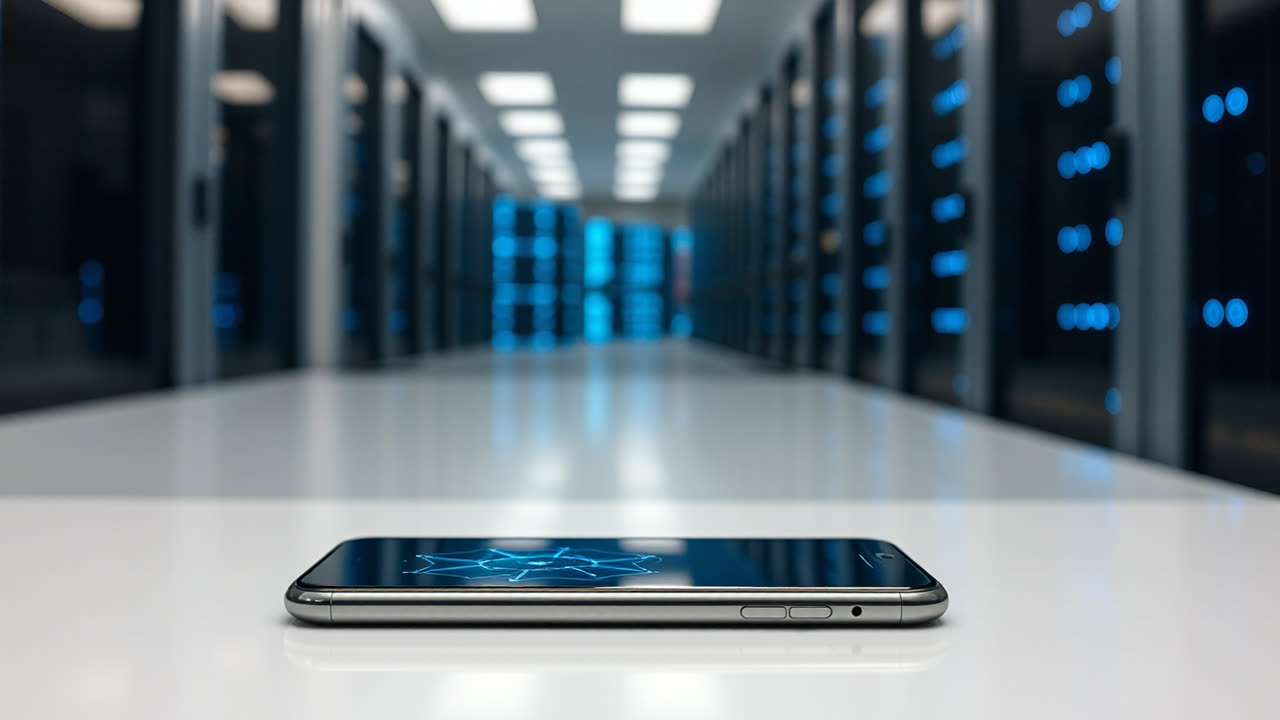
The anticipated waitlist for Siri AI in iOS 27 signals a profound shift in how advanced artificial intelligence is integrated and deployed on consumer devices, reflecting the immense computational and infrastructure hurdles even for a tech giant like Apple. This restriction, despite the supposed arrival of iOS 27 and compatible hardware, points to a future where access to the most sophisticated AI features may not be universally instantaneous, fundamentally altering user expectations and industry rollout strategies.
The core reason for such a waitlist is likely multifaceted, stemming from a confluence of factors including server-side processing demands, the necessity for phased rollouts to ensure stability and quality, and the sheer complexity of personalizing and fine-tuning generative AI at scale. While Apple's custom silicon, like the A-series and M-series chips, offers unparalleled on-device processing power, a truly transformative Siri AI – one capable of understanding complex, multi-turn conversations, summarizing lengthy documents, generating creative content, and performing advanced contextual actions across apps – will almost certainly rely on a hybrid model. This model would offload the most intensive generative AI tasks to Apple's cloud infrastructure, where massive GPU clusters can handle the immense parameter counts and inference loads of state-of-the-art large language models (LLMs). Developing and maintaining this cloud infrastructure, which could involve billions of dollars in investment in data centers and specialized AI hardware, presents a significant scaling challenge.
This reliance on a hybrid architecture, combining on-device processing for privacy-sensitive and low-latency tasks with cloud processing for computationally heavy generative AI, means that network bandwidth, server capacity, and even regional regulatory compliance become bottlenecks. A waitlist allows Apple to manage the initial load, collect real-world usage data, identify potential bugs or biases, and gradually expand access as its cloud infrastructure scales. This measured approach mirrors the cautious rollouts seen with other groundbreaking AI features from competitors, such as Google's initial limited access to certain Gemini capabilities or Microsoft's phased deployment of Copilot features.
For users, the waitlist signifies a departure from Apple's typical "it just works" philosophy, where new features are generally available immediately upon OS updates. This could lead to frustration and a tiered user experience, where early adopters or those in specific regions gain preferential access. However, it also underscores the significant leap in capability that Siri AI is expected to deliver, moving beyond its current, often criticized, transactional nature. Current Siri, while adept at setting timers or launching apps, frequently struggles with natural language understanding, context retention, and complex reasoning, often falling short of rivals like Google Assistant and even open-source LLMs integrated into third-party apps. The promise of a truly intelligent Siri AI, able to act as a proactive, deeply integrated personal agent, justifies the anticipation, but also highlights the technical chasm Apple must cross.
The industry impact is profound. A waitlist for a flagship AI feature from Apple would validate the immense resource requirements for deploying advanced generative AI at scale. It would likely prompt other major tech companies to reassess their own rollout strategies for highly anticipated AI functionalities, potentially leading to more phased introductions and managed access programs across the board. Furthermore, it could accelerate the development of more efficient on-device AI models, as companies strive to reduce reliance on costly cloud infrastructure and mitigate potential bottlenecks. The demand for specialized AI accelerators and energy-efficient processing will undoubtedly intensify, driving innovation in chip design and software optimization.
Looking ahead, the Siri AI waitlist in iOS 27 is likely a temporary, albeit necessary, measure. Apple's long-term strategy will almost certainly involve continuous investment in its neural engines and on-device AI capabilities, aiming to shift more of the AI workload directly onto the iPhone, iPad, and Mac. This move would not only alleviate cloud infrastructure strain but also significantly enhance data privacy and reduce latency, offering a more seamless and secure user experience. We can anticipate future iterations of Apple silicon to feature even more powerful neural processing units (NPUs) designed specifically for running increasingly complex AI models locally. Furthermore, Apple will likely leverage its vast ecosystem, integrating Siri AI across all its devices and services, from Apple Watch to Apple TV, creating a truly ubiquitous and deeply personalized intelligent layer that learns and adapts to individual user behavior across their digital life. The eventual goal will be to make the "waitlist" a distant memory, as on-device and highly optimized hybrid cloud solutions become the standard for delivering cutting-edge AI.