SK hynix's SSD Warranty Policy Leaves Consumers Financially Stranded Amid Soaring Prices
SK hynix is reportedly offering original purchase price refunds for faulty SSDs instead of replacements, leaving buyers at a significant financial disadvantage as market prices for solid-state drives have nearly doubled.
✨ This content was summarized and interpreted by AI; it may contain errors — please verify accuracy with the original sources. Learn more
Listen to this story
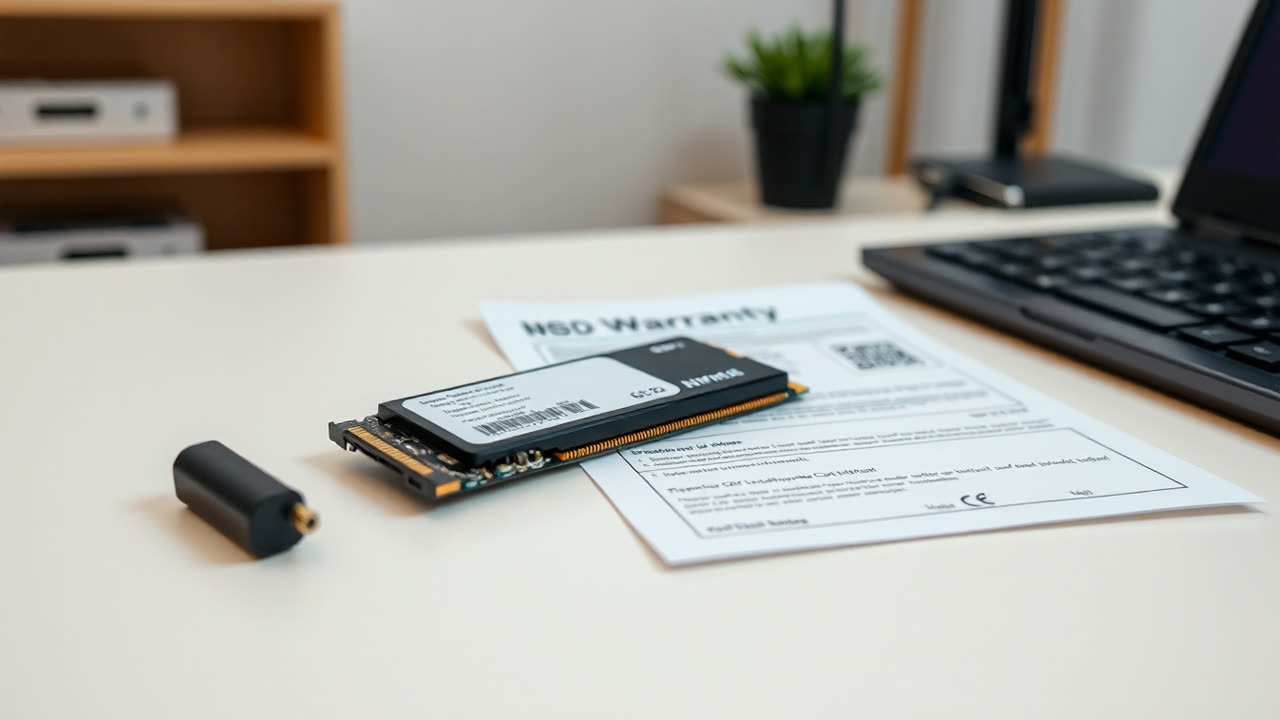
SK hynix, a leading global memory manufacturer, is reportedly offering refunds at the original purchase price for malfunctioning SSDs instead of direct replacements, leaving buyers financially disadvantaged amidst a period of significant price inflation in the solid-state drive market. This policy, brought to light by a Reddit user's account and corroborated by tech media, highlights a critical vulnerability in standard warranty clauses when confronted with extreme market volatility. The reported incident specifically details a user's experience with an SK hynix P31 Gold SSD, where a warranty claim for a faulty drive was met with a refund offer based on the initial purchase amount rather than a like-for-like replacement, despite current market prices for comparable drives having nearly doubled since the original purchase.
This development carries substantial implications for consumers and the broader tech industry. For users, the immediate impact is a direct financial loss. A refund at the original price, while technically fulfilling a contractual obligation under specific warranty terms, fails to account for the real-world cost of replacing the product. With NAND flash memory prices, and consequently SSD prices, experiencing a sharp upturn driven by supply chain adjustments and increasing demand, consumers are effectively shortchanged. Reports indicate that SSD prices have seen an average increase of 15-20% quarter-over-quarter in early 2026, with some popular models experiencing even steeper hikes. This means a buyer who paid, for instance, $80 for a 1TB SSD a year ago might now need to spend $140-$160 to acquire an equivalent replacement, making the original-price refund insufficient to restore their storage capacity. The inconvenience extends beyond mere cost, forcing users to navigate a volatile market, potentially settle for an inferior product, or absorb the additional expense themselves. It erodes consumer trust, transforming a seemingly robust warranty into a punitive clause during adverse market conditions.
From an industry perspective, SK hynix's reported stance could set a troubling precedent. While many manufacturers include clauses allowing for refunds or replacements with "equivalent" products, the interpretation of "equivalent" becomes contentious when market values diverge so drastically from original purchase prices. Most major SSD manufacturers, including Samsung, Western Digital, and Crucial, typically aim for direct replacements or upgrades when stock is available, recognizing that the spirit of a warranty is to ensure the user retains a functional product of comparable value. However, a critical shortage of specific SK hynix models, such as the P31 Gold, appears to be the root cause of the company's inability to provide direct replacements. This scarcity, exacerbated by broader NAND market tightening, forces the company to fall back on the most literal interpretation of its warranty terms. The challenge lies in the fine print: while seemingly fair in stable markets, clauses stipulating refunds at original purchase price can become predatory during periods of significant inflation, effectively transferring market risk from the manufacturer to the consumer.
The current market environment for NAND flash and SSDs is a complex interplay of factors. Following a period of oversupply and price declines in late 2023 and early 2024, manufacturers have strategically cut production to stabilize prices and improve profitability. This reduction, combined with a resurgence in demand from data centers, AI applications, and consumer electronics, has created a supply deficit. Industry analysts project that NAND flash prices will continue their upward trajectory through 2026, driven by persistent strong demand and cautious production increases. This backdrop makes SK hynix's position particularly acute; if they cannot source replacement drives at a cost that makes economic sense relative to the original sale, their current policy becomes a mechanism to mitigate their own financial exposure at the consumer's expense.
Looking ahead, this situation could prompt a re-evaluation of warranty terms across the technology sector, particularly for components susceptible to rapid price fluctuations. Regulatory bodies might face pressure to examine whether such warranty clauses, while legally sound, are fair to consumers in highly volatile markets. SK hynix, meanwhile, faces a significant reputational challenge. While adhering to the letter of its warranty, the perceived unfairness could deter future customers, especially those sensitive to after-sales support and long-term value. Competitors who maintain more flexible replacement policies, even if it means incurring higher costs during shortages, could gain a competitive advantage in consumer trust. Ultimately, this incident underscores the delicate balance between corporate liability and consumer protection, especially when market dynamics create conditions where adherence to the fine print can feel like a breach of good faith. Companies may need to consider more robust contingency planning for warranty fulfillment during periods of extreme market shifts, potentially through buffer stock or more adaptable replacement mechanisms, to safeguard their brand equity and ensure customer loyalty.