Slackforce Surfaces: AI-Powered 'Vibe-Coding' Reshapes Workplace Collaboration
Slack's new AI-powered Surfaces feature allows users to "vibe-code" interactive reports, polls, dashboards, and microsites directly within chat, dramatically reducing context switching and democratizing data visualization.
✨ This content was summarized and interpreted by AI; it may contain errors — please verify accuracy with the original sources. Learn more
Listen to this story
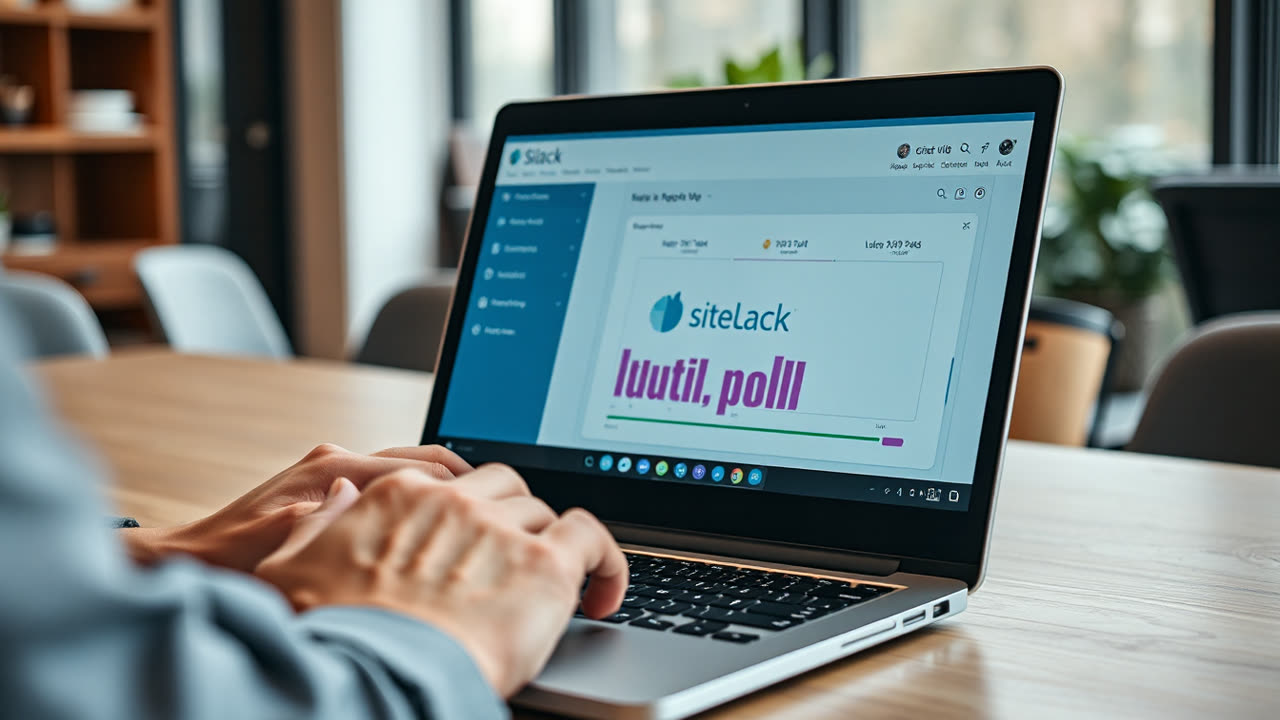
Slack is poised to fundamentally reshape workplace collaboration with the impending rollout of Slackforce Surfaces, an AI-powered feature enabling users to "vibe-code" interactive reports, polls, dashboards, and even microsites directly within chat interfaces. This isn't merely an incremental update; it represents a significant leap towards democratizing data visualization and operationalizing insights within the flow of conversation, moving beyond static attachments to dynamic, real-time collaboration artifacts. The core innovation lies in its capacity to translate natural language prompts given to Slackbot into sophisticated, interactive tools, sidestepping traditional coding or complex external applications.
The immediate impact for users is a dramatic reduction in context switching, a notorious productivity killer. Instead of toggling between Slack, a data visualization tool, a survey platform, and a presentation suite, teams can now generate and interact with these assets without leaving their primary communication channel. Imagine a sales team instantly generating a real-time sales performance dashboard based on a natural language query like "Show me Q3 sales by region for new customers," or a marketing team quickly spinning up an interactive poll to gauge campaign effectiveness, all within a dedicated Slack channel. This capability not only streamlines workflows but also fosters a more agile decision-making environment, as data and insights become instantly accessible and manipulable by anyone in the conversation, regardless of their technical proficiency. The "vibe-coding" aspect, where users describe their desired output to an AI, pushes the boundaries of user experience, making complex tasks intuitively simple.
For the industry, Slackforce Surfaces signals an intensified arms race in the generative AI space, particularly within enterprise collaboration platforms. While Slack has long been a leader in channel-based communication, its previous iterations, such as Slack Canvas for persistent content or Workflow Builder for automation, still required users to either manually create or pre-define structures. Surfaces, powered by AI, introduces a dynamic, on-the-fly generation capability that elevates Slack beyond a mere communication hub to a genuine operational platform. Rivals like Microsoft Teams, with its Copilot integration and Loop components, have also been pushing towards more intelligent, interactive content generation within chats. Loop components, for instance, allow for real-time collaborative editing of tables, task lists, and paragraphs across various Microsoft 365 apps, aiming for persistent, portable content. However, Slackforce Surfaces appears to differentiate itself by focusing on the *creation* of entirely new, interactive *applications* or reporting tools from scratch, driven by conversational AI, rather than just embedding or collaboratively editing existing document types. This puts Slack in a strong position to capture the burgeoning market for AI-assisted content generation within the enterprise.
The underlying technology likely leverages large language models (LLMs) trained on vast datasets of code, data structures, and user interface elements, enabling Slackbot to interpret nuanced requests and synthesize appropriate interactive components. This move also builds on Slack's existing integration ecosystem, where thousands of apps already extend its functionality. Surfaces could potentially simplify the creation of bespoke internal tools that previously required significant development effort, effectively turning every user into a nascent "citizen developer" capable of crafting functional utilities with natural language. This could drastically reduce the reliance on IT departments for minor data requests or custom reporting needs, empowering teams with greater autonomy and speed.
Looking ahead, the success of Slackforce Surfaces will hinge on several factors. Accuracy and reliability of the AI's output will be paramount; incorrect data visualizations or poorly constructed reports will quickly erode user trust. Security and data governance will also be critical, especially when dealing with sensitive business intelligence generated and shared within channels. Slack will need robust controls to ensure that interactive reports only display information relevant to authorized users and that data integrity is maintained. Furthermore, the feature's adoption will depend on its ease of use and the breadth of its capabilities. While initial offerings like polls and dashboards are compelling, the true power will lie in its ability to handle more complex data sources and generate highly customized, industry-specific tools.
The competitive landscape will undoubtedly respond, with Google Workspace's Duet AI and other collaboration suites likely to accelerate their own conversational AI-driven content generation initiatives. The next phase of enterprise software will not just be about connecting people, but about intelligent platforms that empower them to *create* and *analyze* directly within their collaborative flows. Slackforce Surfaces positions Slack not just as a communication tool, but as a proactive partner in driving business outcomes, offering a glimpse into a future where the line between conversation and application development continues to blur, making data and insights not just accessible, but actionable, in real-time. This evolution could redefine workplace productivity, shifting the paradigm from information consumption to dynamic, AI-assisted creation within the collaborative environment.