Slate Auto's Affordable Electric Truck Faces Skepticism Despite Low Price
Despite a sub-$25,000 starting price, Electrek readers express significant doubt about the market viability of Jeff Bezos-backed Slate Auto's new electric truck in the competitive US market.
✨ This content was summarized and interpreted by AI; it may contain errors — please verify accuracy with the original sources. Learn more
Listen to this story
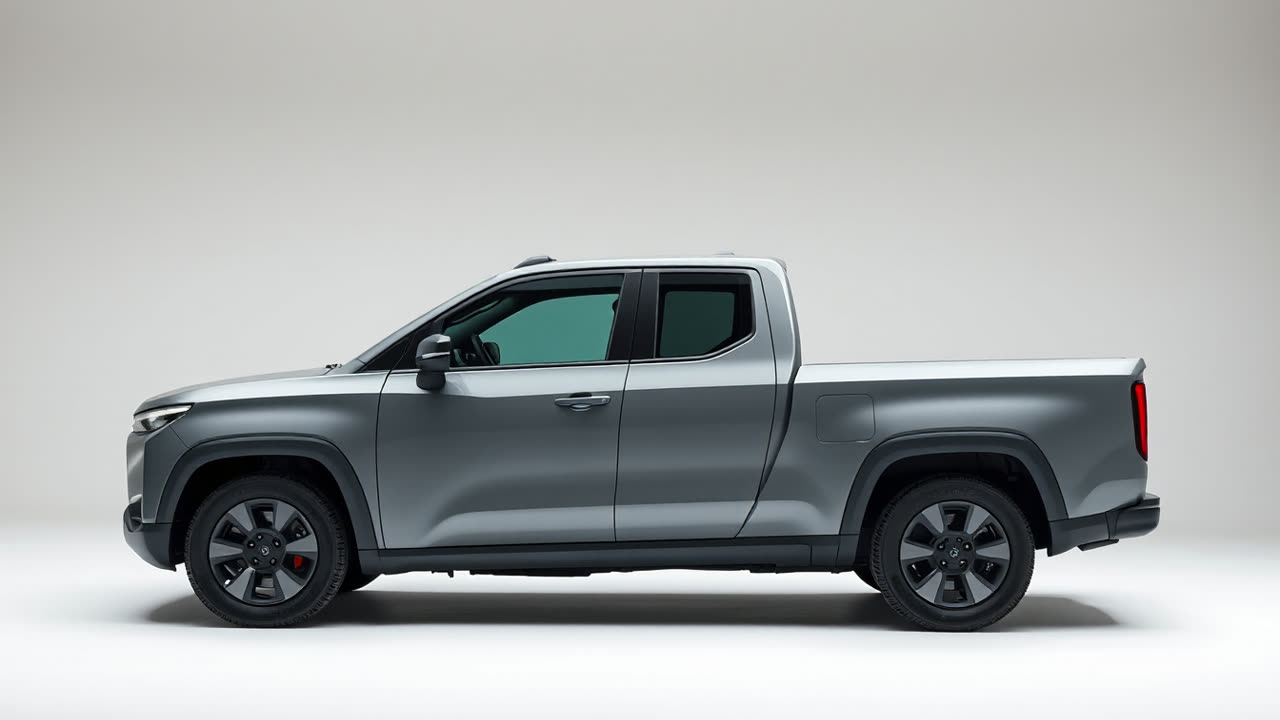
Despite an aggressive sub-$25,000 starting price point, Electrek readers are largely skeptical about the prospective success of Slate Auto’s new electric truck in the highly competitive US market. Out of nearly 3,000 responses to a recent survey, 1,553 votes indicated "maybe" or "no" concerning the truck's viability, significantly outweighing the 1,239 "absolutely" or "yes" votes. This lukewarm reception for the Jeff Bezos-backed startup’s "Blank Slate" pickup, which officially starts at $24,950 before a $1,450 destination fee, totaling $26,400, highlights a crucial disconnect between the allure of affordability and the practical demands or perceived value of today's electric vehicle consumer.
The skepticism underscores a significant challenge for Slate Auto and potentially for the broader industry's pursuit of truly affordable EVs. While the average price of a new car in the US hovers around $50,000, and existing electric trucks routinely command prices upwards of $50,000 to $100,000, Slate's minimalist approach aims to disrupt this trend by stripping away features considered standard in modern vehicles. The Slate truck eschews an infotainment system, power windows, and even a factory paint job, instead offering a single gray composite exterior that owners can customize with vinyl wraps ranging from $499.99 to $1,599.99. This "back-to-basics" philosophy, while enabling the low price, appears to be a double-edged sword, appealing to a niche segment but potentially alienating a wider audience accustomed to convenience and amenities. The user sentiment suggests that even a compelling price might not overcome the desire for a certain level of comfort and technology, especially when existing full-size electric trucks like the Chevrolet Silverado EV start at $52,800 or the Ford F-150 Lightning at $52,375, offering significantly more in terms of features and capability.
Slate Auto's entry, with deliveries expected to begin in late 2026, represents a stark contrast to the prevailing trend of larger, more luxurious, and increasingly expensive electric trucks. The vehicle is designed as a two-door pickup, convertible into a two-door SUV or fastback SUV, offering a 65 kWh LFP battery (63 kWh usable) providing an estimated 205 miles of range. With a rear-motor, rear-wheel-drive setup delivering 181 horsepower and 195 lb-ft of torque, it boasts a respectable 1,550 pounds of payload capacity for the pickup variant and can tow up to 2,000 pounds. Charging is facilitated by a NACS port, supporting up to 120 kW DC fast charging, allowing a 10-80% charge in about 30 minutes. These specifications position it as a functional, albeit compact, utility vehicle rather than a direct competitor to high-performance, long-range behemoths.
A key rival in the "affordable truck" segment is not another EV, but the Ford Maverick Hybrid, which, for a few thousand dollars more than the Slate, offers a four-door, five-seat configuration and a hybrid powertrain that avoids "charging homework." The Maverick is also considerably larger at 199.8 inches long compared to the Slate's 174.6 inches, a difference of over two feet. This size disparity highlights Slate's targeting of a truly compact, urban-friendly utility vehicle, a segment largely abandoned by traditional automakers in the US. However, a significant blow to Slate's initial value proposition was the elimination of the $7,500 federal EV tax credit, which had initially allowed the company to float an "under $20,000" price point. This policy shift forced the current $24,950 base price, diminishing its "cheapest new car in America" claim and potentially impacting its perceived value against internal combustion engine (ICE) alternatives.
Looking ahead, Slate Auto's success will hinge on its ability to cultivate a market that values extreme affordability and customization over traditional automotive luxuries. The company's direct-to-consumer sales model, similar to Tesla, Rivian, and Lucid, bypasses dealership markups and offers extensive personalization through wraps and accessories. Slate's "Slate University" how-to videos, guiding owners through tasks like SUV conversions, are an innovative, albeit untested, approach to customer empowerment. However, the US truck market has historically favored larger, more capable vehicles, and the challenges of EV adoption—including charging infrastructure limitations and concerns about range and payload capacity—remain, even for a budget-friendly option. The looming possibility of a Ford electric pickup around the $30,000 mark in 2027 could further intensify competition. Ultimately, the Electrek survey's results serve as a pragmatic early indicator: while Slate Auto has undeniably carved out a unique, low-cost niche, convincing the masses that "less is more" in an electric truck remains a formidable uphill battle.