Slate Auto Unveils $3,000 High-Roof Cargo Kit for Electric Pickup
Slate Auto's new $3,000 high-roof cargo kit transforms its minimalist electric pickup into a versatile commercial workhorse, challenging traditional automotive manufacturing with an open, customizable ecosystem.
✨ This content was summarized and interpreted by AI; it may contain errors — please verify accuracy with the original sources. Learn more
Listen to this story
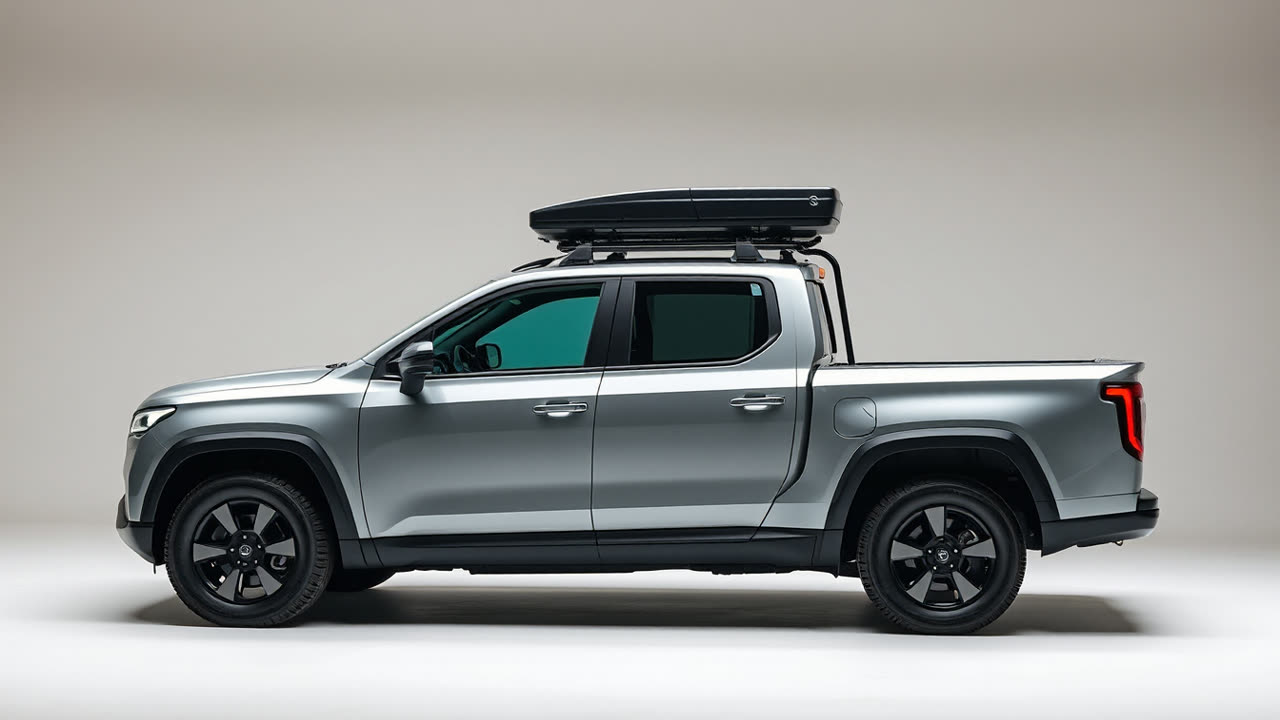
Slate Auto is set to profoundly reshape the compact commercial vehicle landscape by offering a high-roof cargo version of its minimalist electric pickup, priced at an accessible $3,000. This significant announcement, made by Christian Kreipke of Slate's Fleet Business Development team at the ongoing Portland ride-along event, confirms that this modular cargo solution will be available not only to fleet operators but also to individual buyers, dramatically expanding the vehicle's utility beyond a simple pickup. The kit, conceptually similar to the brand's existing SUV conversion, will come in both standard square-back and high-roof configurations, offered in white and black finishes.
This strategic move carries substantial implications for both users and the broader automotive industry. For small businesses, contractors, and entrepreneurs, the high-roof cargo option transforms Slate's already affordable electric pickup into a highly versatile, cost-effective workhorse. It directly addresses the unmet demand for a compact, utilitarian electric cargo solution, enabling diverse applications such as mobile refrigeration units, slide-out workstations, or even vending machines, as envisioned by companies and municipalities already exploring its potential. The ability for anyone to purchase this kit democratizes access to specialized commercial vehicle capabilities, previously often confined to larger, more expensive platforms.
From an industry perspective, Slate Auto’s commitment to an open, customizable ecosystem is a bold challenge to traditional automotive manufacturing. By offering a stripped-down, “blank slate” vehicle and encouraging aftermarket modifications, Slate validates its core philosophy of affordability and modularity. Crucially, Kreipke confirmed that the next generation of the Slate pickup will maintain the same basic design dimensions, a pivotal assurance for third-party upfitters and accessory manufacturers. This long-term design consistency fosters confidence among external developers, encouraging the creation of a robust accessory market and avoiding the obsolescence issues often seen with traditional vehicle updates, a problem Slate specifically noted with Ford. This approach could cultivate a vibrant ecosystem of specialized solutions, making the Slate a highly adaptable platform across numerous vocational sectors.
Bezos-backed Slate Auto, founded in 2022, has steadfastly pursued a strategy centered on an ultra-affordable electric vehicle. The company recently secured $650 million in Series C funding, bringing its total capital raised to approximately $1.4 billion. Its compact electric pickup, initially advertised to start under $20,000, now carries a base price of $24,950, a revision largely attributed to the elimination of the $7,500 federal EV tax credit. This two-seater truck is designed for simplicity and customization, deliberately omitting luxuries like power windows and integrated infotainment systems to keep costs down. It features a single 181 hp rear motor and a 65 kWh LFP battery pack, delivering an estimated 205 miles of range. With a payload capacity of approximately 1,400 pounds and a towing capacity of 1,000 pounds, its capabilities are modest but suitable for its intended compact utility market. Production is slated to commence at an idled printing plant in Warsaw, Indiana, a $400 million investment projected to yield up to 150,000 vehicles annually.
The Slate pickup, particularly with its new high-roof cargo option, carves out a unique niche in a market largely dominated by either expensive full-size electric pickups like the Ford F-150 Lightning and Tesla Cybertruck, or larger, dedicated commercial electric vans such as the Ford E-Transit. There are currently few direct rivals offering a compact, highly customizable electric pickup at Slate’s price point. While some critics express skepticism about the limited market for a two-door pickup, Slate’s modular design, allowing conversion into a five-passenger SUV for $29,950, and now this cargo variant, directly addresses versatility concerns. This "blank canvas" approach stands in stark contrast to the integrated, feature-rich offerings from established automakers, offering a compelling value proposition in an era of rising vehicle costs.
Looking ahead, the success of Slate's high-roof cargo kit will be a critical barometer for the company's broader commercial strategy. Deliveries of the core truck are anticipated by the end of 2026, and the availability of this cargo accessory will immediately enhance its appeal. The speed and breadth with which third-party upfitters embrace the platform, leveraging Slate's commitment to consistent design dimensions, will be key to establishing a robust aftermarket ecosystem. If Slate can effectively scale production at its Indiana facility and cultivate this network of accessory providers, it could fundamentally disrupt the affordable commercial EV segment. The long-term viability hinges on converting its impressive 160,000+ refundable reservations into sustained sales and demonstrating profitability, especially as the broader EV market navigates evolving consumer demand and the absence of federal incentives. Slate Auto's high-roof cargo offering is not merely an accessory; it is a declaration of intent, signaling a serious play for the utilitarian commercial market with an unprecedented blend of affordability, modularity, and customization.