Slate Truck Launches at $24,950, Disrupting EV Market with Unprecedented Affordability and 205-Mile Range
Slate Auto's new electric pickup deliberately sacrifices extended battery range for a groundbreaking low price, aiming to redefine entry-level expectations in the burgeoning EV market.
✨ This content was summarized and interpreted by AI; it may contain errors — please verify accuracy with the original sources. Learn more
Listen to this story
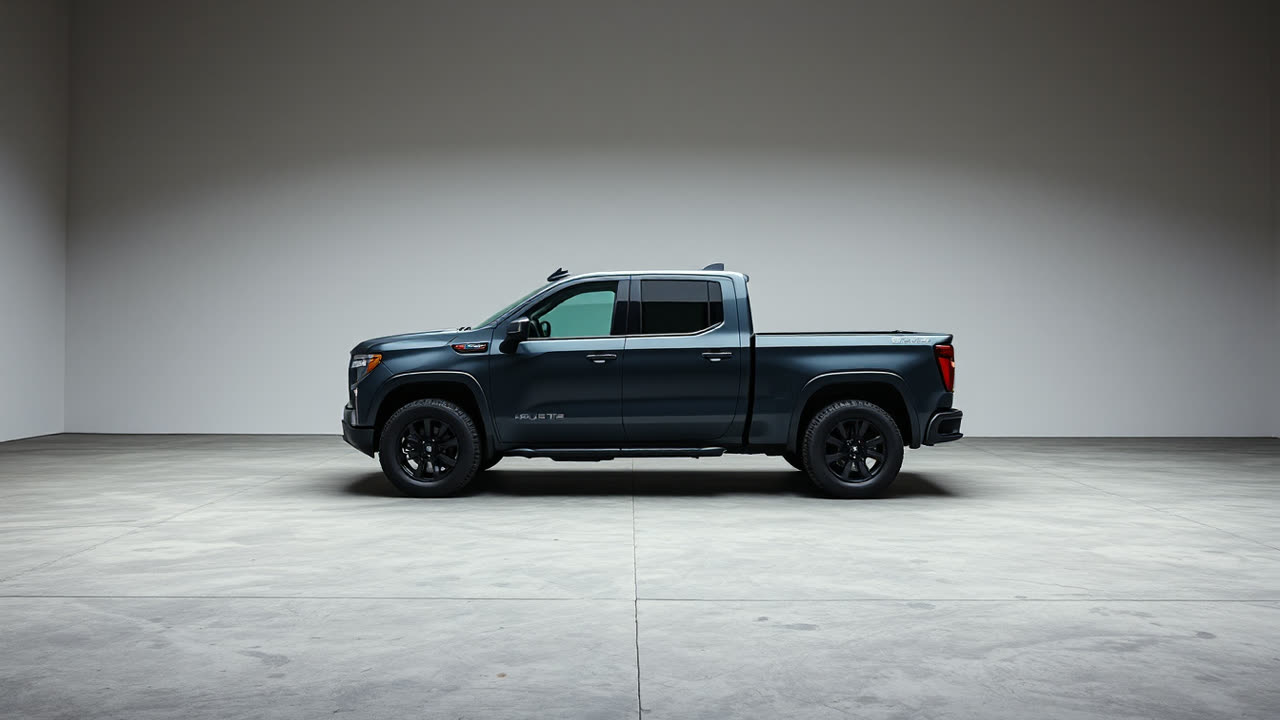
At an audacious starting price of $24,950, the Slate Truck is poised to redefine expectations in the burgeoning electric vehicle market, deliberately trading extended battery range for unparalleled affordability and a "blank slate" philosophy. This strategy, however, comes with the inherent compromise of a 205-mile estimated range from its 65 kWh LFP battery pack, a figure that places it notably below many contemporary EV truck competitors whose ranges often span between 280 and 450 miles.
This singular focus on a lower barrier to entry is the core news, and it matters immensely for both consumers and the automotive industry. Slate Auto, a startup backed by notable investors like Jeff Bezos and having raised over $1.4 billion in capital, is betting that a significant segment of the market prioritizes a sub-$25,000 price point over long-distance capability. This directly challenges the prevailing industry trend of pushing ever-higher ranges and luxury features, which has driven the average new EV transaction price to nearly $50,000. For users, particularly those engaged in last-mile delivery, urban logistics, or as a second household vehicle, the 205-mile range may be entirely adequate. Studies show that most Americans drive approximately 37 miles daily, meaning a full charge could cover more than five days of typical commutes and errands. The truck's ability to charge from 20% to 80% in about 30 minutes via 120 kW DC fast charging, coupled with its NACS connector for access to Tesla's extensive Supercharger network, further mitigates range anxiety for its intended use cases. Furthermore, the use of LFP (lithium iron phosphate) battery chemistry, a departure from earlier plans for NMC (nickel-manganese-cobalt) packs, allows for daily charging to 100% without significant degradation, a practical advantage for commercial fleets.
The Slate Truck's minimalist design is central to its cost-effectiveness. It arrives with a stripped-down cabin featuring manual crank windows, no central touchscreen (instead, a phone holder), and physical HVAC controls. This "less is more" approach, while stark compared to feature-laden rivals, provides a foundational platform for customization. Slate offers over 200 accessory options, 80% of which are priced under $500, allowing owners to personalize their vehicles with items like exterior color wraps, Bluetooth speaker holders, or even converting the two-door pickup into an SUV with additional seating via conversion kits. This modularity could foster a new owner relationship with their vehicle, evolving with needs rather than being replaced.
In comparison to rivals, the Slate Truck carved out a unique niche. While traditional electric trucks like the Ford F-150 Lightning or Rivian R1T target premium segments with ranges often exceeding 300 miles and significantly higher price tags, Slate directly competes with smaller, more affordable internal combustion engine (ICE) trucks and hybrid options, such as the Ford Maverick Hybrid, which starts under $25,000 and offers a 2,000 lb towing capacity. The Slate's 1,550 lb payload and 2,000 lb towing capacity position it as a capable light-duty workhorse. Even within the EV landscape, its closest price point competitors are often compact SUVs like the Chevrolet Bolt, starting at $28,995, which still offer more standard features. The Slate's philosophy also contrasts sharply with upcoming vehicles like the Ford Fathom, which aims for affordability through advanced engineering and software efficiency, rather than Slate's mechanical simplicity.
Looking ahead, the Slate Truck's success hinges on proving the viability of its constrained-range, affordable strategy, particularly for fleet operators and urban consumers. The electric last-mile delivery vehicle market is projected for substantial growth, expanding from $34.8 billion in 2025 to $205.1 billion by 2035, driven by e-commerce expansion and sustainability pressures. For these commercial applications, the Slate's lower purchase price, combined with reduced operational costs of EVs, could present a compelling total cost of ownership (TCO) argument. Deliveries are expected to commence in late 2026, with a ramp-up to 150,000 units annually by the end of 2027. The true test will be whether its estimated 205-mile range, while sufficient for many, creates limitations for a broader adoption, especially as battery technology continues to advance and range expectations grow. Slate's innovative approach could force other automakers to re-evaluate their own entry-level EV strategies, potentially sparking a new wave of genuinely affordable, utilitarian electric vehicles that prioritize access over excess.