Smart Monitors Embrace Ads and Tracking, Echoing Smart TV Concerns
The encroachment of advertising and user tracking into computer monitors, mirroring a long-standing practice in smart televisions, represents a significant and concerning shift in the display industry.
✨ This content was summarized and interpreted by AI; it may contain errors — please verify accuracy with the original sources. Learn more
Listen to this story
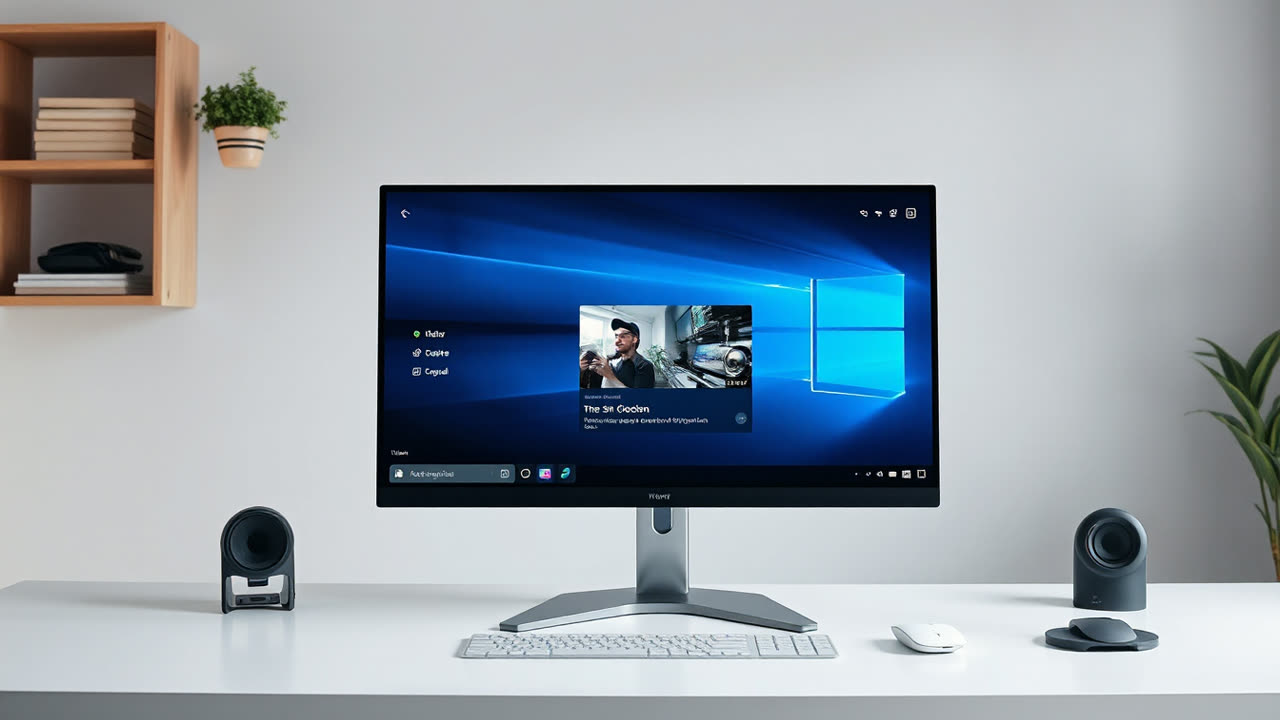
The encroachment of advertising and user tracking into computer monitors, mirroring a long-standing practice in smart televisions, represents a significant and concerning shift in the display industry. This evolution extends beyond mere interface ads to deep-seated data collection, fundamentally altering the relationship between users and their hardware. While the monitor market, valued at approximately $49.62 billion in 2026 and projected to reach $64.23 billion by 2031, continues its growth, driven by hybrid work, gaming, and 4K adoption, the integration of "smart" features is introducing a new, more insidious revenue stream for vendors.
The core news is that monitor manufacturers are now embedding functionality akin to Smart TV operating systems, enabling them to collect user data and serve targeted advertisements directly on the display. Unlike traditional monitors that are passive output devices, these "smart monitors" offer built-in access to productivity platforms, web browsing, streaming apps, and wireless connectivity, often without needing a connected PC. This convenience comes at the cost of privacy. For instance, smart monitors can track app usage, account activity, voice commands, and preference changes. This data can then be used to create detailed user profiles, which are highly valuable for advertisers.
This trend directly parallels the trajectory of smart TVs, where Automatic Content Recognition (ACR) technology has become pervasive. ACR enables TVs from manufacturers like Samsung, LG, Roku, Vizio, and Sony to silently monitor everything displayed on the screen, including content from external devices like gaming consoles or laptops, by capturing screenshots multiple times per second. This viewing information, along with geo-location, web browsing, and social media data, is then used to build comprehensive profiles that can be sold to advertisers and data brokers. The global smart TV ads market, valued at $1.7 billion in 2026, is expected to reach $4.54 billion by 2035, demonstrating the immense financial incentive behind this data monetization. TV makers increasingly rely on ad revenue to keep hardware prices stable despite rising component costs, effectively shifting their profit model from hardware margins to advertising.
The impact on users is profound. What was once a private computing experience is now becoming a monitored one. Users face the erosion of privacy, with their digital habits on a device central to their work, entertainment, and personal life being constantly observed and monetized. While some users may tolerate ads on free streaming platforms, the expectation of privacy and control is significantly higher for a personal computer monitor, a device traditionally considered a utility rather than an advertising billboard. The subtle nature of these embedded ads, often appearing as "recommended browsing" or sponsored tiles on home screens, blurs the line between content and advertisement, making it harder for users to distinguish and avoid them.
From an industry perspective, this move signals a dangerous race to the bottom, where hardware margins are sacrificed for recurring advertising revenue. Major monitor companies like Dell, HP, Lenovo, Samsung, and Acer, who are key players in the monitor market, could be incentivized to adopt similar strategies. This could lead to a fragmented market where "dumb" monitors become a premium, privacy-focused niche, while the mainstream is dominated by ad-supported devices. This also raises significant security concerns, as more connected devices with embedded operating systems create larger attack surfaces for potential data breaches.
Compared to rivals and prior generations, this represents a stark departure. Older monitors were essentially "dumb" displays, reliant entirely on the connected computer for functionality and content. The current generation of smart monitors, however, is increasingly self-sufficient, embedding operating systems and internet connectivity directly into the display. While innovations like OLED and mini-LED panels are advancing at a CAGR of 17.85% and 11.92% respectively, and larger, curved displays are gaining traction, the underlying shift towards data harvesting is a parallel, less celebrated development. Privacy-focused technologies, such as switchable privacy displays for smartphones, are emerging, with shipments projected to increase twentyfold to 21 million units in 2026, indicating a growing consumer demand for data protection. This suggests a potential counter-trend where privacy features could become a key differentiator for premium devices.
Looking ahead, the trajectory is clear: monitor vendors will likely expand their data collection capabilities and advertising integrations, driven by the lucrative model established by smart TVs. The global display market, projected to reach $345.80 billion by 2034, offers ample opportunity for such monetization. However, this will inevitably lead to increased regulatory scrutiny, similar to the Federal Trade Commission's past actions against companies like Vizio for deploying ACR without explicit user consent. There will also be a growing demand for user-friendly privacy controls, moving beyond buried settings to more transparent and easily manageable options. Products that offer robust, embedded privacy features, perhaps even at a premium, could find a receptive audience among privacy-conscious consumers and enterprises. The battle for control over user data, which once centered on mobile phones and web browsers, is now extending to the very screens through which we interact with the digital world, marking a critical juncture for consumer rights and the future of display technology.