Solo Developer Cracks NVIDIA's CUDA Moat, Runs CUDA on AMD Hardware in Windows
A single developer has successfully enabled NVIDIA's CUDA libraries to run natively on an AMD Radeon RX 9060 XT GPU on Windows, challenging NVIDIA's software dominance and opening new possibilities for high-performance computing.
✨ This content was summarized and interpreted by AI; it may contain errors — please verify accuracy with the original sources. Learn more
Listen to this story
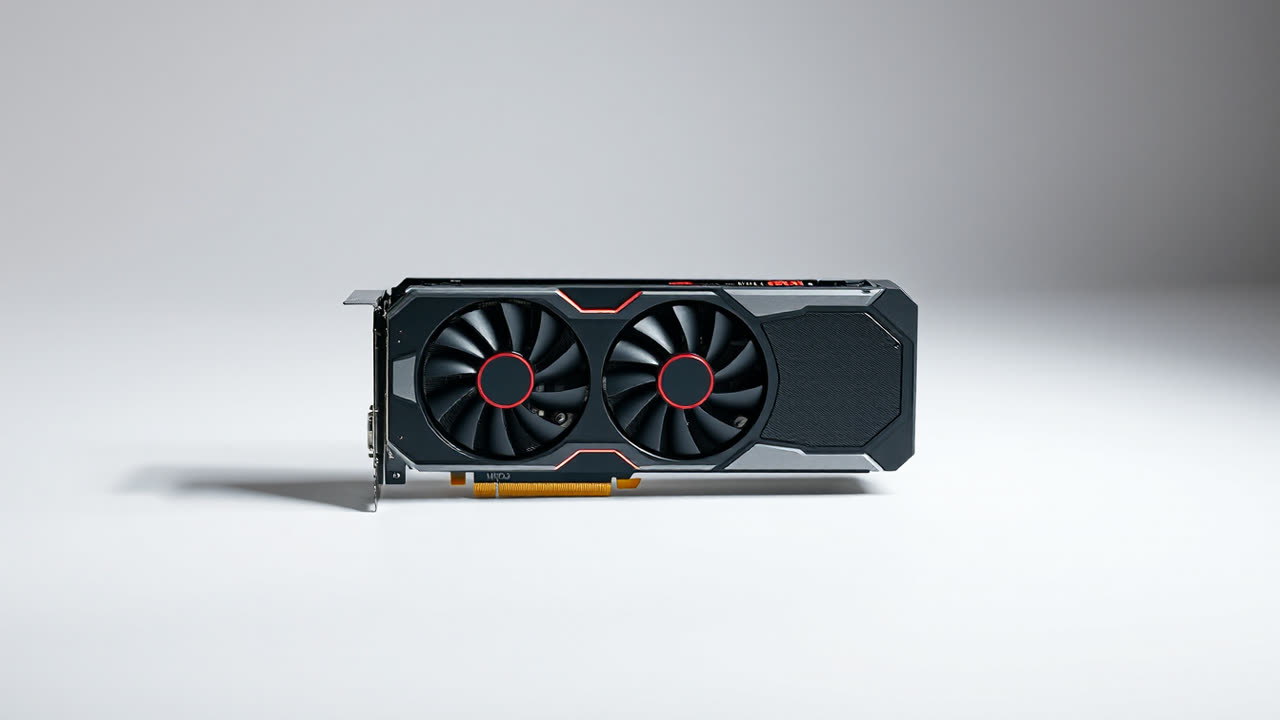
A solo developer has successfully bridged NVIDIA's formidable CUDA ecosystem to AMD hardware on Windows, enabling multiple CUDA libraries to run natively on a gaming Radeon RX 9060 XT GPU without the need for virtualization or dual-booting. This groundbreaking achievement, accomplished by wiring the ZLUDA project to AMD's HIP libraries for Windows, directly challenges NVIDIA's long-standing software dominance and offers a significant, albeit nascent, crack in the proprietary wall that has long confined high-performance computing workloads to GeForce and Quadro cards.
This development carries profound implications for both end-users and the GPU industry, fundamentally altering the competitive landscape. For users, particularly those in AI development, scientific research, and professional creative fields, the ability to execute CUDA-exclusive applications on AMD hardware promises unprecedented flexibility and cost savings. Historically, choosing a GPU for these demanding tasks meant committing to NVIDIA due to CUDA's pervasive integration into critical software stacks, from TensorFlow and PyTorch to Blender and various CAD programs. This lock-in forced many to either purchase NVIDIA hardware, often at a premium, or forgo access to optimized workflows. ZLUDA's integration means users could potentially leverage AMD's often more competitive price-to-performance ratio for general computing and gaming, without sacrificing access to their CUDA-dependent tools, thus democratizing access to powerful computational resources.
Industrially, this marks a pivotal moment, potentially eroding NVIDIA's near-monopoly on the high-performance computing and AI accelerator markets. NVIDIA's CUDA platform, launched in 2006, has been meticulously cultivated over nearly two decades, fostering a vast developer community and an unparalleled library of optimized software that has served as a significant "moat" against competitors. While AMD has long offered its open-source ROCm platform, designed as an alternative to CUDA, its adoption has been limited, primarily due to CUDA's entrenched position and the sheer breadth of its software ecosystem. ZLUDA, by directly translating CUDA calls to AMD's HIP (Heterogeneous-compute Interface for Portability) runtime, bypasses the need for developers to recompile or rewrite their CUDA code for ROCm, offering a more direct and immediate pathway to cross-platform compatibility.
The significance of ZLUDA lies in its direct translation layer. Unlike virtualization, which introduces performance overheads, or dual-booting, which is inconvenient, ZLUDA aims for near-native performance by mapping CUDA API calls and kernels to their HIP equivalents. AMD's HIP itself serves as a C++ runtime API and kernel language that allows developers to write single-source code that can run on both AMD and NVIDIA GPUs, acting as a bridge. ZLUDA leverages this by effectively "tricking" CUDA applications into thinking they are running on NVIDIA hardware, while HIP handles the underlying execution on the AMD GPU. This approach is reminiscent of Wine for Windows applications on Linux, but at a much lower, hardware-accelerated level. Prior attempts to run CUDA on non-NVIDIA hardware have often been fraught with compatibility issues, significant performance penalties, or required extensive code modification, none of which ZLUDA appears to demand from the end-user.
Looking ahead, the immediate future of ZLUDA's integration into AMD's ecosystem remains an open question. As a solo developer's project, its long-term maintenance and comprehensive compatibility with the ever-evolving CUDA stack could pose challenges. However, the potential gains for AMD are enormous. Should AMD choose to officially support or integrate ZLUDA, it could provide a desperately needed boost to their market share in professional and AI segments, allowing them to compete more aggressively on both price and performance without the historical software handicap. This could also spur further innovation in GPU hardware design, as AMD would no longer be solely reliant on its own, less-adopted software stack.
In the longer term, this development could catalyze a broader shift towards more open and interoperable GPU computing standards. NVIDIA might be compelled to re-evaluate its proprietary stance on CUDA, or at least invest more heavily in making its hardware more accessible to competing software frameworks. The emergence of a viable, performant pathway for CUDA workloads on non-NVIDIA hardware could foster a more competitive and dynamic market, ultimately benefiting consumers through lower prices, greater choice, and accelerated innovation across the entire GPU industry. While ZLUDA is currently a small bridge, it has the potential to become a vital artery, fundamentally reshaping the landscape of high-performance computing.