Sonos Overhauls Ecosystem with AI-Powered OS and Flagship Hardware
Sonos is embedding artificial intelligence directly into its core audio operating system, Sonos 27, alongside new flagship products, marking a significant strategic pivot to unify its hardware ecosystem with agentic automation and open AI integration.
✨ This content was summarized and interpreted by AI; it may contain errors — please verify accuracy with the original sources. Learn more
Listen to this story
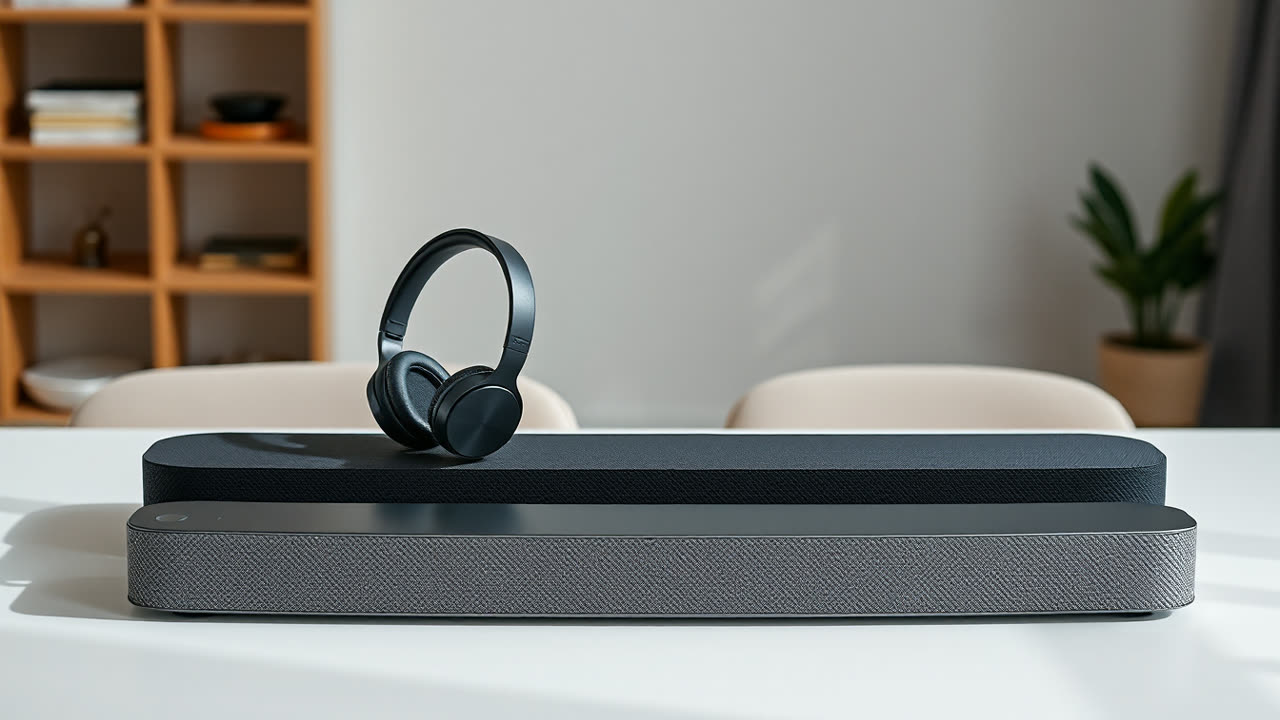
Sonos is embedding artificial intelligence directly into its core audio operating system, Sonos 27, marking a significant strategic pivot that aims to unify its hardware ecosystem with agentic automation and open AI integration. This ambitious overhaul, announced alongside new flagship products—the Sonos Ace Ultra headphones ($449) and Beam Ultra soundbar ($699)—is a direct response to a rapidly evolving smart home market and an effort to rebuild user trust after a "disastrous app update" in May 2024 that led to widespread customer frustration and a leadership change. Available for pre-order on September 1, 2026, with general availability on September 29, 2026, these announcements signal Sonos's intent to move beyond a hardware-centric model into a more intelligent, adaptable, and personalized audio experience.
The Sonos Ace Ultra, the company's second foray into personal audio after the original Ace headphones launched in June 2024, features stronger Adaptive Active Noise Cancellation (ANC), a 35-hour battery life, and new 40mm drivers tuned with input from the Sonos Soundboard. Its standout feature is direct Wi-Fi integration and "headphone linking" via the new Sonos Fabric capability, allowing users to seamlessly transfer TV audio from a Sonos soundbar to the headphones. This directly addresses a key limitation of the previous Ace model and rivals like Apple AirPods Max, Sony WH-1000XM5, and Bose QuietComfort Ultra, which lack such deep integration with a home entertainment system. The Ace Ultra's focus on ecosystem connectivity aims to differentiate it in a crowded premium headphone market where competitors often excel in specific areas like ANC (Bose QC Ultra, Sony WH-1000XM5) or midrange clarity (AirPods Max).
Accompanying the headphones is the Sonos Beam Ultra, a compact soundbar priced at $699, which significantly upgrades the popular Beam Gen 2 by incorporating true 7.1.2 Dolby Atmos with physical up-firing drivers. This is a crucial improvement, as the Beam Gen 2 relied on software emulation for height effects. The Beam Ultra also boasts a redesigned center channel for clearer dialogue, four levels of AI Speech Enhancement, and a Night Sound mode. Its ability to combine with portable Sonos speakers as wireless rear surrounds, thanks to Sonos Fabric's "Positioning Technology" that uses high-frequency sound to detect and adapt speaker roles, further enhances its home theater flexibility. This positions the Beam Ultra as a compelling mid-range option, bridging the gap between the existing Beam and the larger, more expensive Arc Ultra, which itself offers 14 drivers and four high channels for a wider soundstage.
At the heart of these hardware innovations is Sonos 27, the latest iteration of the company's audio operating system, and a completely redesigned app. The most striking aspect is the extensive integration of AI, which Sonos openly states is being implemented because it’s “very hot these days.” This includes Sonos 27voice, an in-house assistant for music and mood curation, and Sonos 27mcp, an open framework allowing outside AI assistants like OpenAI's ChatGPT to connect directly to the Sonos system. Users can ask ChatGPT to play music on their Sonos devices without leaving the conversation. Critically, these AI features are opt-in, addressing consumer concerns about privacy, which remains a top priority even as over half of consumers believe AI can improve their listening experience. Sonos is also previewing "Sonos Custom Agents," a forthcoming feature that will allow users to build personalized AI assistants with distinct models, personas, and voices.
This comprehensive strategy, spearheaded by CEO Tom Conrad, seeks to transform Sonos from a premium speaker company into a holistic "audio operating system" for the home. The previous app debacle in 2024, which impacted hardware sales and customer sentiment, underscored the critical importance of robust and intuitive software. By focusing on "Sonos Fabric" to enable seamless device interaction and an "open platform" approach to AI, Sonos aims to not only regain trust but also to future-proof its ecosystem against the growing influence of tech giants like Apple, Amazon, and Google in the smart home space.
The analytical value here lies in Sonos's recognition that hardware alone is no longer enough to command the premium segment. The company's nearly $1.5 billion in fiscal 2024 revenue is overwhelmingly hardware-driven, but the long-term growth opportunity lies in deepening engagement within its 17.1 million existing households and converting single-product users into multi-product ones. AI is the chosen mechanism to achieve this, offering personalized content recommendations, enhanced audio quality through adaptive processing, and greater automation across the smart home. The opt-in nature of AI features is a smart move to mitigate privacy fears, which Futuresource research indicates is a significant consumer concern.
Looking ahead, Sonos's "open AI" strategy, particularly with Sonos 27mcp and Custom Agents, could be a shrewd move to avoid the pitfalls of developing a proprietary AI that struggles to keep pace with industry leaders. By allowing integration with external AI models like ChatGPT, Sonos can leverage cutting-edge advancements without bearing the full development burden. However, the success of this approach hinges on seamless integration and a user experience that genuinely enhances, rather than complicates, listening. The challenge will be to maintain the "radically easy system" ethos while introducing complex AI functionalities. If executed well, Sonos could establish itself as the intelligent audio layer across various AI platforms, reinforcing its premium position and driving deeper ecosystem lock-in through unparalleled convenience and personalization. If not, the missteps of the 2024 app update could serve as a harsh reminder that software complexity, even with "hot" AI, can quickly erode brand loyalty.