Sonos Reintroduces Lock Screen Controls for iPhone Users via Apple's Live Activities
Sonos has restored essential playback controls to the iPhone lock screen, Dynamic Island, and Apple Watch/CarPlay displays, leveraging Apple's Live Activities system to address a major user pain point and rebuild trust after a controversial app redesign.
✨ This content was summarized and interpreted by AI; it may contain errors — please verify accuracy with the original sources. Learn more
Listen to this story
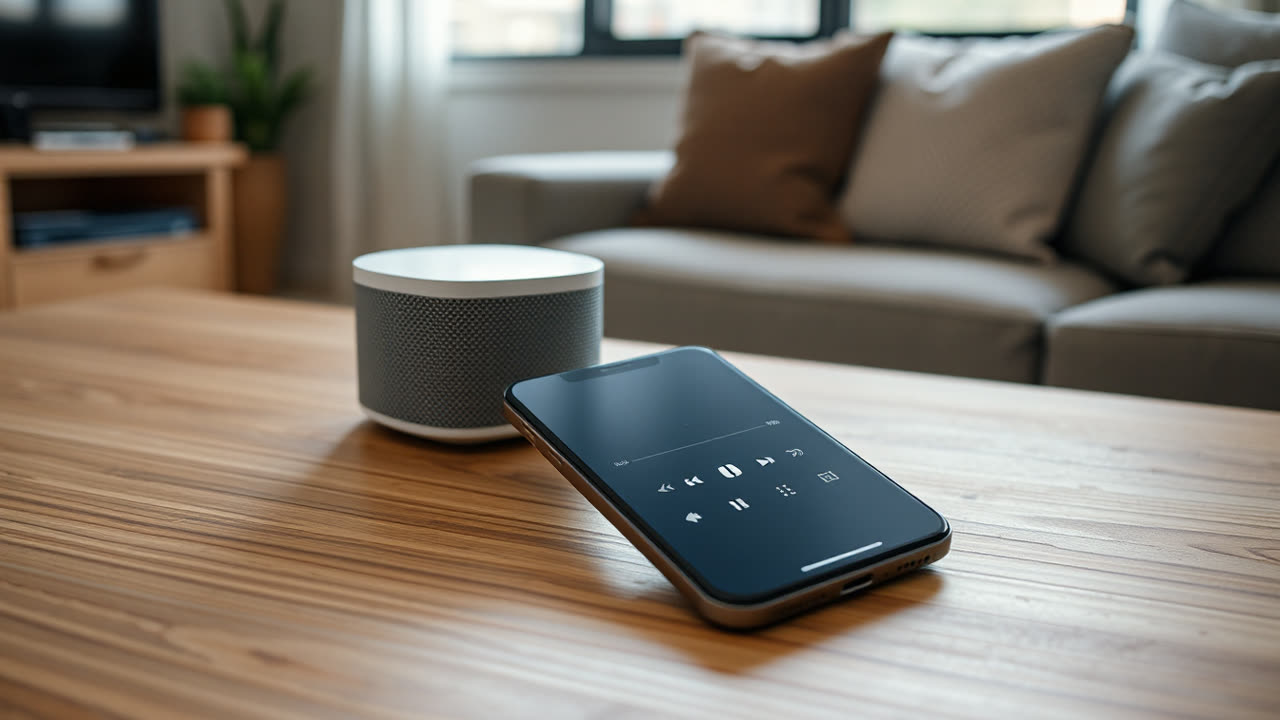
The reintroduction of lock screen controls for Sonos on iPhones, leveraging Apple's Live Activities system, marks a significant step in the company's ongoing effort to rebuild user trust and enhance the foundational user experience. This update, released with app version 80.16.32 on iOS, allows iPhone users to view playback information and access basic controls like play/pause and track skipping directly from their lock screen, the Dynamic Island, and even on Apple Watch and CarPlay displays, though controls are not yet functional on the latter two. This functionality was a "much requested, anticipated, and needed feature" according to Sonos itself, addressing a prominent pain point that emerged after a controversial app redesign in 2024.
The significance of this re-implementation extends beyond mere convenience; it signals Sonos's renewed commitment to core user experience after a period of considerable turbulence. Previously, Sonos offered lock screen controls for iOS devices starting in 2016, but this feature was removed in 2023 because the underlying architecture no longer aligned with Apple's updated design framework. This removal was compounded by a "disastrous" app redesign in May 2024, which stripped away crucial features and introduced bugs, leading to widespread user dissatisfaction and the eventual departure of former CEO Patrick Spence. Current CEO Tom Conrad has since prioritized restoring customer trust, and the reintroduction of lock screen controls is a direct response to this strategic imperative. For users, the ability to control playback without fully unlocking their phone and navigating to the app represents a substantial improvement in usability, particularly for a system designed around instant, multi-room audio. It streamlines interaction, reducing friction for common tasks like pausing music during a call or skipping an unwanted track, thereby elevating the perceived responsiveness and integration of the Sonos ecosystem within the broader iOS environment.
Apple's Live Activities, introduced with iOS 16, are designed to provide real-time, glanceable updates for ongoing events directly on the lock screen and Dynamic Island. This system is a natural fit for music playback, offering a persistent notification that updates with track information and provides interactive elements. While the current Sonos implementation displays the room or group playing and the track title, it notably lacks album art, a limitation Sonos acknowledges and is exploring ways to enhance. Furthermore, while the Live Activity appears on Apple Watch and CarPlay, the playback controls are not yet functional in these contexts, requiring users to unlock their iPhone for adjustments. This contrasts with some third-party solutions, like "Lyd for Sonos," which already offer album artwork and more comprehensive controls via Live Activities and Dynamic Island integration. Despite these initial caveats, the adoption of Live Activities positions Sonos to leverage future iOS enhancements, as Apple continues to evolve the framework with interactive elements and improved performance in iOS 17 and 18.
In the competitive smart speaker market, where the global market size reached approximately $17 billion in 2024 and is projected to grow to $21.4 billion by 2025, user experience remains a critical differentiator. Amazon leads the market with a 23% share as of 2024, followed by Apple at 15% and Alphabet (Google) at 8%. While Sonos competes in the premium segment with products like the Era 100 and Era 300, its market share is often grouped under "other brands," which collectively account for a smaller percentage. Enhancing app functionality and integration with dominant mobile platforms like iOS is crucial for Sonos to maintain its appeal against rivals that often offer deeper, native integrations with their own smart home ecosystems and voice assistants (Alexa, Google Assistant, Siri). The return of lock screen controls helps Sonos close a gap in convenience that had persisted, bringing its iOS app closer to parity with its Android counterpart, which regained similar lock screen notifications in February 2026.
Looking ahead, this update is more than just a feature parity fix; it's a strategic move that underscores Sonos's focus on software as a cornerstone of its integrated audio platform. The company's net income rose to $93.8 million in Q1 2026, an 86.7% increase from Q1 2025, and gross margin improved to 46.5%, indicating a strengthening financial position despite a slight revenue decrease. With a market cap of $1.92 billion as of August 2026, Sonos is well-positioned to continue investing in app development. The company's acknowledgment of ongoing work, particularly regarding album art and extended control functionality for Apple Watch and CarPlay, suggests a roadmap for further refinements. As iOS 27 looms, offering potential new capabilities, Sonos's engagement with Apple's latest APIs will be key to delivering a truly seamless and intuitive user experience that can compete effectively in an increasingly integrated smart home landscape. The success of this and future app enhancements will ultimately determine whether Sonos can not only regain the trust of its existing user base but also attract new customers in a fiercely competitive market.