Sony A7R VI Shatters Boundaries with 66.8MP Stacked Sensor and AI-Powered Speed
Launching in May 2026, the Sony A7R VI redefines professional photography by merging an unprecedented 66.8-megapixel fully stacked Exmor RS CMOS sensor with blistering 30fps speed, driven by an AI-integrated BIONZ XR2 processor.
✨ This content was summarized and interpreted by AI; it may contain errors — please verify accuracy with the original sources. Learn more
Listen to this story
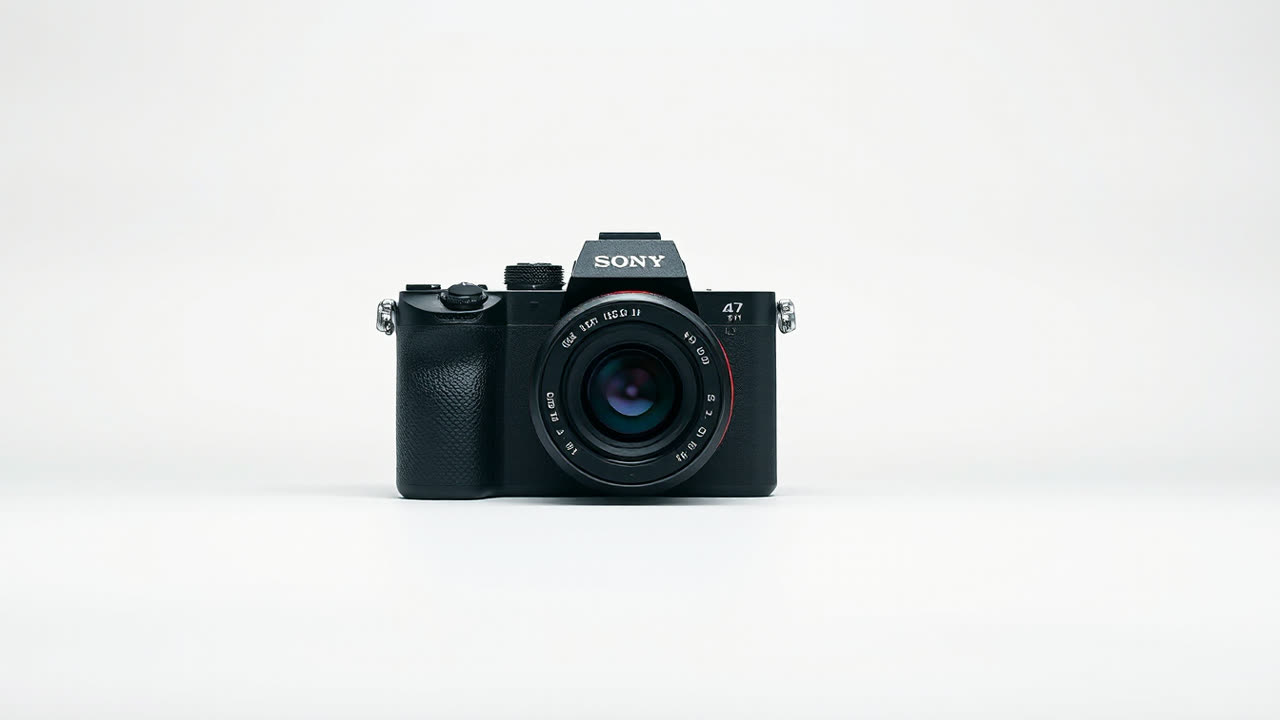
The Sony A7R VI shatters traditional distinctions in professional photography, launching in May 2026 with an unprecedented 66.8-megapixel fully stacked Exmor RS CMOS sensor that redefines the capabilities of a high-resolution camera. Priced at approximately $4,499 USD, this flagship mirrorless body is not merely an incremental update; it integrates the raw pixel power of the R-series with the blistering speed typically reserved for dedicated sports cameras, fundamentally altering expectations for hybrid shooters. This confluence of resolution and velocity is driven by Sony's advanced BIONZ XR2 processor, featuring an integrated AI processing unit that facilitates a 5.6x faster sensor readout compared to its predecessor, the A7R V.
The significance of the A7R VI extends far beyond a simple megapixel count increase from the A7R V's 61MP; the true leap lies in the stacked sensor architecture. This design allows for blackout-free continuous shooting at an astounding 30 frames per second (fps) with the electronic shutter, complete with full autofocus (AF) and auto-exposure (AE) tracking in 14-bit RAW compressed files, a three-fold increase over the A7R V's 10fps. This burst rate now matches the speed-focused Alpha 1 II, positioning the A7R VI as a formidable all-rounder rather than a niche studio or landscape tool. The enhanced Real-Time Recognition AF+ system, powered by the AI unit, boasts 759 phase-detection points and performs 60 AF/AE calculations per second, offering superior subject recognition, tracking persistence for fast-moving subjects, and improved detection of small or distant subjects compared to its predecessor. This translates into a camera that can consistently deliver 66.8MP's worth of detail even in dynamic scenarios, a critical advancement for commercial, wildlife, and sports photographers where both resolution and decisive moments are paramount.
Beyond stills, the A7R VI makes a compelling case for hybrid content creation. It offers internal 8K 30p video recording, oversampled from 8.2K or 10K, and full-frame 4K video at up to 120p without cropping at 60p, all with 10-bit 4:2:2 color sampling. The faster sensor readout dramatically reduces rolling shutter distortion, a notable weakness of the A7R V, making the VI a far more capable tool for video in fast-moving situations. Furthermore, the camera introduces a "Dual Gain Shooting" mode, optimizing sensor performance for reduced noise and improved dynamic range in Log recording, a feature previously more common in Sony's dedicated cinema line. The A7R VI also boasts an exceptional dynamic range of up to 16 stops in mechanical shutter mode, achieving a class-leading 12.55 PDR (Photographic Dynamic Range) at base ISO 100, which surpasses rivals like the Canon R5 Mark II (11.45 stops) and Nikon Z8 (11.32 stops). This impressive dynamic range, coupled with an 8.5-stop in-body image stabilization system, ensures superior image quality and low-light performance, with a native ISO range of 100-32,000, expandable to ISO 50-102,400. The inclusion of a dual gain ISO sensor with base ISOs at 800 and 3200 further enhances its versatility in varied lighting conditions.
When comparing the A7R VI to its immediate predecessor, the A7R V, the approximately $1,660 price difference (considering a renewed A7R V at around $2,840) prompts a critical evaluation. While the A7R V remains a highly capable 61MP camera, the A7R VI's fully stacked sensor, significantly faster readout, and enhanced video capabilities represent a fundamental architectural shift. For professionals whose workflow demands the highest resolution combined with uncompromised speed for action, the A7R VI justifies its premium. For instance, the pre-capture shooting feature, buffering up to one second of images before the shutter is fully pressed, is invaluable for unpredictable moments in wildlife or sports. The new 9.44 million-dot OLED electronic viewfinder, three times brighter than the A7R V's and covering the DCI-P3 color space, also offers a superior viewing experience.
The A7R VI's emergence signals a pivotal moment, perhaps indeed "peak camera" in the traditional sense of raw sensor specifications. With 66.8 megapixels, class-leading dynamic range, and burst speeds that rival dedicated sports bodies, the physical limitations of what a single full-frame sensor can achieve are being pushed to their extremes. The industry's focus is clearly shifting from merely increasing resolution to enhancing the *usability* of that resolution across diverse and demanding scenarios, primarily through faster processing, AI integration, and robust hybrid functionality. What comes next will likely involve even deeper integration of computational photography, more specialized AI functions for everything from composition to post-processing, and potentially new sensor technologies that further blur the lines between still and video capture, and even between traditional cameras and advanced imaging devices. The A7R VI is not just a camera; it's a statement that the era of compromise between resolution and speed is largely over, setting a new benchmark for what a single camera body can accomplish.