SpaceX Takes Power Generation In-House to Fuel AI Data Centers
SpaceX is now manufacturing turbine blades internally, aiming to slash generator deployment times by 18 months and meet the urgent power demands of Elon Musk’s rapidly expanding AI infrastructure.
✨ This content was summarized and interpreted by AI; it may contain errors — please verify accuracy with the original sources. Learn more
Listen to this story
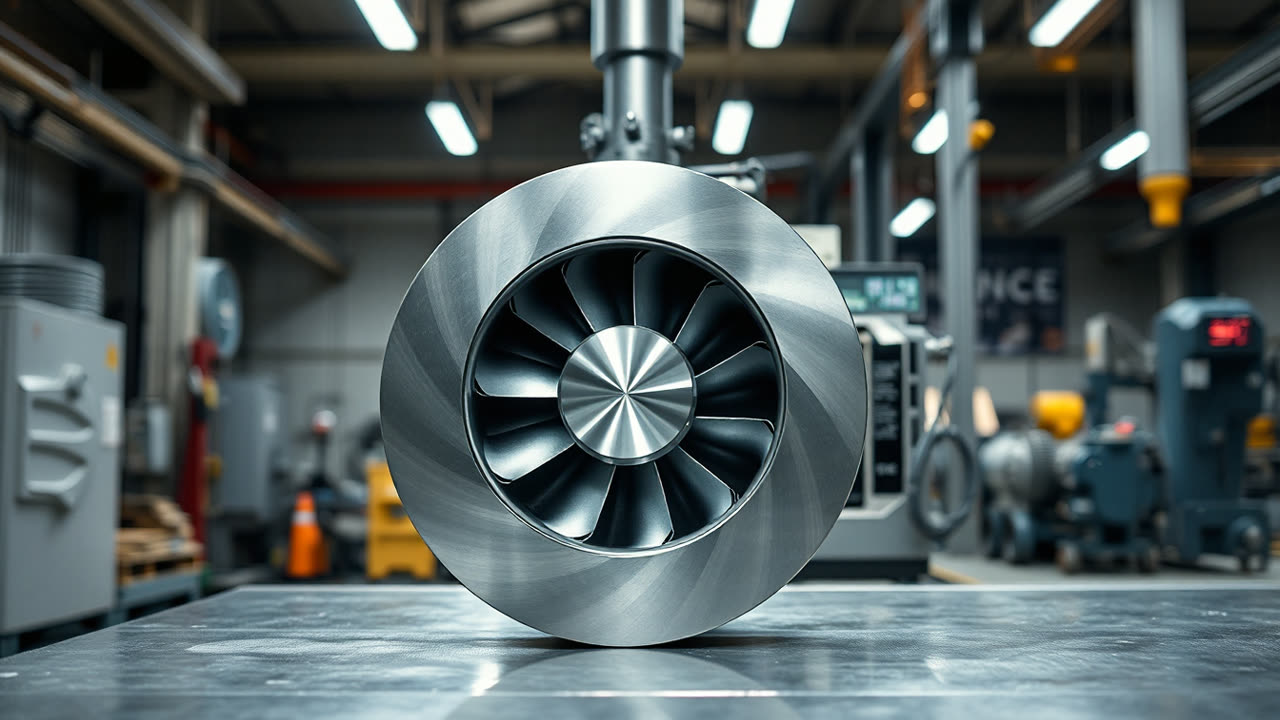
SpaceX has initiated in-house manufacturing of turbine blades, a strategic move designed to drastically reduce the 60-to-90-week lead times for these complex components and cut overall generator delays by an estimated 18 months, directly addressing the urgent power demands of Elon Musk’s burgeoning AI data centers. This vertical integration effort targets one of the most challenging aspects of gas-powered generator production, with turbine blades and vanes being notoriously difficult to build due to their intricate designs and high-performance material requirements. The decision underscores a critical bottleneck in scaling AI infrastructure: the reliable and rapid deployment of massive power generation capacity, an issue that traditional supply chains are currently struggling to meet at the pace required by hyperscale AI operations.
This manufacturing pivot by SpaceX is far more than a simple supply chain optimization; it represents a profound strategic realignment in how critical infrastructure for AI is being conceived and executed. By bringing turbine blade production in-house, Musk is directly attacking the dependency on external suppliers whose lengthy lead times can cripple the rapid expansion necessary for AI compute. The typical 60 to 90 weeks required for turbine blade and vane production often contribute significantly to the multi-year timelines for deploying large-scale gas turbine power plants. For AI data centers, where every month of delay translates into lost competitive advantage and slower model training, an 18-month acceleration in generator deployment is a game-changer. This move suggests a recognition that the foundational infrastructure for AI, particularly its energy backbone, cannot be left to traditional, slower-moving industries. It implies a 'SpaceX-ification' of power generation, applying the company's aggressive vertical integration and rapid iteration philosophy to a sector historically characterized by long cycles and established players.
Historically, major tech companies powering their data centers have relied on a mix of grid power, often supplemented by large-scale backup generators and, increasingly, renewable energy sources. Companies like Google, Microsoft, and Amazon have invested heavily in power purchase agreements for solar and wind farms, alongside developing advanced power management systems. However, the sheer, uninterrupted power density required for next-generation AI, particularly for training massive models, often necessitates reliable, high-output baseload generation that renewables alone cannot yet consistently provide. This is where gas-powered generators, despite their carbon footprint, become a pragmatic necessity for rapid deployment and consistent supply. The bottleneck isn't just the generator itself, but the highly specialized components like turbine blades, which are typically manufactured by a limited number of global specialists such as Siemens Energy, General Electric, and Mitsubishi Heavy Industries. These established players have optimized for durability and efficiency over decades, but perhaps not for the rapid, almost bespoke, deployment timelines now demanded by the AI industry. SpaceX's direct intervention into this highly specialized manufacturing process highlights an industry-wide capacity crunch for critical power components.
Looking ahead, this move by SpaceX could trigger a broader shift in how hyperscalers approach their energy needs. If successful, it could set a precedent for other tech giants to consider deeper vertical integration into critical power components, moving beyond just sourcing and into manufacturing. This doesn't necessarily mean every tech company will start building turbine blades, but it could spur investment in advanced manufacturing techniques, automation, and potentially new materials to accelerate production. Furthermore, it could incentivize traditional industrial power generation companies to innovate faster, shorten lead times, and potentially adopt more agile manufacturing processes to remain competitive with the demands of the rapidly evolving AI sector. The immediate impact will be on the speed at which Musk's various AI ventures, including xAI and potentially Tesla's compute infrastructure, can scale. Longer term, this strategy could redefine the relationship between technology companies and their energy suppliers, blurring the lines between consumer of power and producer of critical power components, ultimately accelerating the build-out of the vast energy infrastructure needed to sustain the AI revolution.