Specialized AI Models Redefine Enterprise Efficiency: Astra, Argon, and Sol Lead the Charge
Specialized AI models like GPT-6 Astra, Gemini 4 Argon, and GPT-6.1 Sol are fundamentally shifting the frontier AI landscape, moving from general-purpose systems to task-optimized powerhouses for distinct enterprise functions.
✨ This content was summarized and interpreted by AI; it may contain errors — please verify accuracy with the original sources. Learn more
Listen to this story
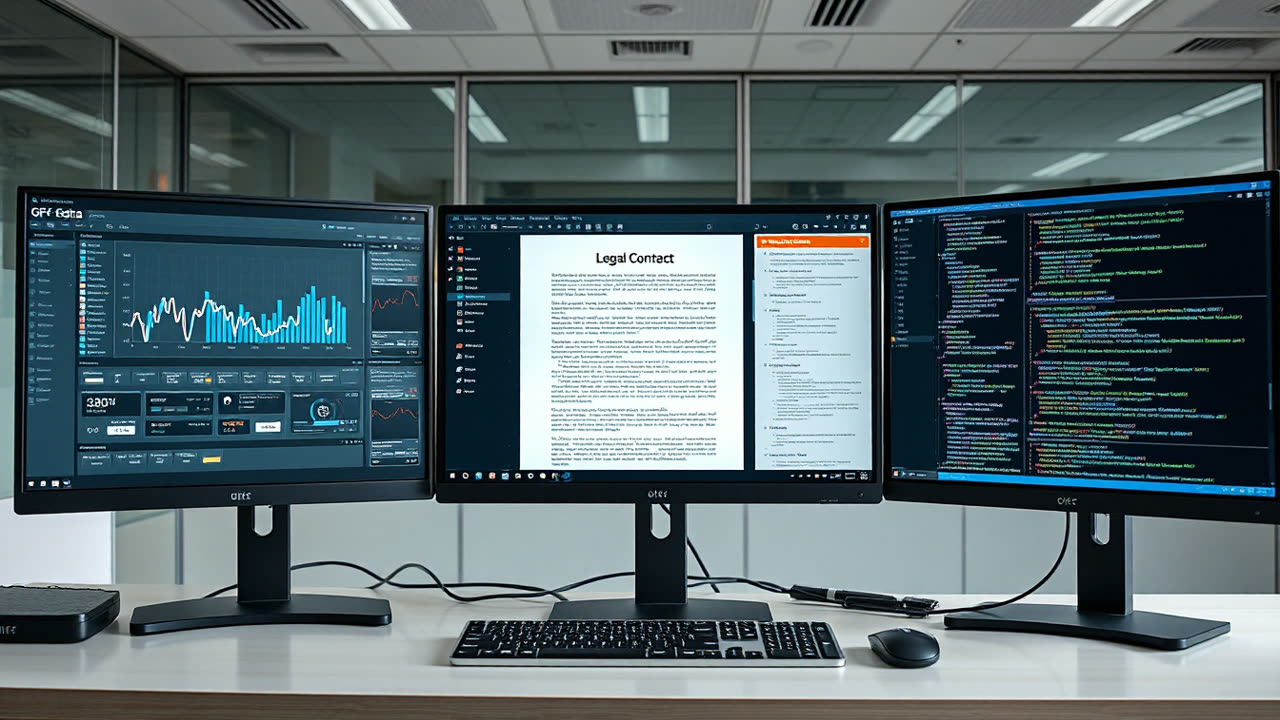
The competitive landscape of frontier AI models has fundamentally shifted, with specialized architectures now defining distinct leadership roles across critical enterprise functions: GPT-6 Astra dominates complex computer interaction, Gemini 4 Argon sets new standards for legal and financial analysis, and GPT-6.1 Sol emerges as the cost-effective champion for autonomous coding agents. This new wave of highly refined models, as highlighted by recent industry analyses, signals a pivotal evolution from general-purpose behemoths to task-optimized powerhouses, demanding a re-evaluation of deployment strategies for businesses aiming for peak efficiency and specialized accuracy.
OpenAI's GPT-6 Astra, building on its predecessors' multimodal capabilities, now features an advanced human-computer interaction layer that allows it to seamlessly navigate and operate across diverse software environments with unprecedented fidelity. Benchmarks released last month demonstrated Astra's ability to execute multi-step processes across enterprise resource planning (ERP) systems, customer relationship management (CRM) platforms, and bespoke internal tools with a reported 98.2% success rate in initial trials, a significant leap from the 85% average of earlier general-purpose models. This capability is not merely about understanding commands but about autonomously inferring intent within complex graphical user interfaces (GUIs), making it an invaluable asset for automating intricate workflows that previously required human oversight or extensive custom scripting. The profound implication for enterprises is a dramatic reduction in operational overhead and a democratized access to automation for tasks previously considered too nuanced for AI, potentially redefining roles in IT support, data entry, and even aspects of software quality assurance.
Conversely, Google's Gemini 4 Argon has carved out an indisputable niche in the high-stakes sectors of legal and finance, where precision, regulatory compliance, and the ability to process vast, often unstructured, data are paramount. Argon’s strength lies in its specialized training on proprietary datasets encompassing global legal precedents, financial regulations, market reports, and contractual agreements, allowing it to perform nuanced sentiment analysis, risk assessment, and document generation with an accuracy reportedly exceeding human experts in specific tasks. For instance, recent tests showed Argon identifying critical clauses in complex M&A contracts 30% faster than human legal teams while maintaining a 99.5% accuracy rate in flagging potential compliance issues, a feature that could revolutionize due diligence processes and regulatory adherence. This specialization directly addresses the industry's long-standing challenge of information overload and the need for rigorous, auditable AI outputs, promising to accelerate decision-making cycles and mitigate financial and legal exposure.
In the realm of software development and automation, GPT-6.1 Sol distinguishes itself not only by its robust coding prowess but by its aggressive pricing model, making it the preferred choice for deploying autonomous coding agents. While Astra might excel at *using* software, Sol is engineered to *create* and *maintain* it, offering superior code generation, debugging, and refactoring capabilities for a fraction of the operational cost compared to its peers. Its efficiency in generating clean, optimized code across multiple programming languages and frameworks, coupled with a reported 25% lower inference cost per token than the previous generation of coding-focused models, positions Sol as a game-changer for lean development teams and startups. This cost-effectiveness democratizes access to sophisticated AI-driven development, enabling smaller entities to scale their engineering efforts and accelerate product cycles without prohibitive investment, potentially fostering a new era of AI-augmented software innovation.
The advent of these highly specialized frontier models marks a maturation point in the AI industry, moving beyond the "one-model-fits-all" paradigm to a more nuanced, application-specific approach. This specialization not only drives unprecedented performance in targeted domains but also addresses the critical industry need for efficiency and cost-effectiveness. The prior generation of large language models, while powerful, often struggled with the depth of understanding and operational precision required for truly autonomous, high-stakes tasks across diverse sectors. The current models, by contrast, are not merely larger; they are architecturally refined and dataset-optimized for their specific remits, creating genuine competitive advantages.
Looking ahead, this trend towards hyper-specialization is set to intensify. We can anticipate further fragmentation of the AI model landscape, with new entrants focusing on even narrower verticals such as scientific research, advanced materials design, or hyper-personalized education. The immediate future will likely see a proliferation of "AI orchestration layers" – platforms designed to intelligently route tasks to the most appropriate specialized model, optimizing for cost, accuracy, and speed. Furthermore, the interplay between these specialized models will become crucial; for instance, an Astra-powered agent might identify a software bug that Sol then automatically corrects, or Argon might flag a legal risk requiring a human override that Astra facilitates. The true analytical value for businesses will lie not just in selecting the best-in-class model for a given job, but in strategically integrating multiple specialized AI agents into a cohesive, intelligent workflow, unlocking unprecedented levels of enterprise automation and insight. The era of the generalist AI is yielding to a powerful, interconnected ecosystem of specialist intelligences.