Spotify's AI Replaces Dedicated Running Mode with Ubiquitous Personalization
Spotify has phased out its explicit 'Running Mode' in favor of a more integrated, AI-powered personalization approach that dynamically supports runners through intelligent recommendations and features like the AI DJ.
✨ This content was summarized and interpreted by AI; it may contain errors — please verify accuracy with the original sources. Learn more
Listen to this story
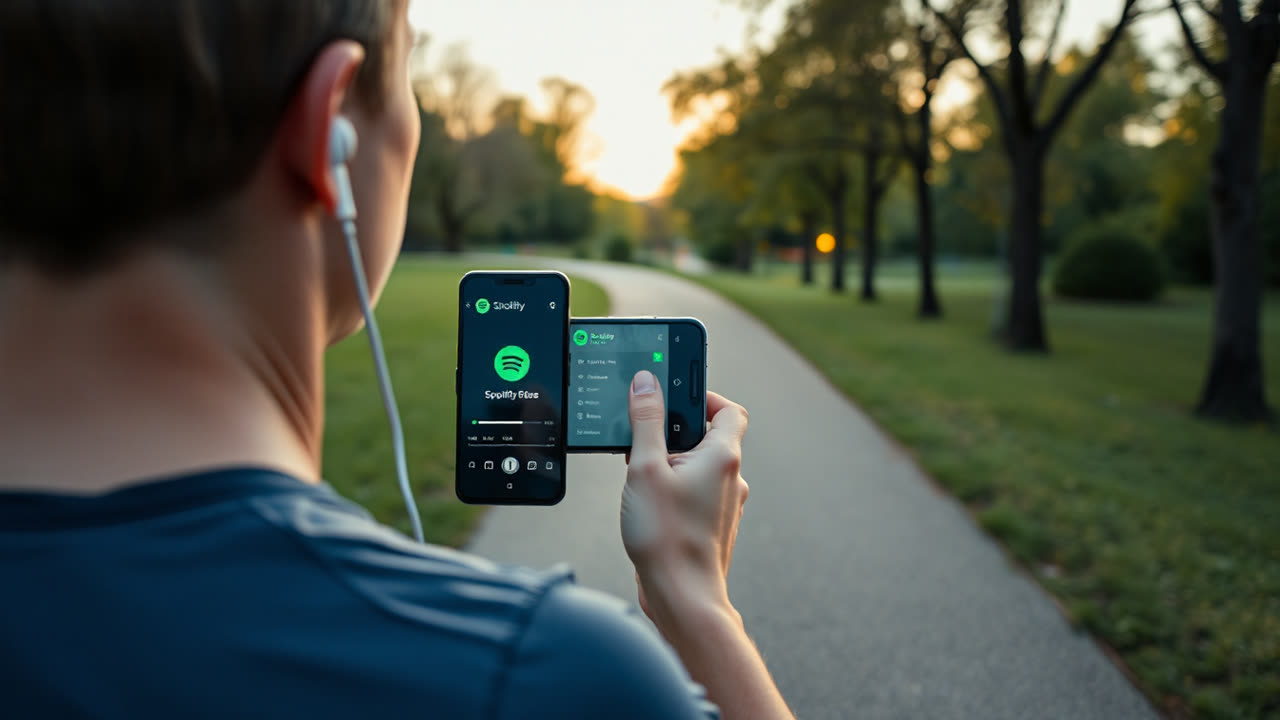
While Spotify’s pioneering "Running Mode," which dynamically matched music tempo to a user's stride, was discontinued in 2018, the platform has evolved its approach to supporting runners through a sophisticated, albeit less explicit, suite of AI-powered personalization features. This strategic pivot reflects a broader industry trend towards ubiquitous, integrated AI experiences rather than dedicated, siloed modes.
Today, maximizing one's stride with Spotify's AI capabilities on iOS and Android primarily revolves around leveraging its powerful recommendation engine and personalized content streams. Instead of a single "Running Mode," users tap into an ecosystem of algorithmic playlists, the innovative AI DJ, and seamless third-party integrations. Spotify's "Daily Mixes" and "Discover Weekly" are prime examples, continuously learning user preferences and activity patterns to curate fresh, high-energy tracks suitable for a run. These playlists are not explicitly tied to stride tempo, but their algorithmic generation based on BPM, genre, and user listening history effectively provides a dynamic and personalized soundtrack for various intensities of exercise.
The AI DJ, a more recent innovation, further elevates the personalized running experience by acting as an intelligent audio companion. It selects music based on listening habits, often introducing new tracks or artists, and provides contextual commentary in a synthetic voice. While not designed for real-time tempo matching, the AI DJ’s ability to create a continuous, evolving flow of music, interspersed with insights, can keep runners engaged and motivated, reducing the need for manual song selection. This feature exemplifies Spotify's shift towards ambient intelligence, where AI anticipates and adapts to user needs without requiring explicit mode activation. Furthermore, Spotify's extensive library includes a vast array of genre-specific "Workout" or "Running" playlists, many of which are algorithmically updated or curated by users and the platform, offering diverse tempos and moods for different running styles and durations.
The impact on users is a trade-off: while the specific real-time tempo matching of the original Running Mode is gone, users gain greater flexibility and broader music discovery. They are no longer confined to a single mode but can leverage Spotify's core personalization strengths across any activity. This means a runner can transition from a high-intensity sprint to a cool-down walk, and Spotify's algorithms will continue to provide relevant music, whether through a Daily Mix, the AI DJ, or a user-generated playlist. This shift empowers users to craft their ideal running soundtrack through a combination of algorithmic suggestions and personal curation, fostering a more adaptable and less prescriptive experience.
For the industry, Spotify's evolution signifies a move away from attempting to be a comprehensive fitness app, instead solidifying its position as the premier audio platform that *integrates* with dedicated fitness services. The original "Spotify Running" was launched in 2015, offering a unique feature that automatically detected a runner's pace and adjusted music BPM accordingly, aiming to provide a seamless motivational experience. However, its discontinuation in 2018, alongside other niche features, suggested a strategic decision to streamline the app and focus resources on core music streaming and broader personalization. This contrasts with rivals like Apple Fitness+, which offers deeply integrated music with its guided workouts, or Nike Run Club, which provides guided runs often with curated playlists. Peloton, another major player, builds its entire experience around curated music within instructor-led classes. Spotify, by contrast, provides the foundational music layer, allowing users to bring their personalized soundtracks to these or any other running experience, often via direct integrations. For instance, Spotify connects with popular running apps like Nike Run Club, enabling users to play their Spotify music directly within the third-party app environment, effectively outsourcing the fitness-specific tracking and guidance while retaining its role as the primary music source.
Looking ahead, Spotify's trajectory in supporting fitness will undoubtedly be driven by further advancements in AI and deeper contextual understanding. Expect more sophisticated adaptive audio experiences where AI might subtly adjust music based on real-time biometric data (e.g., heart rate, cadence data from connected wearables), even if not directly matching tempo. Such integration would likely come through enhanced partnerships with fitness device manufacturers and app developers, allowing Spotify's AI to interpret external data and dynamically fine-tune the audio experience, perhaps through subtle changes in genre, energy, or even spatial audio cues. The platform could also explore more advanced mood-adaptive algorithms, creating playlists that not only match a runner's energy but also their psychological state, enhancing focus or providing a calming cool-down. The challenge will be to balance this increasing personalization with user control and data privacy, ensuring that these advanced features genuinely augment the running experience without becoming intrusive. Ultimately, Spotify is positioning itself as an intelligent audio companion for life, with AI-driven running features being a significant, albeit evolving, facet of that broader vision.