Spotify's 'Playlist Notes' Transforms Music Listening Experience
Spotify's new 'Playlist Notes' feature allows users and editorial teams to embed rich contextual explanations directly within playlists, transforming passive consumption into narrative journeys.
✨ This content was summarized and interpreted by AI; it may contain errors — please verify accuracy with the original sources. Learn more
Listen to this story
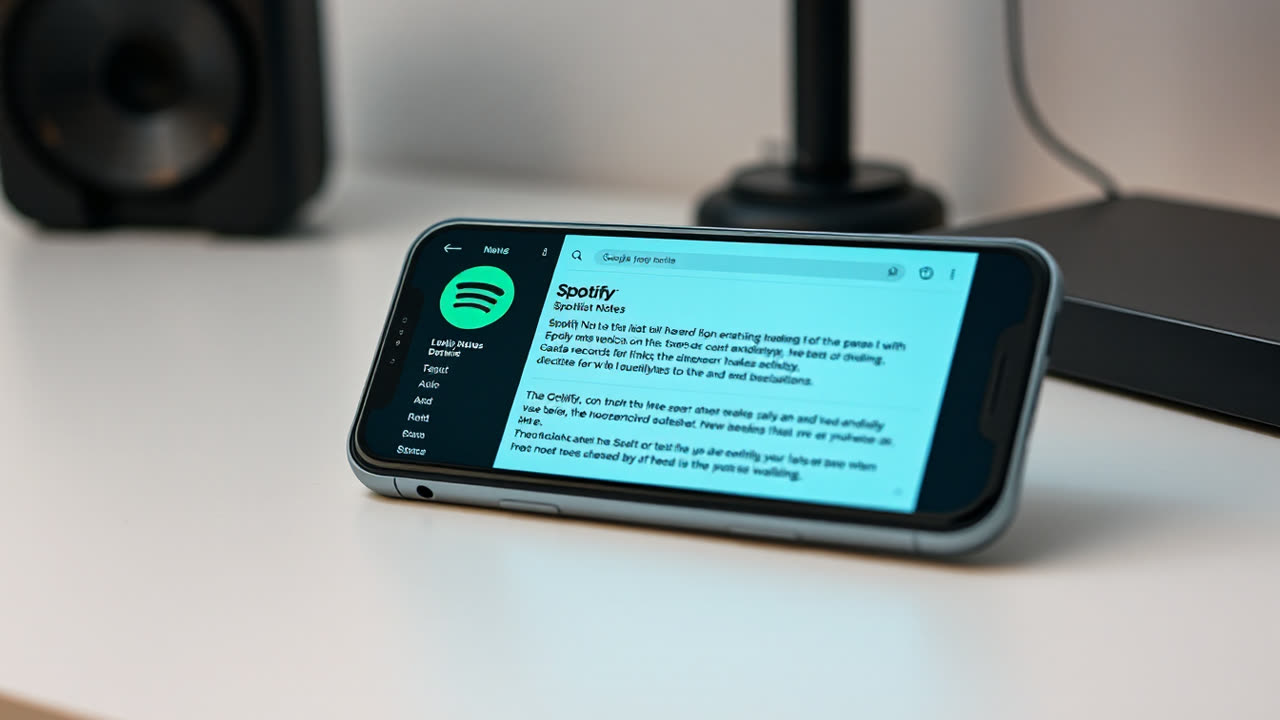
Spotify's new "Playlist Notes" feature, launched on August 17, 2026, fundamentally redefines the passive consumption of curated music, allowing both individual users and editorial teams to embed rich contextual explanations directly within their playlists. This innovative addition moves beyond mere song titles and artist names, offering a dedicated space for creators to articulate the stories, inspirations, and specific moods behind their selections, a capability that will be prominently integrated into high-profile editorial mainstays like RapCaviar and other genre-defining collections. The immediate impact is a significant enhancement of the listening experience, transforming playlists from simple sonic sequences into narrative journeys, fostering a deeper connection between the curator's intent and the listener's understanding.
This development is far more than a superficial UI tweak; it represents a strategic pivot for Spotify in an increasingly saturated streaming market, emphasizing human curation and contextual storytelling over purely algorithmic discovery. While algorithms excel at pattern recognition and personalized recommendations, they often lack the nuanced "why" behind a song's inclusion in a specific context. Playlist Notes fills this void, providing a vital layer of human insight that can illuminate a track's historical significance, its personal resonance, or its role within a broader cultural moment. For users, this means not just *what* to listen to, but *why* it matters, potentially leading to more meaningful musical discoveries and a richer appreciation for the art form. For creators, it offers an unprecedented tool for self-expression and direct communication with their audience, allowing them to build stronger communities around shared tastes and narratives.
The feature directly addresses a long-standing gap in digital music consumption—the absence of the "liner notes" experience that once accompanied physical media. While platforms like Genius offer crowd-sourced annotations for individual songs, Playlist Notes integrates curator-driven context directly at the playlist level, making it an organic part of the listening flow rather than a separate research endeavor. Rivals such as Apple Music and Tidal have attempted similar contextualization through editorial write-ups and exclusive content, but these are often separate articles or videos, not intrinsically linked to the playlist experience itself. Spotify's approach, by embedding these notes directly, streamlines the access to information and maintains the user within the core listening environment. This integration also differentiates it from YouTube Music's focus on video content or Amazon Music's emphasis on spatial audio, positioning Spotify as the premier platform for narrative-driven audio curation.
For the music industry, Playlist Notes opens new avenues for artist engagement, label promotion, and even potential monetization. Artists can now directly communicate the narrative arc of an album through a curated playlist, offering insights into their creative process or influences. Labels can leverage this feature to craft compelling promotional narratives around new releases, guiding listeners through the thematic connections between tracks. Furthermore, the feature could evolve into a premium content offering, where certain in-depth notes or exclusive insights from celebrity curators are gated behind subscriptions, adding value to Spotify's premium tiers. This also presents a significant opportunity for independent curators and tastemakers to build stronger personal brands, attracting followers based on their unique perspectives and explanatory prowess, thereby bolstering the broader creator economy within music.
Looking ahead, the success of Playlist Notes will hinge on user adoption and the quality of the content generated. Spotify will likely need robust moderation tools to ensure notes remain relevant and appropriate, particularly for user-generated content. Future iterations could see the integration of rich media beyond text, such as short audio clips from artists or interview snippets, further enhancing the storytelling potential. The platform might also explore AI-assisted note generation or summarization, particularly for longer playlists, to maintain conciseness and accessibility. Ultimately, Playlist Notes signals Spotify's continued evolution beyond a pure streaming service into a comprehensive audio platform, one where context and human connection are as vital as the music itself. This strategic move could solidify its leadership position by fostering a more engaged, informed, and loyal user base, setting a new standard for how digital music is both consumed and understood.