Steam Deck OLED Sales Collapse 80% After Price Hike, Faces Fierce Competition
Valve's significant price increase for its Steam Deck OLED models has triggered an estimated 80-82% sales collapse, fundamentally altering its competitive standing against powerful rivals.
✨ This content was summarized and interpreted by AI; it may contain errors — please verify accuracy with the original sources. Learn more
Listen to this story
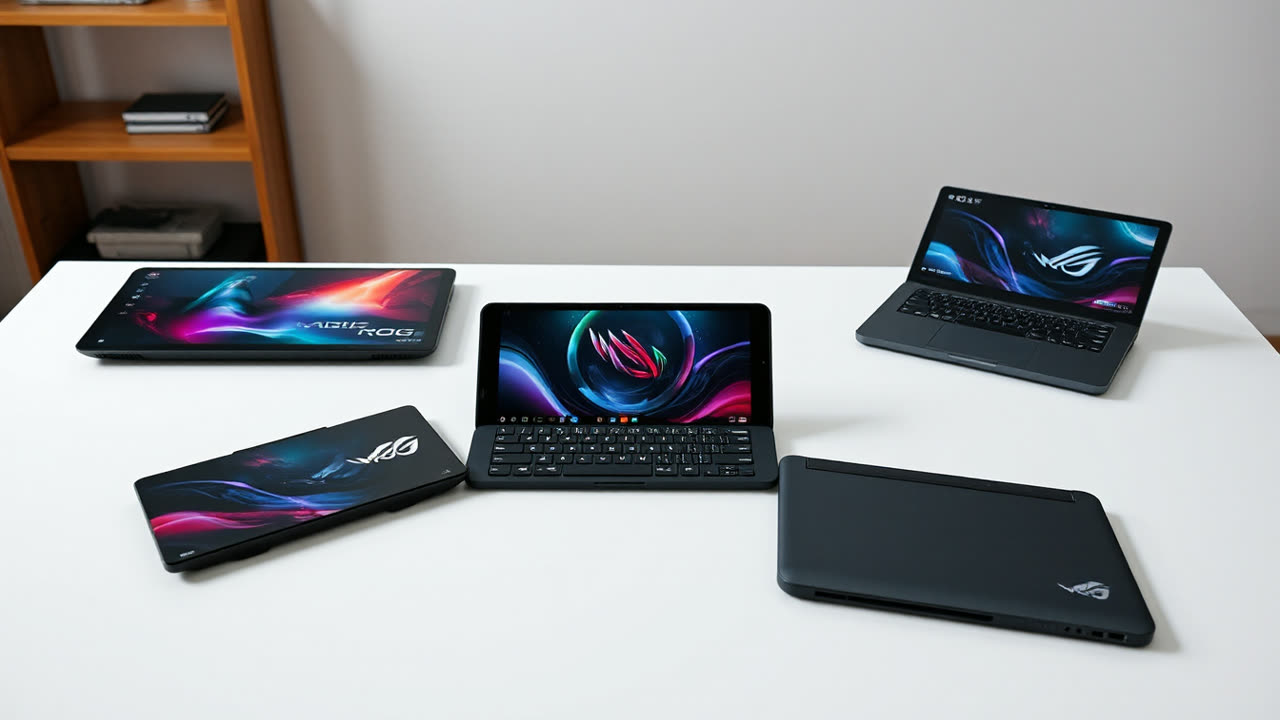
The Steam Deck, once the undisputed champion of the handheld PC gaming arena, faces a formidable challenge in September 2026, with Valve's May price hike for its OLED models triggering an estimated 80-82% collapse in weekly sales. The 512GB Steam Deck OLED now commands $789, while the 1TB version has surged to $949, marking increases of $240 and $300 respectively, a direct consequence of rising memory and storage costs across the industry. This significant price adjustment, coupled with the discontinuation of the more affordable LCD model, fundamentally alters the device's value proposition and its competitive standing against a rapidly evolving landscape of powerful, and in some cases, more budget-friendly rivals.
This shift in pricing is more than just a fiscal adjustment; it represents a critical inflection point for the handheld PC gaming market, which was valued at $12.9 billion in 2025 and is projected to reach $12.4 billion in 2026, illustrating a slight contraction before an anticipated rebound to $16.6 billion by 2035. Valve's initial strategy hinged on aggressive pricing to democratize PC gaming on the go, a vision that resonated deeply with consumers, driving cumulative Steam Deck sales to approximately 4 million units by early 2025. The current price point, however, positions the Steam Deck OLED above many entry-level gaming laptops and even the latest console hardware, forcing consumers to re-evaluate its appeal against a backdrop of compelling alternatives that often boast superior raw performance.
The impact on users is immediate and tangible. For those prioritizing an integrated, Linux-based gaming experience, SteamOS remains a significant draw. It offers a streamlined interface and a vast library of over 25,000 Verified or Playable titles as of January 2026. Valve's continued investment in SteamOS is evident, with updates like SteamOS 3.8.0 and the 3.9 preview in 2026 bringing improved graphics drivers, KDE Plasma 6.4, VRR frame pacing fixes, and even preliminary hibernation support. This commitment to the software ecosystem is arguably the Steam Deck's strongest enduring asset, fostering a console-like simplicity that Windows-based handhelds often struggle to replicate. However, SteamOS does inherently limit compatibility with titles employing specific anti-cheat software, such as *Fortnite* or *Call of Duty: Warzone*.
In the intensely competitive hardware arena of late 2026, the Steam Deck's core silicon—an AMD Zen 2 + RDNA 2 APU—is now two full generations behind what many contemporary rivals are shipping. Competitors like the ASUS ROG Ally (and its beefier iteration, the Ally X) and the Lenovo Legion Go series have pushed the envelope with newer AMD Z1 Extreme or Z2 Extreme processors, delivering generally higher frame rates and 3DMark Time Spy scores. The ROG Ally X, retailing around £999, offers improved battery life and a gorgeous LCD screen, running on Windows 11 for broad compatibility. Lenovo's Legion Go 2, which saw a SteamOS-powered variant launch in June 2026 starting at $1,199, boasts an 8.8-inch 120Hz OLED display, detachable controllers, and up to an AMD Z2 Extreme processor, with some models even considered superior SteamOS handhelds to the Deck itself. Even manufacturers like OneXPlayer have introduced a 2026 lineup featuring Intel Arc G3 Extreme or AMD Ryzen AI Max+ processors, high-brightness AMOLED displays, and innovative features like external liquid cooling, albeit at premium price points.
Despite these performance disparities, the Steam Deck OLED often maintains a real-world advantage in battery longevity when rival handhelds are pushed to their full potential, a crucial factor for a portable device. This efficiency, combined with its ergonomic design and Valve's consistent software updates, still makes it a compelling, albeit now more expensive, option for those deeply invested in the Steam ecosystem. However, the market is also seeing the Nintendo Switch 2, which, even with its own price hike to $500 in September 2026, presents a more affordable console-gaming alternative, albeit with a different game library focus.
Looking ahead, the landscape will continue to fragment. Valve has confirmed that a true Steam Deck 2 is in development, but it will not arrive until late 2027 or 2028, underscoring Valve's commitment to delivering a significant generational leap in performance and battery life, rather than incremental updates. This strategic delay allows Valve to wait for AMD's next-generation mobile APUs, likely based on Zen 5 CPU cores and RDNA 4 GPU architecture, ensuring a substantial upgrade. In the interim, the handheld PC market will likely see further innovation from ASUS, with a next-gen ROG Ally expected to be unveiled at Computex 2026, potentially featuring an OLED display to directly compete with the Steam Deck OLED's key visual advantage. The expansion of SteamOS to third-party devices, such as some Lenovo Legion Go models, also signifies a growing ecosystem beyond Valve's own hardware, potentially broadening the appeal of the Linux-based gaming experience. The Steam Deck, while still a solid device with a robust software platform, finds itself at a crossroads in 2026, challenged by more powerful, often pricier, competitors and its own escalated cost. Its continued relevance hinges less on raw performance and more on the enduring strength of SteamOS, its unique user experience, and Valve's long-term vision for a truly generational successor.