Sunbird Messaging Returns to Android with iMessage Blue Bubbles for $2.99/Month
Sunbird Messaging has re-emerged on the Google Play Store, promising Android users the coveted "blue bubble" iMessage experience for $2.99 per month, reigniting debates on messaging interoperability and security after a three-year hiatus.
✨ This content was summarized and interpreted by AI; it may contain errors — please verify accuracy with the original sources. Learn more
Listen to this story
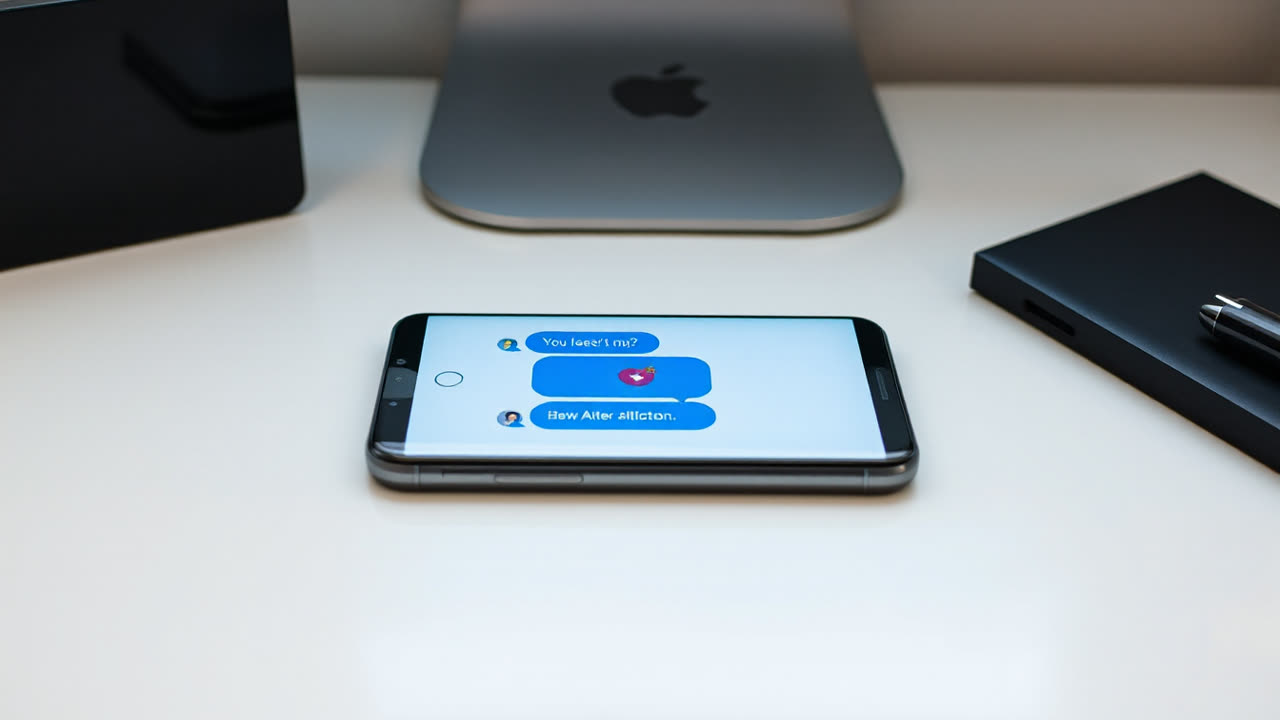
Sunbird Messaging has re-emerged on the Google Play Store, promising Android users the coveted "blue bubble" experience for iMessage, complete with reactions and high-quality video sharing, priced at $2.99 per month, marking its return after a three-year hiatus and a tumultuous history for similar cross-platform solutions. This relaunch, while addressing a persistent user demand, reignites critical debates around messaging interoperability, security, and the walled gardens of major tech ecosystems.
The significance of Sunbird's return extends beyond mere feature parity; it taps into a deep-seated social dynamic, often dubbed "blue bubble envy," that has long isolated Android users in mixed-device social circles. For years, iMessage's exclusive features on Apple devices have created a subtle but impactful social stratification, where Android users communicating with iPhone users are relegated to "green bubbles" lacking modern messaging functionalities like read receipts, typing indicators, and high-quality media sharing. Sunbird's offering directly confronts this divide, aiming to provide a seamless messaging experience that could erode a key differentiator for Apple's ecosystem. The monthly subscription model suggests a commitment to ongoing service and infrastructure, though it also places the burden of cost directly on the user for a feature that is free on native Apple devices.
However, the path for third-party iMessage bridges has been fraught with technical challenges and significant security concerns, lessons that Sunbird must demonstrably overcome to build lasting user trust. Its previous iteration, which launched around 2022, faced criticism and eventually went offline, though specific details of its prior security architecture and reasons for its initial withdrawal are less publicized than those of its contemporaries. The most prominent cautionary tale remains Beeper Mini, which briefly offered a similar service in late 2023, rapidly gaining traction before Apple swiftly and repeatedly blocked its access, citing security and privacy concerns. Beeper Mini's short-lived success was overshadowed by revelations that user credentials were, at one point, transmitted in plain text, exposing a critical vulnerability. Similarly, Nothing Chats, a collaboration between Nothing and Sunbird, launched and was pulled almost immediately due to unencrypted message transmission, highlighting the inherent risks in reverse-engineering proprietary messaging protocols. Sunbird's current iteration claims end-to-end encryption and a more robust infrastructure, but the privacy-conscious user base will demand rigorous independent verification given this history.
The industry impact of Sunbird's re-emergence is multifaceted. For Apple, it represents another challenge to the perceived exclusivity and stickiness of iMessage, a cornerstone of its ecosystem lock-in strategy. While Apple has historically tolerated some third-party integrations, it has aggressively shut down efforts that directly mimic or bypass iMessage's core functionality, often citing user security and privacy. Apple's long-standing refusal to adopt RCS (Rich Communication Services) for cross-platform messaging, despite Google's persistent advocacy, underscores its strategic intent to maintain iMessage's unique position. The company's recent announcement to adopt RCS in "late 2024" somewhat alters the landscape, promising an upgrade for green bubble chats with features like read receipts, typing indicators, and higher-quality media. However, this adoption will not bring blue bubbles to Android or enable iMessage-specific features like tapbacks or full end-to-end encryption for cross-platform chats, leaving a clear gap that Sunbird aims to fill.
For Google, Sunbird's return presents a complex dynamic. While it helps Android users overcome a social hurdle, it also potentially siphons attention from Google's own RCS push, which aims to standardize modern messaging across all platforms. Google has invested heavily in promoting RCS as the industry standard, and third-party solutions that bridge iMessage directly could be seen as both a stopgap for users and a distraction from the broader goal of universal RCS adoption. The ideal scenario for Google would be Apple fully embracing RCS, thereby negating the need for apps like Sunbird.
Looking ahead, Sunbird's sustainability hinges entirely on its ability to withstand Apple's inevitable scrutiny and potential technical countermeasures. Apple possesses significant resources and a vested interest in protecting its messaging platform, making any third-party bridge a constant target. Sunbird's long-term viability will depend on a robust, constantly evolving technical architecture that can adapt to Apple's changes, coupled with transparent and verifiable security protocols. User adoption will also be critical; after the failures of Beeper Mini and Nothing Chats, Android users may approach Sunbird with a healthy dose of skepticism, demanding proof of reliability and security before committing to a paid subscription. The ultimate impact of Sunbird, therefore, will not just be measured by its initial download numbers, but by its ability to maintain uninterrupted service and rebuild trust in a market segment scarred by past disappointments, all while navigating the evolving cross-platform messaging strategies of tech giants.