Suno Embeds Two-Layer Digital Watermarks in All AI-Generated Music
Leading AI music generator Suno has begun embedding a proprietary, two-layered digital watermark into all songs created on its platform, a critical move towards content provenance amid escalating legal challenges and industry demands for greater transparency.
✨ This content was summarized and interpreted by AI; it may contain errors — please verify accuracy with the original sources. Learn more
Listen to this story
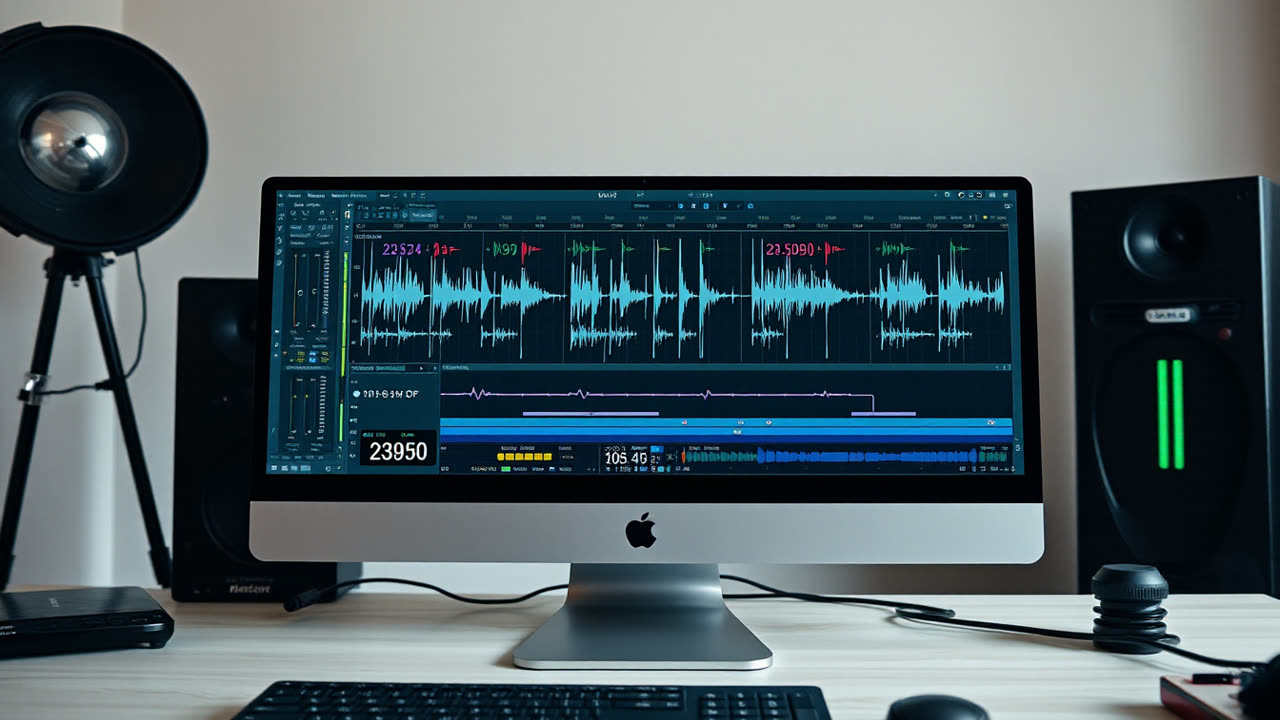
Leading AI music generator Suno has begun embedding a proprietary, two-layered digital watermark into all songs created on its platform, a critical move towards content provenance amid escalating legal challenges and industry demands for greater transparency. This initiative, rolled out in recent weeks, integrates both an inaudible acoustic signal and a statistical fingerprint directly into the audio output, designed to identify AI-generated tracks even after common modifications like compression or pitch shifts. Suno's co-founder and CEO, Mikey Shulman, announced these "transparency tools" which also include new download limits intended to curb the mass distribution of AI-generated music on streaming services.
This development signals a significant shift in the nascent AI music industry, driven by a confluence of technological capability, ethical pressure, and urgent legal mandates. The proprietary watermark comprises an acoustic layer, a narrow-band signal subtly embedded between 16 kHz and 20 kHz, largely imperceptible to human hearing, alongside a more robust statistical layer. This statistical signature is a distinct distribution of harmonic energy and transient shapes inherent to Suno's generative model, making it highly resilient to common audio processing like MP3 compression down to 128 kbps, modest pitch shifts, and even reverb or EQ passes. While Suno states that watermark-free tracks are available for commercial use via its authorized API with proper subscriptions, the underlying statistical fingerprint's persistence implies that the provenance of such audio could still be identified by sophisticated detectors.
The urgency for such measures is underscored by recent legal setbacks for AI music generators. Suno itself recently lost a copyright infringement case brought by German collecting society GEMA, with a Munich Regional Court ruling that the company had unlawfully used copyrighted music to train its models. This follows similar lawsuits filed by major labels including Sony Music, Universal Music Group, and Warner Music Group, alleging widespread infringement and the flooding of platforms with "spammy" AI tracks. The music industry's collective call for AI-generated content to be disqualified from charts and clearly labeled has amplified pressure on platforms like Suno.
Beyond legal battles, the implementation of watermarks is a proactive response to the growing global demand for transparency in AI-generated content. Regulatory frameworks, such as the EU AI Act, which came into effect on August 2, 2026, now mandate that synthetic text, images, video, and audio designed to appear authentic must be visibly marked as AI-generated and contain a digital watermark. This legislation reflects a broader societal concern about the spread of misinformation and deepfakes, where the inability to distinguish human-created from AI-generated content poses risks to public trust and democratic processes.
Suno's approach mirrors efforts seen in other generative AI domains, most notably Google's SynthID, which embeds imperceptible digital watermarks across AI-generated images, audio, video, and text. These technologies are designed to survive various modifications, from cropping and filtering for images to compression and speed changes for audio. Other AI music generators like Udio and Stable Audio are also under scrutiny, with detection services like ACRCloud already capable of identifying outputs from multiple platforms. The challenge lies in creating watermarks that are robust against malicious removal attempts, yet do not degrade the user experience. While many "watermark remover" tools are ineffective, the inherent "statistical fingerprint" left by generative models is far more difficult to erase than a simple acoustic signal.
Looking ahead, this move by Suno marks a critical juncture in the ongoing "arms race" between AI generation and detection. The sophistication of watermarking technology will undoubtedly continue to evolve, pushing towards more resilient and tamper-proof methods. The push for industry-wide technical standards, such as those developed by the Coalition for Content Provenance and Authenticity (C2PA), will gain further momentum, aiming for interoperability and consistent identification across platforms. Streaming services, including Spotify and Apple Music, are expected to strengthen their detection capabilities and implement stricter policies regarding AI-generated content, potentially requiring explicit labeling for all submissions. The legal landscape will continue to shape how AI models are trained and how their outputs are managed, with further copyright litigation likely to refine the boundaries of fair use and intellectual property in the age of generative AI. Ultimately, the industry faces the delicate task of fostering innovation and creativity through AI while simultaneously upholding ethical responsibilities, ensuring transparency, and protecting the livelihoods and original works of human artists.