Tabby's Real-Time AI Bookkeeping Poised to Disrupt Traditional Accounting
Tabby, an AI-powered real-time bookkeeping interface, is set to fundamentally disrupt traditional accounting by automating client paperwork and providing instantaneous profit and loss data.
✨ This content was summarized and interpreted by AI; it may contain errors — please verify accuracy with the original sources. Learn more
Listen to this story
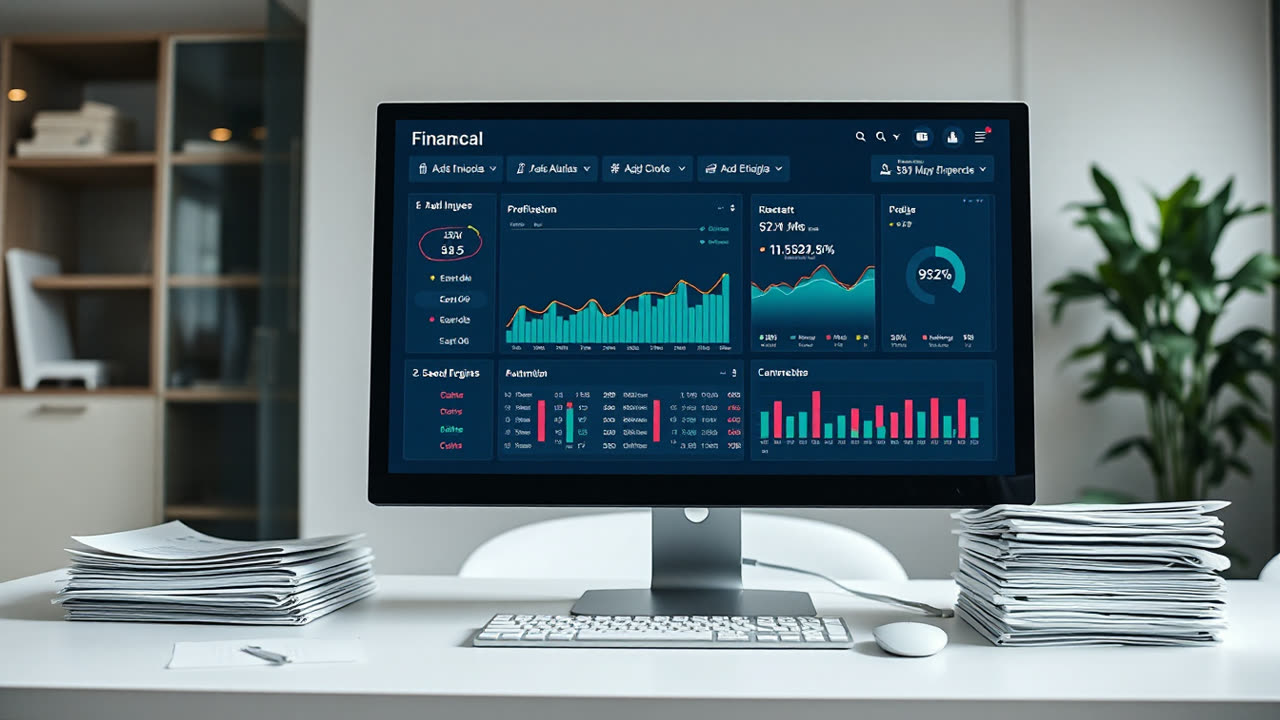
Tabby, an AI-powered real-time bookkeeping interface founded by former accountant [Founder's Name, if found], is poised to fundamentally disrupt the traditional accounting landscape by automating client paperwork and providing instantaneous profit and loss data. This nascent platform, emerging in late 2026, represents a significant leap beyond conventional accounting software, which often requires manual input or periodic reconciliation, instead offering an always-on, dynamic financial overview designed to make the laborious aspects of bookkeeping obsolete. The core innovation lies in Tabby's capacity to process financial transactions and categorize them in real-time, delivering up-to-the-minute insights previously only accessible through a dedicated, often expensive, human accountant or after significant delay.
The immediate impact on small and medium-sized businesses (SMBs) could be transformative, offering unprecedented financial agility. Owners, particularly those without in-house accounting departments, can gain instant clarity on their fiscal health, enabling quicker, data-driven decisions regarding cash flow, inventory, and operational adjustments. This real-time visibility moves businesses from reactive problem-solving to proactive strategic planning, potentially reducing financial distress and fostering more sustainable growth. For individual accountants, however, Tabby signals a stark re-evaluation of their professional value proposition. While the system aims to automate routine transactional tasks, the demand for higher-level advisory services—tax strategy, financial forecasting, and complex compliance—will likely intensify, pushing the profession towards a more consultative role. Firms that fail to adapt by integrating AI tools and upskilling their workforce risk being marginalized by more efficient, tech-forward competitors or even by direct-to-consumer AI solutions like Tabby.
Historically, accounting software has evolved from basic ledger applications to sophisticated enterprise resource planning (ERP) systems, but most have retained a degree of human mediation for data entry, categorization, and reconciliation. QuickBooks and Xero, for instance, have significantly streamlined bookkeeping for SMBs, offering cloud-based access and integrations with banking and payment systems. Yet, even these platforms often require periodic manual review, expense classification, and journal adjustments, creating a time lag between transaction and accurate financial reporting. Tabby differentiates itself by aiming for near-zero latency, leveraging advanced AI and machine learning algorithms to interpret financial data streams autonomously, reducing the need for human intervention to an absolute minimum. While robotic process automation (RPA) has seen adoption in larger firms to handle repetitive tasks, Tabby's ambition is to provide an end-to-end, intelligent bookkeeping solution that learns and adapts to a business's unique financial patterns. Early iterations of AI in accounting focused on anomaly detection or fraud prevention; Tabby's comprehensive, real-time profit and loss reporting represents a more integrated and central application of AI to core financial operations.
The broader industry implications extend beyond mere efficiency gains. Tabby, and similar platforms that will inevitably follow, could democratize access to sophisticated financial management tools, lowering the barrier for entry for new businesses and fostering greater entrepreneurial success. This democratization might also lead to a consolidation within the accounting software market, as solutions offering truly autonomous, real-time capabilities gain significant market share. The competitive landscape will shift from feature parity to AI model superiority and integration breadth. Pricing models for accounting services are also likely to evolve, moving away from hourly billing for transactional work towards subscription-based models for AI platforms and value-based billing for human advisory.
Looking ahead, Tabby's success hinges on its ability to handle the complexities and nuances of diverse business types, tax regulations across different jurisdictions, and the inevitable edge cases that defy algorithmic generalization. The platform will need robust audit trails, unassailable security protocols, and transparent AI decision-making processes to build trust among businesses and regulatory bodies. Future iterations could see Tabby integrating predictive analytics to offer proactive financial advice, identifying potential cash flow shortages before they occur, or suggesting optimal tax strategies based on real-time earnings. The "obsolescence" of accountants will likely be nuanced; rather than elimination, it signifies a profound transformation where human expertise shifts entirely to strategic oversight, complex problem-solving, and the ethical governance of AI systems. The next five years will likely witness a significant acceleration in the adoption of AI across the finance sector, with Tabby leading a vanguard of solutions that redefine the very nature of financial record-keeping and analysis.