Taiwan Indicts Former TSMC Manager for Allegedly Stealing National Core Chip Technologies for China
Taiwan has indicted a former TSMC deputy manager, Chen, for allegedly copying 21 confidential documents, including national core technologies, with intent to transfer them to China, marking the first such case under the National Security Act linking a manager to a Chinese semiconductor analysis company.
✨ This content was summarized and interpreted by AI; it may contain errors — please verify accuracy with the original sources. Learn more
Listen to this story
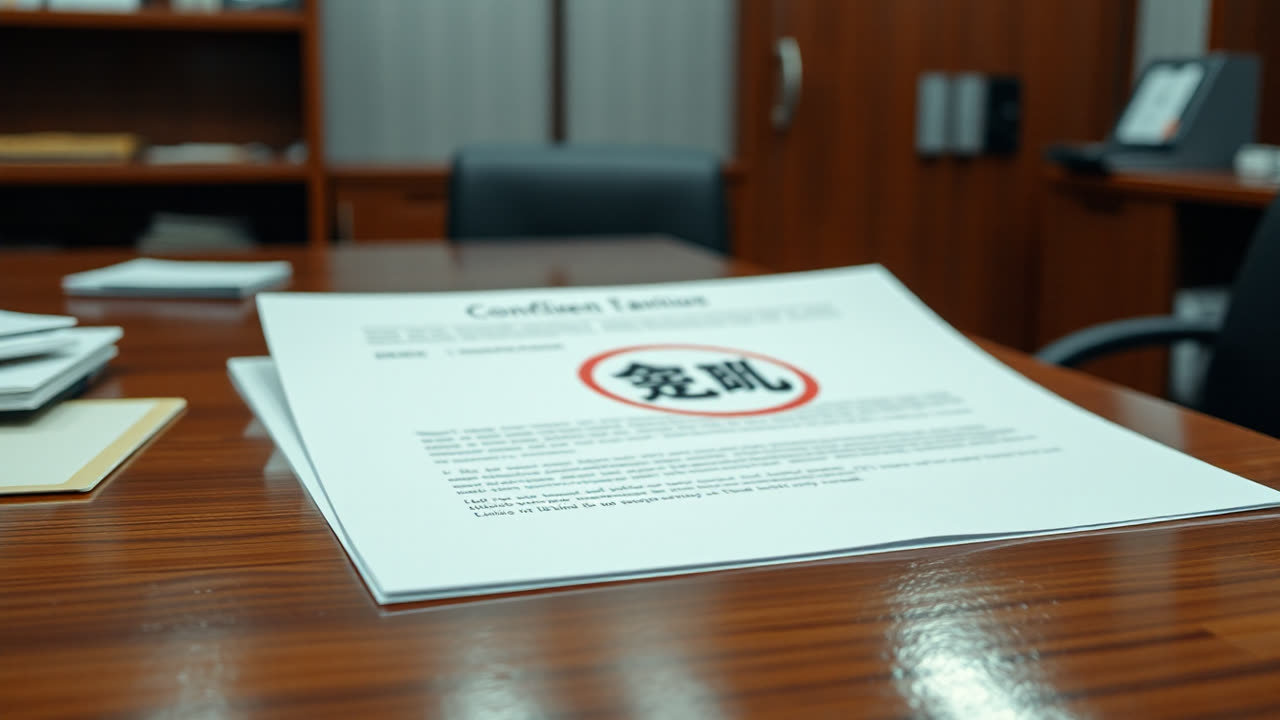
A former deputy manager at Taiwan Semiconductor Manufacturing Company (TSMC), identified only by his surname Chen, was indicted on Monday, July 20, 2026, for allegedly copying 21 confidential documents, some of which contained technologies designated by Taiwan as national core technologies, with the intent to transfer them to China. Prosecutors are seeking a seven-year prison sentence for Chen, who has been detained since late May, under Taiwan's stringent National Security Act and the Trade Secrets Act. This case marks Taiwan's first indictment under the National Security Act specifically linking a former manager to a Chinese semiconductor materials analysis company in an alleged attempt to leak the island's most sensitive chip technologies.
The significance of this indictment extends far beyond the alleged actions of a single individual; it underscores the escalating economic espionage and national security threats faced by Taiwan, the global leader in advanced semiconductor manufacturing. TSMC, a critical supplier to tech giants like Nvidia and Apple, represents the pinnacle of chipmaking prowess, holding an indispensable position in the global supply chain. Any compromise of its intellectual property (IP) could have profound ramifications for global technological development, national security, and the delicate balance of power in the fiercely competitive semiconductor industry. While TSMC's internal monitoring systems detected the irregularities and successfully recovered all 21 improperly copied documents, preventing any actual technology transfer, the alleged intent and the nature of the conspiracy highlight a persistent and sophisticated threat model.
According to prosecutors, Chen allegedly conspired with a now-deceased Hong Kong national, Ding Xiaohu, between May 2023 and February 2024 to establish a semiconductor materials analysis company in China named CSMAC. Ding was reportedly operating under the direction of the Nanning station of the Chinese Communist Party's Central Military Commission Political Work Department, a clear indication of state-sponsored industrial espionage. Chen's alleged role involved drafting a "Blue Ocean Plan" designed to actively recruit Taiwanese semiconductor talent to CSMAC, aiming to bolster China's indigenous chip capabilities with stolen expertise. This strategy of talent poaching, combined with IP theft, is a well-documented facet of China's aggressive push for self-sufficiency in critical technologies, often referred to as its "Made in China 2025" initiative goals.
This incident is not isolated; it is part of a broader pattern of attempts to illicitly acquire Taiwan's invaluable semiconductor know-how. Taiwan's National Security Act, amended in 2022, was specifically enacted to counter such threats, making the unauthorized disclosure or use of designated "national core technologies" a serious crime. These core technologies encompass advanced chipmaking processes more sophisticated than 14nm, precisely the domain where TSMC holds a commanding lead. The first charges under this strengthened law were brought in August 2025, involving three current and former TSMC employees accused of attempting to leak 2nm process data. Furthermore, TSMC is pursuing a civil case against Wei-Jen Lo, a former R&D executive who joined Intel, with a parallel national security inquiry underway, illustrating the multi-pronged approach to IP protection. These cases collectively demonstrate Taiwan's heightened vigilance and its commitment to defending its "silicon shield" against foreign encroachment.
The direct impact on end-users might not be immediately apparent since the alleged theft was thwarted. However, a successful breach would have accelerated China's semiconductor capabilities, potentially altering the competitive landscape and leading to a more bifurcated global tech ecosystem. For the industry, such espionage cases force companies like TSMC to continuously invest heavily in sophisticated internal monitoring systems and cybersecurity measures, increasing operational costs. More broadly, they highlight the inherent vulnerabilities in even the most secure environments when insider threats are present.
Looking ahead, the indictment of Chen signals Taiwan's unwavering resolve to prosecute those who attempt to undermine its technological advantage. The outcome of this trial will set a crucial precedent, reinforcing the severity of penalties under the National Security Act and potentially deterring future acts of espionage. We can anticipate even more stringent security protocols within TSMC and other Taiwanese tech firms, coupled with enhanced government surveillance and intelligence gathering to pre-empt such threats. The ongoing tech rivalry between the US and China, with Taiwan caught in the geopolitical crosshairs, ensures that the battle for semiconductor dominance will intensify. Taiwan's ability to protect its IP is not merely an economic imperative but a matter of national survival, shaping the future trajectory of global technology and geopolitical influence.