Telepathic Instruments Orchid Synthesizer: A Retro Counterpoint to Complexity
The Telepathic Instruments Orchid synthesizer offers a 'delightfully retro and approachable' experience, allowing musicians to conjure full, rich chords with the press of a single button, directly challenging the trend of overly complex music technology.
✨ This content was summarized and interpreted by AI; it may contain errors — please verify accuracy with the original sources. Learn more
Listen to this story
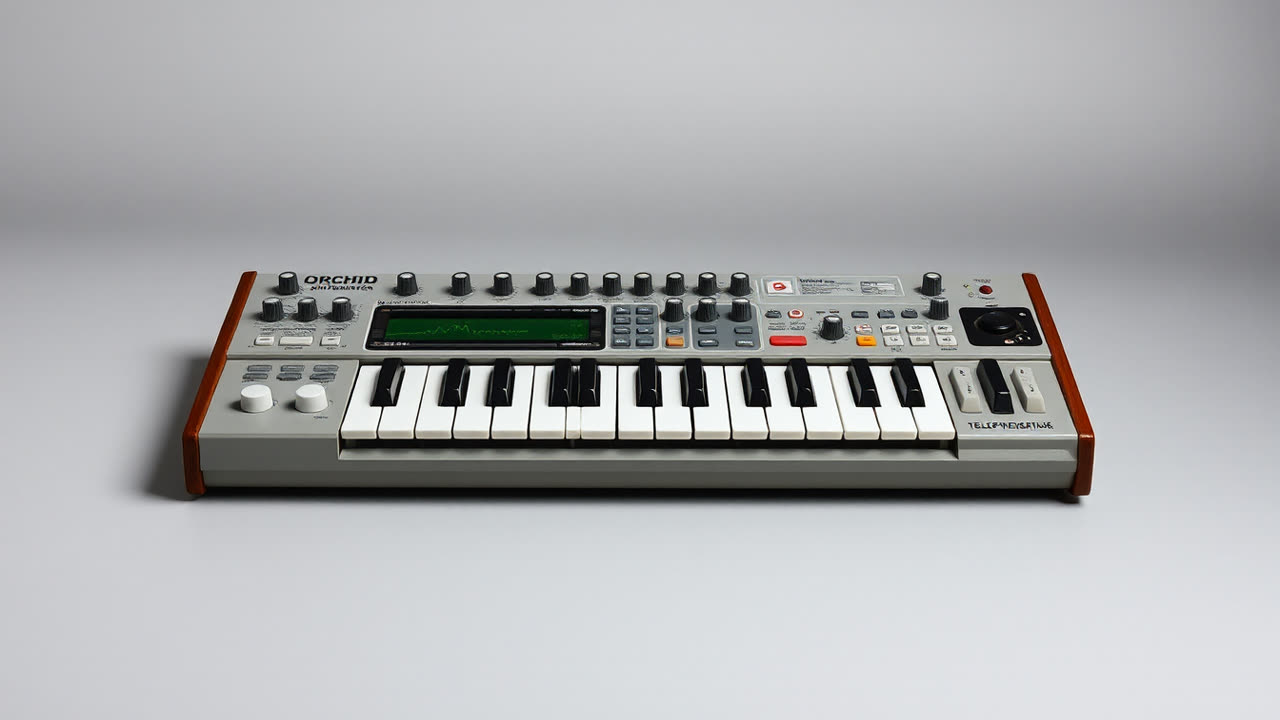
The Telepathic Instruments Orchid synthesizer has emerged as a compelling counterpoint to the increasingly complex landscape of modern music technology, offering a "delightfully retro and approachable" experience that resonates deeply with a growing segment of musicians. Conceived by Telepathic Instruments, the Orchid directly channels the spirit of vintage chord organs like the Magnus, allowing users to conjure full, rich chords with the press of a single button, a design philosophy that prioritizes immediate musical gratification over intricate sound design. This intentional simplification marks a significant departure from the prevailing trend of feature-laden digital workstations and analog behemoths, positioning the Orchid as a unique proposition in the crowded synthesizer market.
The Orchid's significance lies in its democratizing effect on music creation and its astute understanding of contemporary aesthetic preferences. For aspiring singer-songwriters and hobbyists, the ability to effortlessly generate harmonically rich textures removes a substantial barrier to entry, fostering creativity without requiring extensive knowledge of music theory or synthesis. This approachability extends beyond novices, appealing to seasoned producers seeking fresh inspiration or a distinct sonic signature that stands apart from the ubiquitous sounds of software plugins. The instrument’s "hipster" appeal, rooted in its vintage aesthetic and tactile interface, taps into a broader cultural movement valuing authenticity, craftsmanship, and a tangible connection to the creative process. Instead of endless menus and sub-menus, the Orchid offers a direct, intuitive interaction, encouraging experimentation and improvisation.
Historically, chord organs like the Magnus gained popularity in the mid-20th century precisely because of their ease of use, making musical expression accessible to a wider audience than ever before. The Orchid revives this ethos, but with modern sonic capabilities and a robust build quality that far surpasses its plastic predecessors. While a vintage Magnus might offer charming lo-fi tones, the Orchid likely provides a more versatile sound palette and reliable performance expected from a contemporary instrument, without sacrificing the core functionality that made chord organs so beloved. In comparison to rivals, the Orchid carves a niche distinct from the reams of analog clones or digital emulations that dominate the retro synth market. Where companies like Behringer focus on replicating classic circuitry, or Korg reissues iconic models, Telepathic Instruments has chosen to innovate by reinterpreting a fundamental, user-friendly concept. Even boutique manufacturers often lean into complex modularity or deep synthesis engines, making the Orchid’s elegant simplicity a refreshing outlier. Its direct competitors aren't necessarily other synthesizers in the traditional sense, but rather instruments that prioritize immediate playability and a unique sonic character, such as certain Teenage Engineering Pocket Operators or simplified grooveboxes, though none offer the same dedicated chord-organ paradigm.
The impact on the industry could be substantial, signaling a potential shift towards instruments that prioritize user experience and immediate musicality over sheer technical specifications. As the market for complex, high-end synthesizers reaches saturation, the Orchid demonstrates that there is a strong demand for tools that simplify the creative process and offer a distinct personality. This could inspire other manufacturers to explore less conventional interfaces and design philosophies, moving beyond traditional keyboard layouts and knob-per-function paradigms to cater to a broader spectrum of musicians. Furthermore, the Orchid's success could validate the commercial viability of niche, retro-inspired instruments that offer genuine innovation in user interaction rather than just sonic emulation.
Looking ahead, the success of the Orchid could pave the way for a new generation of "anti-complexity" instruments. Telepathic Instruments might explore expanding the Orchid line with variations offering different timbral characteristics, expanded chord voicings, or even integration with modern MIDI and CV ecosystems while retaining its core simplicity. One could envision a "pro" version with more robust effects or connectivity options, or even a more compact, portable iteration. The broader trend suggests a growing appreciation for instruments that feel like companions in the creative journey rather than daunting machines. The Orchid is not just a synthesizer; it's a statement about accessibility, nostalgia, and the enduring power of simple, elegant design to unlock musical potential for everyone.