Tesla Activates 2.4 kW Vehicle-to-Load for Model Y Premium
Tesla has officially activated 2.4 kilowatts of vehicle-to-load (V2L) functionality for its Model Y Premium in the United States and Puerto Rico, enabling owners to draw 120 volts at 20 amps from the vehicle's high-capacity battery, though this capability requires an $80 accessory and is not universally available across all Model Y Premium units.
✨ This content was summarized and interpreted by AI; it may contain errors — please verify accuracy with the original sources. Learn more
Listen to this story
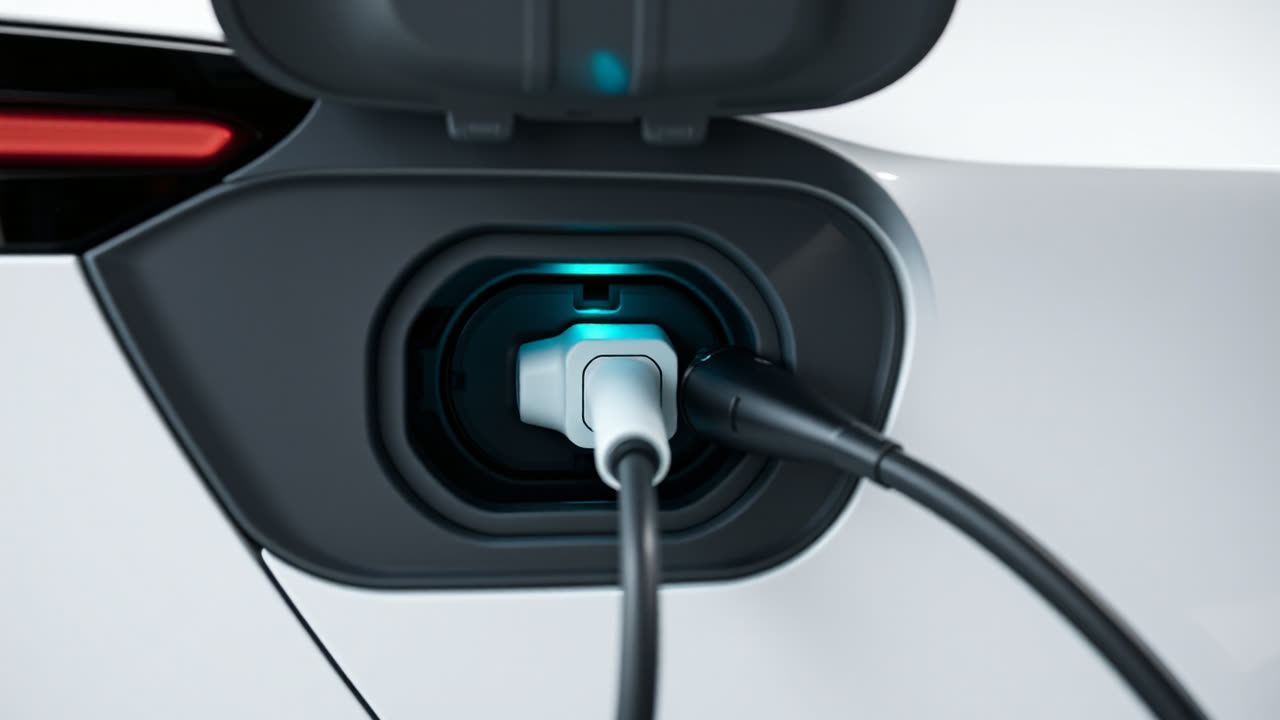
Tesla has officially activated 2.4 kilowatts of vehicle-to-load (V2L) functionality for its Model Y Premium in the United States and Puerto Rico, enabling owners to draw 120 volts at 20 amps from the vehicle's high-capacity battery, though this capability requires an $80 accessory and is not universally available across all Model Y Premium units. This long-anticipated feature, while a significant addition to Tesla's ecosystem, arrives with a relatively modest power output compared to some rivals and specific hardware limitations, marking a cautious but strategic entry into a burgeoning market segment.
The immediate impact for users is the newfound ability to power standard household appliances, tools, or even provide limited backup power during outages directly from their Model Y. A 2.4 kW output is sufficient for operating a refrigerator, a few lights, and charging devices simultaneously, offering a practical level of utility for camping, tailgating, or emergency situations. However, the requirement for a specific $80 adapter, which plugs into the vehicle's charge port, and the implied necessity for certain hardware revisions within the Model Y Premium itself, suggests a phased rollout that might frustrate some existing owners whose vehicles lack the necessary internal components. This selective compatibility highlights Tesla's iterative approach to hardware integration, often leaving earlier models without access to new features.
Strategically, Tesla's move into V2L, even at 2.4 kW, is a crucial step in solidifying its energy ecosystem play, aligning the automotive division more closely with its Powerwall and Solar Roof offerings. While 2.4 kW falls short of whole-home backup, it positions the Model Y as a mobile power source, enhancing the perceived value and versatility of the vehicle beyond mere transportation. This feature could particularly appeal to customers in regions prone to power disruptions or those seeking greater energy independence, subtly blurring the lines between vehicle and stationary energy storage.
Compared to its rivals, Tesla's 2.4 kW V2L implementation is notably conservative. The Hyundai Ioniq 5 and Kia EV6, for instance, have offered V2L capabilities for years, typically providing up to 3.6 kW from a standard interior or exterior outlet, often without requiring an additional adapter. These Korean EVs have demonstrated the practical utility of higher V2L outputs for more demanding applications. More robust still are offerings from electric trucks like the Ford F-150 Lightning, which boasts its "Pro Power Onboard" system delivering up to 9.6 kW (7.2 kW on the bed outlets and 2.4 kW in the cabin) in its top trims, capable of powering an entire home for days. Even Rivian's R1T and R1S provide multiple 120V outlets, though their combined V2L capacity is generally lower than the Ioniq 5 or EV6, focusing more on utility for adventure. Tesla's initial 2.4 kW output, therefore, feels more like a proof-of-concept or a preliminary offering rather than a direct challenge to the more powerful V2L systems already on the market.
The background to this rollout includes years of speculation and rumors regarding Tesla's V2L capabilities, with patents hinting at bidirectional charging and power export features. The delay in implementation, coupled with the relatively low initial output, suggests a cautious approach, possibly to ensure battery longevity, manage thermal loads, or prioritize grid integration for future vehicle-to-grid (V2G) applications. The decision to limit it to the Model Y Premium first could also be a strategic move to test market reception and refine the technology before a broader rollout to other models or higher power outputs.
Looking ahead, this 2.4 kW V2L feature is likely just the beginning for Tesla. The company's history suggests an iterative improvement cycle, and it is highly probable that future Model Y iterations, or perhaps the upcoming Cybertruck, will feature significantly higher V2L or even V2G capabilities, potentially integrating directly with the Powerwall ecosystem for seamless home energy management. The current 2.4 kW serves as a baseline, establishing the necessary hardware and software infrastructure within the vehicle. Future software updates could potentially unlock higher power outputs from existing hardware, or new hardware revisions might dramatically increase the available power. The industry trend is undeniably towards greater vehicle utility, and as EV battery capacities continue to grow, the ability to leverage that energy for purposes beyond propulsion will become an increasingly critical differentiator. Tesla's entry, even if initially modest, signals a commitment to this future, setting the stage for more advanced energy management solutions that could redefine the role of the electric vehicle.