Tesla and SpaceX Confirm $16.8 Billion Terafab Semiconductor Megafactory in Texas
Tesla and SpaceX are investing approximately $16.8 billion in the initial phase of 'Terafab,' a colossal semiconductor megafactory in Grimes County, Texas, marking a strategic pivot towards unprecedented vertical integration in critical hardware manufacturing.
✨ This content was summarized and interpreted by AI; it may contain errors — please verify accuracy with the original sources. Learn more
Listen to this story
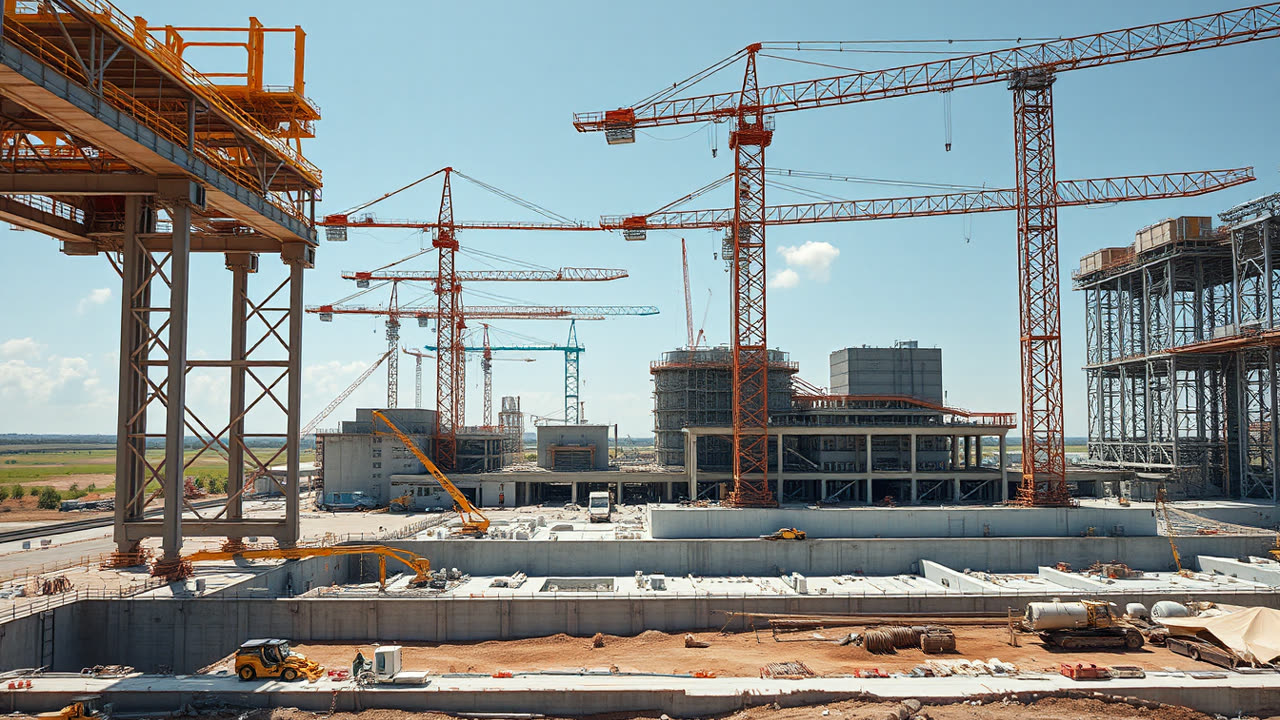
Tesla and SpaceX have confirmed plans to construct "Terafab," a semiconductor megafactory in Grimes County, Texas, an hour northwest of Houston, with an initial phase investment of approximately $16.8 billion. This monumental undertaking marks a profound strategic pivot for both companies, signaling a decisive move towards unprecedented vertical integration in critical hardware manufacturing. The scale of this investment and the ambition behind it underscore a long-term vision to exert absolute control over their silicon supply chain, a strategy with significant ramifications for the global technology and automotive industries.
This move is a direct response to the volatile semiconductor landscape of recent years, which saw global supply chains buckle under demand surges and geopolitical pressures. Tesla, in particular, experienced firsthand the crippling effects of chip shortages, forcing production halts and redesigns. By bringing chip fabrication in-house, Tesla aims to insulate its electric vehicle production from future disruptions, ensuring a steady supply of specialized silicon for its advanced driver-assistance systems (ADAS), infotainment, and power management units. Similarly, SpaceX's rapidly expanding Starlink constellation, its Starship development, and various satellite ventures require a colossal volume of custom, high-performance, and radiation-hardened chips. Relying on external foundries, especially for mission-critical space applications, introduces layers of risk and intellectual property exposure that Elon Musk's companies are evidently no longer willing to tolerate. The sheer size of the $16.8 billion first phase suggests a commitment to advanced process nodes, likely targeting sub-7nm architectures, which are essential for the AI capabilities driving Tesla’s Full Self-Driving (FSD) ambitions and SpaceX’s sophisticated onboard processing needs.
The impact on users and the industry could be transformative. For Tesla owners, this could translate into faster hardware iterations, more robust software-hardware integration, and potentially a quicker rollout of advanced features, unconstrained by external chip roadmaps or supply bottlenecks. The ability to co-design chips and vehicles/spacecraft from the ground up offers unparalleled optimization, potentially leading to more efficient, powerful, and cost-effective products. For the broader industry, Terafab represents a significant challenge to the traditional fabless model, where companies design chips but outsource manufacturing to giants like TSMC or Samsung. While other major tech players like Apple have successfully designed their own silicon, none have ventured into building a mega-fab of this magnitude. This bold step could inspire, or even compel, other automotive and aerospace players to reconsider their reliance on third-party foundries, potentially sparking a wave of similar vertical integration efforts, particularly in sectors where custom silicon offers a distinct competitive advantage and supply security is paramount.
Tesla has a history of pioneering in-house silicon development, notably with its FSD chip, first introduced in 2019. This custom SoC (System-on-Chip) replaced NVIDIA hardware, offering significantly higher performance and efficiency for autonomous driving tasks. The FSD chip, designed by Tesla’s internal team, demonstrated the company’s capability to develop highly specialized silicon tailored to its specific needs. However, manufacturing these chips still relied on external foundries. Terafab extends this vertical integration to the very manufacturing process, moving beyond design to full production control. This contrasts sharply with most traditional automakers, who largely rely on off-the-shelf semiconductors or work with established suppliers for custom designs without venturing into actual fabrication. For instance, General Motors has explored partnerships for custom chips, and Ford has invested in chip design capabilities, but neither has announced plans for a multi-billion-dollar fabrication facility. SpaceX, while less public about its internal silicon efforts, undoubtedly utilizes custom chips for its rockets, satellites, and ground infrastructure, particularly for advanced communication and control systems where resilience and performance are critical.
Looking ahead, the construction and operationalization of Terafab will be a Herculean task, fraught with challenges. Building a cutting-edge semiconductor fab requires highly specialized expertise, immense capital, and a workforce skilled in advanced manufacturing processes. The global competition for semiconductor talent is fierce, and ramping up production to meet the demands of both Tesla and SpaceX will test the limits of their operational capabilities. Geopolitically, the move reinforces the trend of reshoring semiconductor manufacturing, particularly in the United States, driven by national security concerns and economic incentives like the CHIPS Act, though the specific incentives secured by Tesla and SpaceX for Terafab remain to be fully detailed. If successful, Terafab could redefine the competitive landscape, providing Tesla and SpaceX with an unparalleled strategic advantage in innovation, cost control, and supply resilience. It represents a bet that complete vertical integration, even at extreme cost and complexity, is the ultimate path to sustained leadership in an increasingly chip-dependent world. The initial $16.8 billion is merely the first phase; the long-term investment required to maintain a state-of-the-art fab will likely escalate, but for companies that thrive on pushing boundaries, the rewards of unconstrained silicon innovation may well justify the staggering price.