Tesla Autopilot Active in Fatal Alabama Crash, Infant Rescued
Data confirms Tesla's Autopilot or Full Self-Driving system was engaged when a 2021 Model Y veered off an Alabama highway, struck trees, and caught fire, killing the driver while a bystander rescued her infant.
✨ This content was summarized and interpreted by AI; it may contain errors — please verify accuracy with the original sources. Learn more
Listen to this story
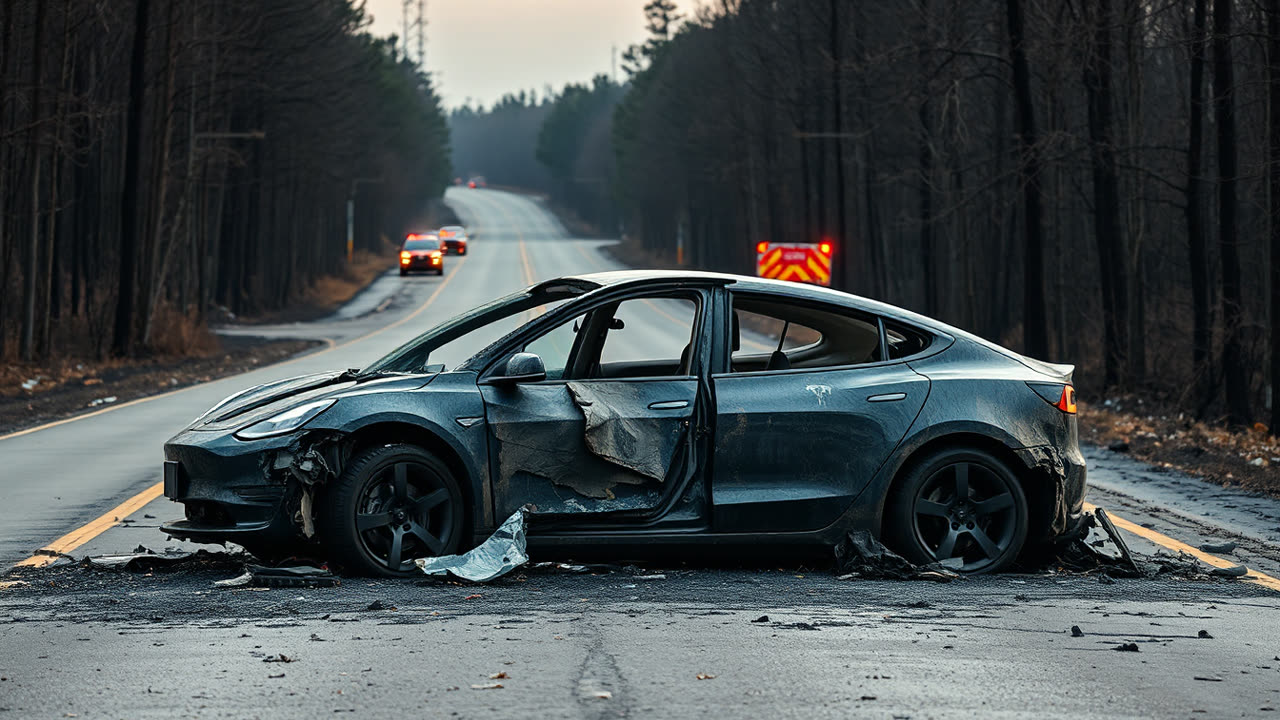
Data analysis has confirmed that Tesla's Autopilot or Full Self-Driving (FSD) system was actively engaged when a 2021 Model Y veered off an Alabama highway, struck two trees, and erupted in flames, tragically killing its 29-year-old driver, Kayleigh Page, while a quick-thinking bystander heroically rescued her 7-month-old infant from the burning wreckage. This confirmation, emerging from trooper reports related to the Vinemont incident, intensifies the ongoing scrutiny of advanced driver-assistance systems (ADAS) and their role in fatal accidents, particularly as Tesla continues to push the boundaries of autonomous technology with its "beta" software releases.
The incident underscores a critical juncture for the automotive industry and regulatory bodies alike, highlighting the persistent tension between technological innovation and public safety. For users, the news is a stark reminder of the inherent risks associated with relying on nascent autonomous features, even those marketed as enhancing safety. While Tesla consistently emphasizes that its systems require active driver supervision, the perception among some consumers that Autopilot or FSD offers a higher degree of autonomy than currently available can lead to misuse or over-reliance. This perception gap is exacerbated by Tesla's marketing terminology, which often implies greater autonomy than the systems currently deliver, potentially fostering a false sense of security. The long-term impact on consumer trust in ADAS technologies, irrespective of manufacturer, could be significant, hindering broader adoption of features that, when properly used, genuinely improve road safety by mitigating human error.
From an industry perspective, this crash, added to a growing list of incidents under investigation by the National Highway Traffic Safety Administration (NHTSA), places renewed pressure on Tesla and other manufacturers to transparently disclose system limitations and improve driver monitoring. As of early 2026, NHTSA had initiated more than a dozen special investigations into Tesla crashes involving Autopilot, with several resulting in fatalities. These probes are crucial for establishing whether system failures, driver inattention, or a combination of factors are primarily responsible. Tesla’s approach, which relies heavily on real-world data collection from its fleet to refine its FSD software, contrasts with rivals who often adopt a more conservative rollout, meticulously validating features before wide release. General Motors' Super Cruise, for instance, operates as a hands-free system only on pre-mapped highways and includes robust driver attention monitoring, while Ford's BlueCruise similarly restricts its hands-free operation to designated zones. Mercedes-Benz's Drive Pilot, notably, has achieved Level 3 conditional automation certification in some jurisdictions, allowing drivers to legally disengage from driving tasks under specific conditions, but even this system has strict operational design domains and requires the driver to be ready to retake control. Tesla's FSD, despite its "full self-driving" moniker, remains a Level 2 system, requiring continuous driver engagement, a distinction often lost in public discourse and marketing.
Looking ahead, this tragic event will undoubtedly intensify calls for more stringent federal regulation of ADAS systems in the United States. While Europe and other regions have adopted clearer frameworks for higher levels of automation, the U.S. has largely relied on voluntary industry standards and post-hoc investigations. The current regulatory environment, which allows manufacturers significant leeway in developing and deploying these technologies, is increasingly being questioned as ADAS capabilities advance. We can anticipate increased pressure on NHTSA to establish clearer performance metrics, standardized testing protocols, and perhaps even a mandatory naming convention that more accurately reflects system capabilities, moving away from potentially misleading terms like "Full Self-Driving." Furthermore, the legal ramifications for manufacturers in such incidents are likely to evolve, potentially shifting liability paradigms as the lines between human and machine responsibility blur. For Tesla, specifically, the ongoing public and regulatory scrutiny may necessitate a re-evaluation of its FSD beta program's rollout strategy and communication, perhaps leading to a more cautious, phased approach or enhanced driver education requirements to rebuild and maintain consumer confidence as the industry progresses towards truly autonomous vehicles. The future of ADAS hinges not just on technological advancement, but critically, on transparent communication, robust regulation, and a clear understanding of human-machine interaction.