Tesla Cybercab's Virtual Joystick: A Radical Rethink of Driverless Control
Tesla's Cybercab, launched without traditional manual controls, surprisingly includes a virtual joystick, sparking debate over true Level 5 autonomy and user interaction.
✨ This content was summarized and interpreted by AI; it may contain errors — please verify accuracy with the original sources. Learn more
Listen to this story
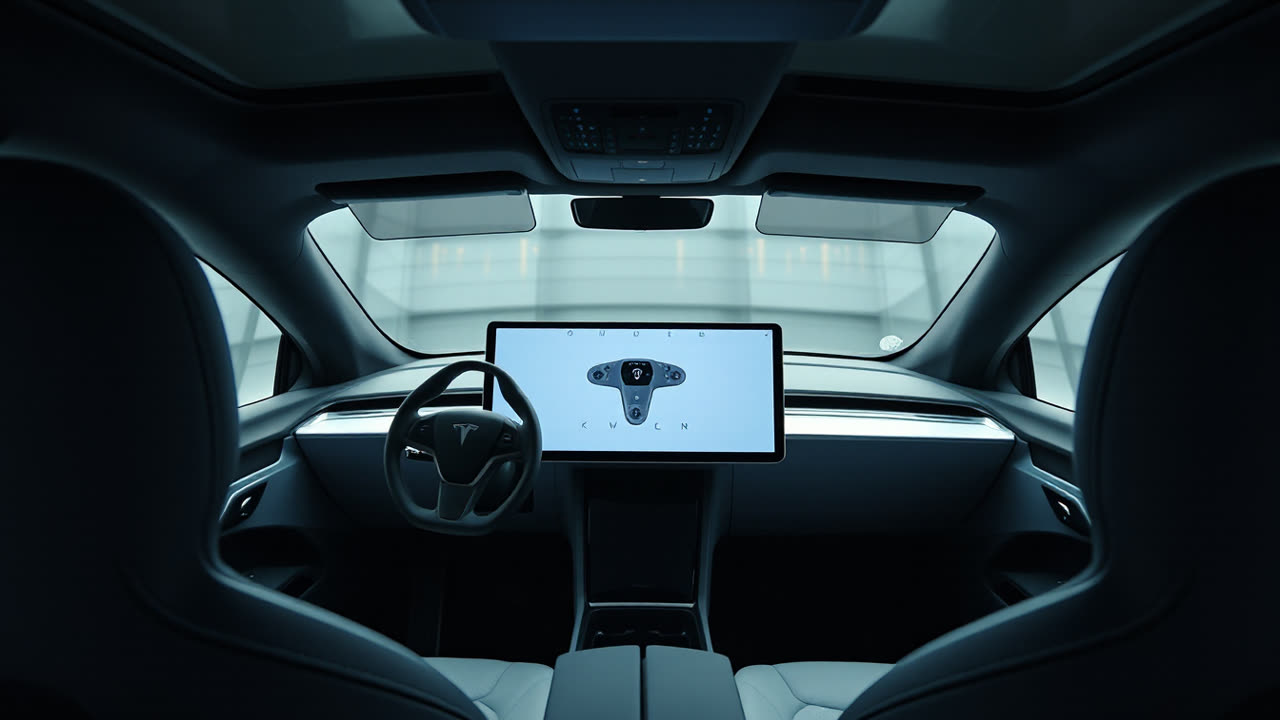
Tesla's recently unveiled Cybercab, reportedly launched in Australia, has ignited a fervent debate within the autonomous vehicle industry, not merely for its striking, driverless design but for the profound implications of its complete lack of traditional manual controls—a steering wheel and pedals. This radical departure from conventional vehicle architecture, however, is paradoxically tempered by the inclusion of a virtual joystick, an unexpected concession that fundamentally reshapes the conversation around true Level 5 autonomy and user interaction in a driverless world.
The core news, as reported, centers on a vehicle engineered from the ground up to be fully autonomous, eliminating the very notion of human driving intervention. This vision, long espoused by Elon Musk, positions the Cybercab as the vanguard of Tesla's robotaxi ambitions, promising a future where transportation is a service, not a driving task. Yet, the addition of a virtual joystick, accessible via the vehicle’s central display, suggests a critical re-evaluation of this purist stance, hinting at a recognition of either regulatory hurdles, passenger anxiety, or unforeseen operational complexities that necessitate a human interface, however minimal. This virtual control could serve as an emergency override for passengers or, more likely, a diagnostic and low-speed maneuvering tool for support staff in specific, controlled environments, blurring the lines of "no manual control" and introducing a new layer of user experience design.
This design choice matters immensely for several reasons. For users, the absence of physical controls represents a significant psychological leap. While the promise of a truly autonomous ride is appealing, the complete relinquishment of control can be unsettling, especially in unfamiliar or emergency situations. The virtual joystick, while not a physical steering wheel, could offer a semblance of agency, potentially easing the transition for early adopters and addressing concerns about being entirely at the mercy of AI. From an industry perspective, it highlights the ongoing tension between technological capability and practical deployment. Regulators globally are grappling with frameworks for fully autonomous vehicles, and the ability to intervene, even virtually, could be a critical factor in securing approvals, particularly in diverse and complex urban environments. The move also signals a potential workaround for the "operational design domain" limitations that currently restrict most autonomous systems.
Compared to rivals like Waymo and Cruise, which primarily operate within geo-fenced areas and often maintain the possibility of remote human oversight or even physical driver presence during testing, Tesla's approach with the Cybercab pushes the boundaries of public interaction with driverless tech. Waymo's vehicles, for instance, typically retain physical controls for safety drivers during testing phases, even as their fully driverless services expand in cities like Phoenix and San Francisco. Cruise, before its recent operational pauses, also heavily relied on remote assistance and had safety protocols involving human intervention. Tesla, historically, has aimed for a more universal "Full Self-Driving" (FSD) solution adaptable to varied conditions, but the Cybercab's design, even with the joystick, acknowledges the practicalities of deployment where human input might still be a necessary, albeit rare, component of the operational safety net.
The background of Tesla’s FSD development has been marked by ambitious timelines and incremental improvements, with the company consistently pushing for higher levels of autonomy in its consumer vehicles. The Cybercab represents the logical next step in this journey, transforming a personal car into a dedicated robotaxi. The virtual joystick also invites comparison to early video game interfaces, suggesting an intuitive, if abstract, method of control that leverages familiar digital interaction paradigms rather than mimicking traditional automotive mechanics. This reflects a broader trend in vehicle interiors, where physical buttons give way to touchscreens and digital interfaces.
Looking ahead, the Cybercab's design, particularly the virtual joystick, sets a fascinating precedent. It suggests that the path to widespread Level 5 autonomy might not be a clean break from human interaction but rather a gradual evolution, incorporating novel interfaces to bridge the gap between full AI control and human assurance. Future iterations could see this virtual control evolve into more sophisticated, context-aware interfaces, perhaps even integrating augmented reality. The success of the Cybercab in Australia, assuming its reported launch details are fully realized, will undoubtedly influence regulatory bodies globally, potentially accelerating the adoption of similar hybrid control philosophies in other autonomous vehicle deployments. Furthermore, it could spur competitors to explore similar "soft" intervention methods, recognizing that absolute autonomy, while a long-term goal, may require flexible human touchpoints for public acceptance and regulatory compliance in the near to medium term. The true test will be how frequently, and under what circumstances, that virtual joystick is ever called into action, and whether its presence ultimately reinforces trust or highlights the enduring challenges of fully driverless mobility.