Tesla Mass-Produces Cybercab Despite Autonomy and Regulatory Hurdles
Tesla is aggressively ramping up production of its steering-wheel-less Cybercab at Giga Texas, mass-producing a vehicle it cannot yet legally sell or reliably operate autonomously.
✨ This content was summarized and interpreted by AI; it may contain errors — please verify accuracy with the original sources. Learn more
Listen to this story
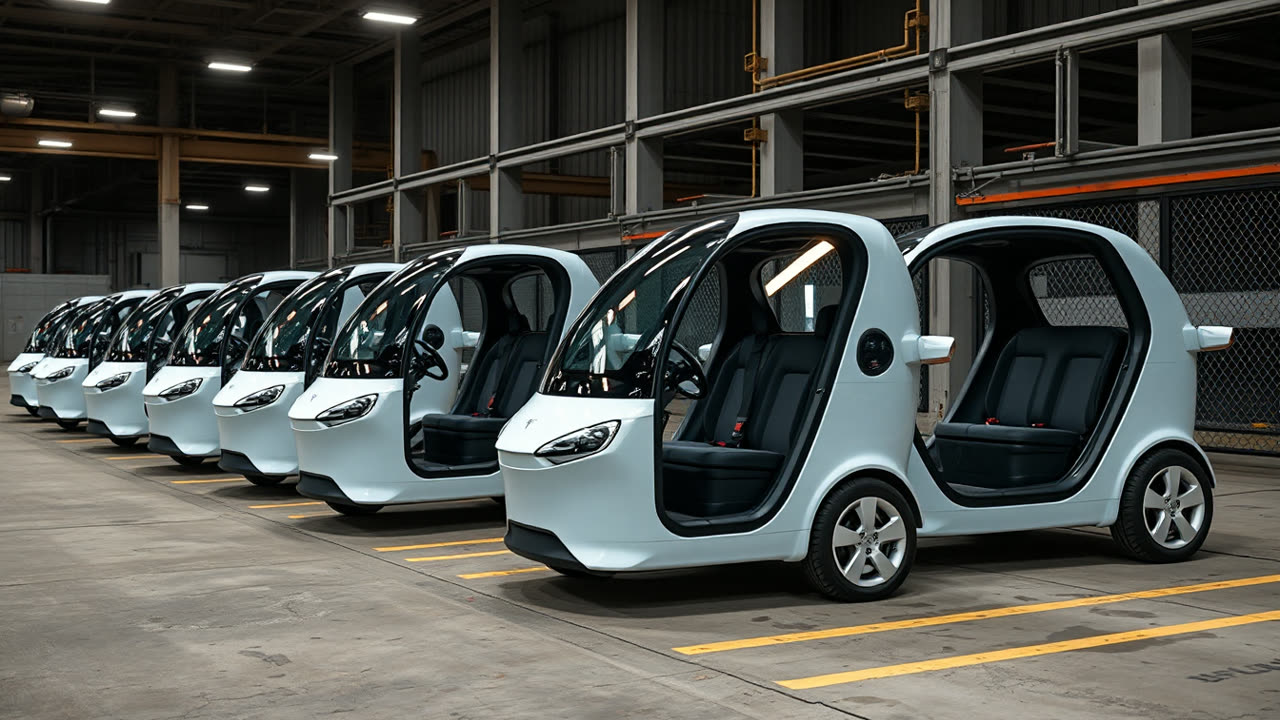
Tesla is aggressively ramping up production of its two-seater Cybercab at Giga Texas, with over 100 of these distinctive steering-wheel-less vehicles already spotted in the factory's outbound lots. This accelerated manufacturing, which began in February 2026, highlights Tesla's unwavering commitment to its robotaxi vision, yet it presents a significant paradox: the company is mass-producing a car it cannot currently sell to the public, nor can it reliably drive itself without constant human oversight at scale.
The Cybercab's design, entirely devoid of a steering wheel or pedals, is purpose-built exclusively for a fully autonomous ride-hailing service, not for private ownership. While engineering tests of these production units are now underway on public roads in Austin, a safety monitor remains present in the passenger seat, underscoring the ongoing limitations of its Full Self-Driving (FSD) software. This situation illuminates a critical bottleneck: Tesla's impressive manufacturing prowess is currently not matched by the maturity of its autonomous driving system, which remains the true hurdle for widespread deployment.
Furthermore, the vehicle faces substantial regulatory challenges. Current federal safety standards mandate traditional driver controls, and although the National Highway Traffic Safety Administration (NHTSA) is proposing rule changes to waive pedal requirements, Tesla has not yet secured the necessary federal exemptions to legally sell or widely operate the Cybercab without these controls. This aggressive hardware push, significantly ahead of software readiness and regulatory clarity, represents a high-stakes gamble. It risks creating a substantial fleet of advanced vehicles awaiting the necessary technological and legal frameworks to fulfill their intended purpose, potentially leaving them parked until Tesla's FSD can truly deliver on its unsupervised autonomy promise.