Tesla Model 3 Receives Larger 16-Inch Touchscreen and Performance Boost in North America
Tesla has begun equipping all Model 3 vehicles sold in the United States, Puerto Rico, and Mexico with a larger 16-inch center touchscreen, alongside a significant performance and range enhancement for the Model 3 Performance variant.
✨ This content was summarized and interpreted by AI; it may contain errors — please verify accuracy with the original sources. Learn more
Listen to this story
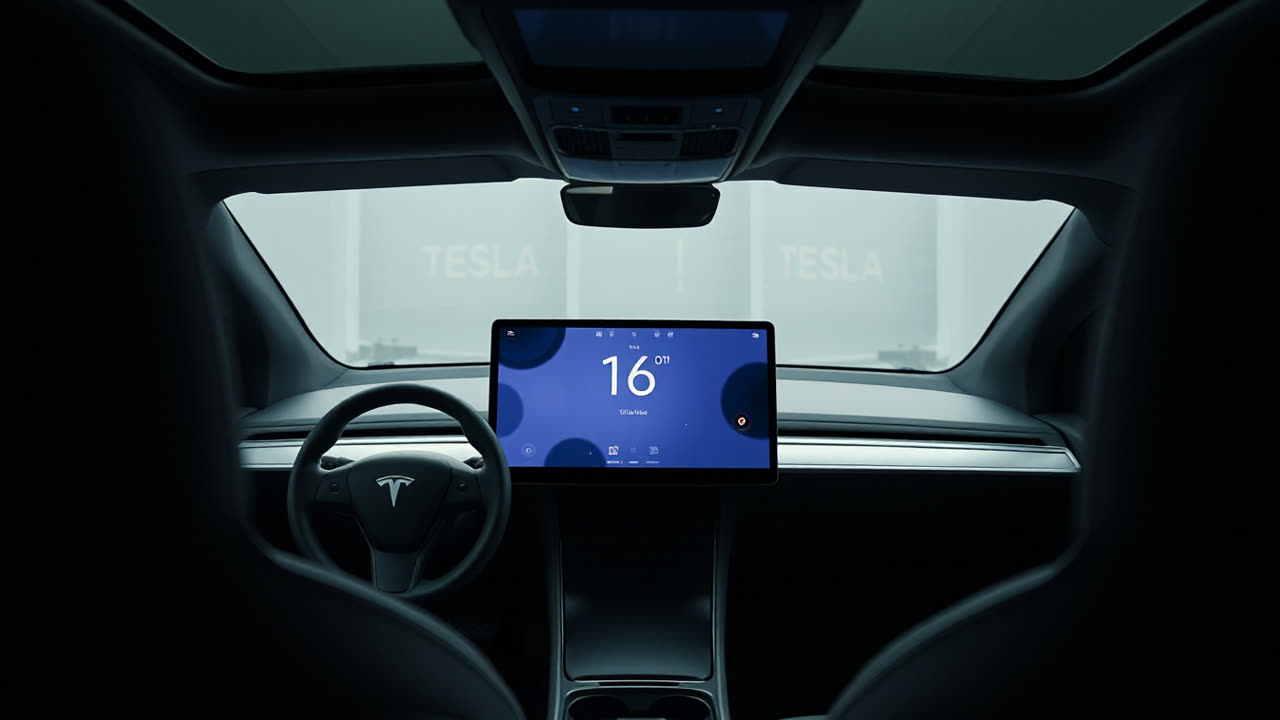
Tesla has begun equipping all Model 3 vehicles sold in the United States, Puerto Rico, and Mexico with a larger 16-inch center touchscreen, mirroring an upgrade rolled out in China just one day prior. This significant hardware update, moving from the previous 15-inch display, arrives alongside a notable performance and range enhancement for the Model 3 Performance variant, which now boasts an estimated 316 miles of range and 528 horsepower, complemented by a new black headliner. These changes are more than incremental; they represent a strategic move by Tesla to solidify the Model 3's position in an increasingly competitive electric vehicle market, addressing both user experience and performance expectations.
The decision to standardize a larger display across the Model 3 lineup in key North American markets is a direct response to evolving consumer preferences and the escalating "screen wars" in automotive interiors. While the previous 15-inch display was groundbreaking upon the Model 3's introduction, many rivals have since adopted larger or dual-screen setups, often integrated with advanced infotainment systems. Tesla's larger 16-inch screen brings the Model 3 closer to the immersive experience offered by the Model S and Model X, which feature 17-inch displays, and even the Cybertruck's expansive 18.5-inch screen. This upgrade isn't just about size; it's about future-proofing the user interface for more complex software features, advanced navigation, and enhanced media consumption, all crucial differentiators in a market where vehicle software is as important as hardware. For users, the immediate impact will be a more expansive and potentially clearer view of navigation, vehicle controls, and entertainment content, reducing visual clutter and enhancing the overall cabin experience. The subtle but impactful shift could also improve the legibility of information, particularly for older drivers or those with visual impairments, a often-overlooked aspect of screen design.
Beyond the cabin, the Model 3 Performance's boost to 316 miles of range and 528 horsepower is a clear statement of intent. The previous Model 3 Performance offered around 303 miles of EPA-estimated range and 455 horsepower. This substantial increase in both metrics not only maintains Tesla's performance edge but also addresses one of the primary concerns for EV adoption: range anxiety. By pushing the Model 3 Performance's range further, Tesla directly challenges competitors like the BMW i4 M50 (which offers up to 269 miles of range) and the Hyundai Ioniq 6 (with a maximum of 361 miles in its long-range RWD variant, but significantly less in performance trims), while simultaneously offering a compelling power output that few in its segment can match. The added black headliner, while a minor aesthetic detail, contributes to a sportier, more premium interior feel, aligning with the "Performance" moniker and enhancing the perceived value of the top-tier variant.
This refresh, although not a complete redesign, signals Tesla's agile approach to product development, iteratively improving existing models based on market feedback and competitive pressures. The company's ability to roll out significant hardware changes like a larger screen and performance enhancements without a full-blown "new generation" launch allows it to stay ahead of the curve. This strategy also puts pressure on traditional automakers, who often adhere to longer product cycles, making it harder for them to react swiftly to Tesla's continuous improvements. The industry impact is substantial; it forces competitors to accelerate their own development cycles, invest more heavily in software and display technology, and continuously re-evaluate their performance and range offerings. It underscores the notion that in the EV space, stagnation is not an option.
Looking ahead, these updates for the Model 3 suggest a broader strategy of continuous refinement across Tesla's lineup. It is plausible that similar screen upgrades and performance boosts could eventually trickle down or up to other models, or inform the design of future vehicles. The timing, following the Cybertruck's recent rollout, indicates Tesla's focus on maintaining technological leadership and perceived value. We might anticipate further software integrations leveraging the larger screen real estate, potentially including more advanced gaming capabilities or productivity tools. Furthermore, as battery technology evolves, Tesla is likely to continue pushing the boundaries of range and charging speeds, ensuring its vehicles remain at the forefront of the EV revolution. This refresh isn't merely about selling more Model 3s today; it's about setting the standard for what consumers expect from an electric vehicle tomorrow, and maintaining Tesla's formidable lead in a rapidly evolving market.