Tesla Reopens Roadster Reservations with $50,000 Deposit Ahead of October 1 Unveil
Tesla demands a substantial $50,000 deposit for its long-awaited next-generation Roadster, reopening reservations just weeks before its official unveiling and nearly nine years after its initial debut.
✨ This content was summarized and interpreted by AI; it may contain errors — please verify accuracy with the original sources. Learn more
Listen to this story
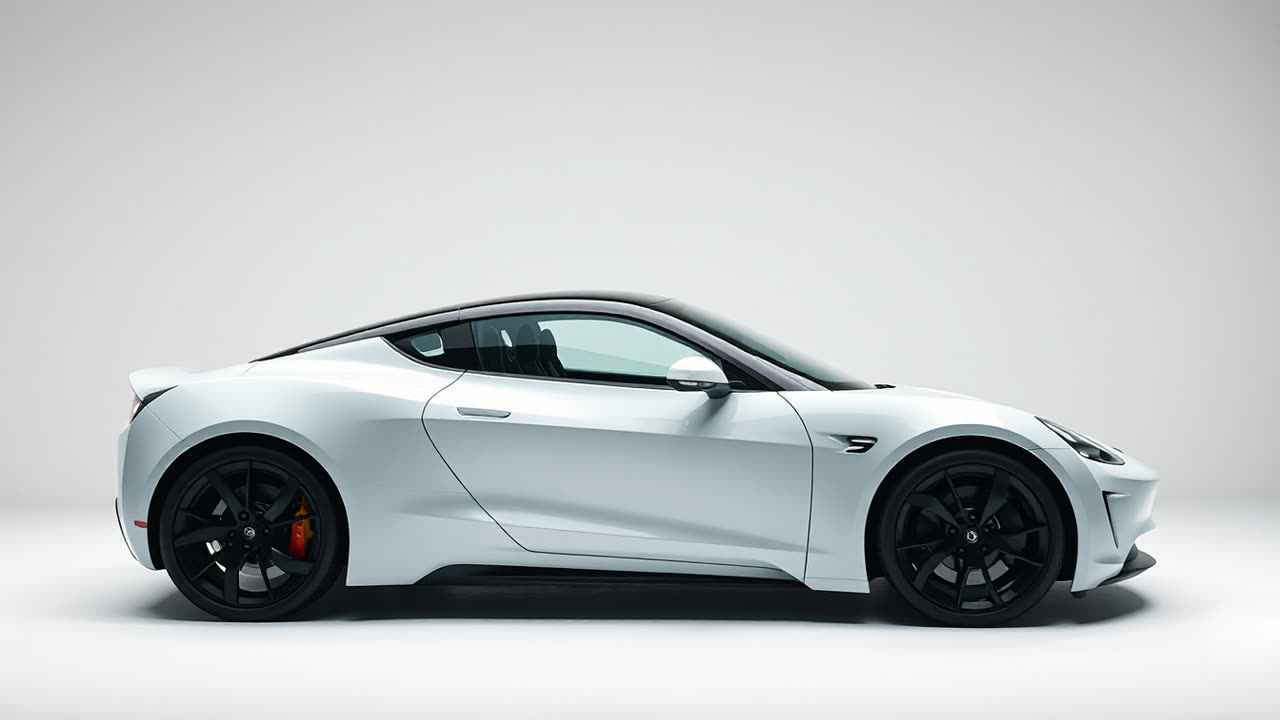
Tesla has reopened reservations for its long-awaited next-generation Roadster, demanding a substantial $50,000 deposit from prospective buyers just weeks before the vehicle's official unveiling. This renewed call for capital, split between an immediate $5,000 credit card payment and a $45,000 wire transfer due within ten days, comes ahead of an October 1, 2026, reveal event near Waco, Texas. The move marks the second instance Tesla has collected significant deposits for the Roadster, nearly nine years after its initial, highly publicized debut.
This aggressive pre-unveil reservation strategy, particularly for a product with a history of significant delays, carries profound implications for both consumers and the broader automotive industry. For buyers, the $50,000 deposit, while ostensibly fully refundable until a Motor Vehicle Purchase Agreement is signed, represents a substantial, interest-free loan to Tesla. This financial commitment, made without a confirmed final price or production timeline, speaks volumes about the enduring brand loyalty and speculative investment appetite Tesla commands. However, it also reopens old wounds for original reservation holders from 2017, many of whom have waited nearly a decade, with some even reporting difficulties in retrieving their deposits when attempting to cancel. The company's decision to reset the reservation book now, just prior to a major reveal, is a clear tactic to inject fresh, interest-free capital and gauge renewed market interest before fully committing to production targets.
From an industry perspective, Tesla's approach tests the boundaries of consumer trust and brand power in the luxury and hypercar segments. Traditionally, such high deposits for unrevealed or long-delayed vehicles are rare, even among exclusive marques. The October 1 event itself, with its "Go for launch" tagline and proximity to SpaceX's McGregor engine test facility, hints strongly at a demonstration of the rumored "SpaceX package" with cold-gas thrusters, which Elon Musk has claimed could enable a 0-60 mph acceleration in an astounding 1.1 seconds. This emphasis on extreme, perhaps even non-street-legal, performance features positions the Roadster not just as a car, but as a technological statement, blurring the lines between automotive engineering and aerospace innovation.
The original Roadster prototype, unveiled in November 2017, promised revolutionary performance: 0-60 mph in 1.9 seconds, a top speed exceeding 250 mph, and an ambitious 620 miles of range from a 200 kWh battery. Its initial price was projected at $200,000 for the standard model, with a $250,000 Founders Series requiring full upfront payment. However, the promised 2020 production start date slipped repeatedly, with Tesla prioritizing high-volume models like the Model Y and Cybertruck. Now, almost nine years later, the production target remains a vague "2027 or 2028" at Gigafactory Texas, with the car still described as being in "design development".
In the intervening years, the electric hypercar landscape has evolved dramatically. Competitors have not waited. The Rimac Nevera, for instance, a Croatian electric hypercar with a price tag of around $2.2 million to $2.3 million, has already shattered records, achieving 0-60 mph in a tested 1.74 seconds and boasting 1,914 horsepower, with deliveries commencing in early 2023. Its even more extreme Nevera R variant claims a 1.66-second 0-60 mph time. The Pininfarina Battista, priced at approximately $2.2 million to $2.6 million, matches the Nevera's 0-60 mph sprint at 1.79 seconds and delivers 1,899 horsepower, with production starting in 2022. Even luxury electric sedans like the Lucid Air Sapphire, at a comparatively modest $249,000, achieve 0-60 mph in 1.89 seconds (claimed) with 1,234 horsepower and an impressive EPA-estimated 427 miles of range, with production having begun in September 2023. Porsche's 2026 Taycan Turbo S, starting around $221,400, offers 0-60 mph in 2.3 seconds with up to 938 horsepower. The Lotus Evija, a $2.3 million to $3 million electric hypercar, has also entered production, delivering over 2,000 horsepower. The market Tesla once aimed to dominate with the Roadster's initial specs is now populated by formidable, proven rivals.
The October 1 unveiling near Waco, Texas, therefore, is more than just a product reveal; it is a critical moment for Tesla to reassert its performance leadership and regain lost credibility for the Roadster program. The company must deliver concrete details: a confirmed retail price, a realistic production start window, and a verifiable demonstration of the "SpaceX package" that truly differentiates it from existing hypercars. Failure to provide these specifics, or to demonstrate a truly groundbreaking advancement that justifies the extended wait and the substantial deposit, could further erode consumer confidence. The market for ultra-high-performance EVs is no longer theoretical, and the new Roadster must now compete against cars that have already delivered on their promises, setting an exceptionally high bar for Tesla's long-awaited halo vehicle. The coming weeks will reveal whether the Roadster can finally transition from an aspirational dream to a tangible reality that reshapes the extreme performance segment.